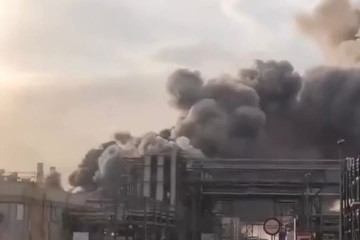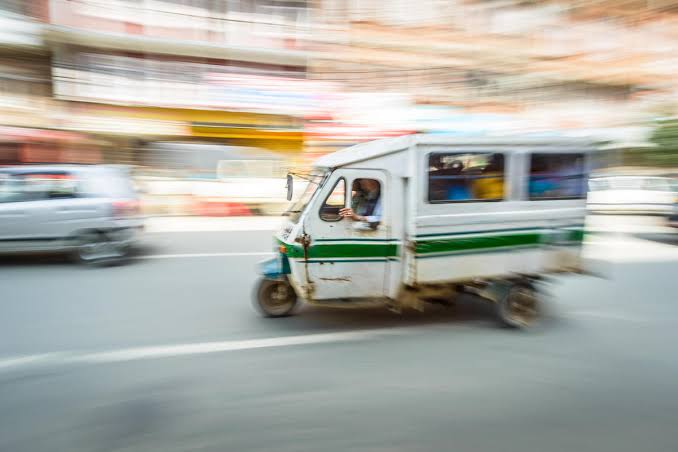
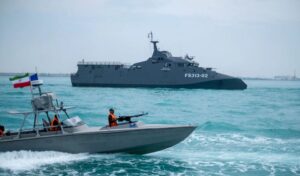
KATHMANDU: Rising geopolitical tensions in the Middle East involving Iran, the United States and Israel have once again highlighted Nepal’s vulnerability to global oil supply disruptions.
With fears growing over possible restrictions in the Strait of Hormuz, international oil prices have already begun moving upward, creating concern in fuel-import dependent countries like Nepal.
The Strait of Hormuz remains one of the world’s most critical oil transit routes. A significant share of globally traded crude oil passes through this narrow maritime corridor connecting the Persian Gulf to international markets.
Any disruption to shipping movement in the region directly affects global fuel prices and eventually impacts South Asian economies.
Oil prices showing upward pressure
Global energy analysts have warned that continued escalation could push crude oil prices sharply higher if supply movement through the Strait of Hormuz is affected. Brent crude prices have already shown volatility in recent trading sessions amid growing uncertainty in the region.
For Nepal, such fluctuations translate almost immediately into domestic price pressure. The country imports all petroleum products from India through the Indian Oil Corporation, leaving little buffer against global price movements.
Following the latest price revision by the Indian Oil Corporation, higher fuel costs have already reached Nepal. However, with the upcoming elections scheduled for March 5, the government has temporarily held back a domestic price adjustment. Fuel prices are expected to increase shortly after the election period in line with rising crude oil rates.
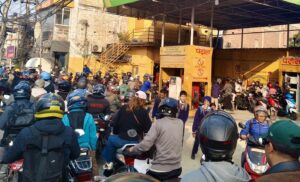
Signs of public concern are visible across major cities including Kathmandu, where long queues have again been reported at several petrol stations. Consumers are rushing to refill tanks amid fears of price hikes or potential supply tightening.
Nepal’s landlocked geography and total dependence on imported petroleum make the country particularly sensitive to global crises. Similar situations during past international disruptions have resulted in panic buying and long waiting times at fuel stations.
Although authorities have urged consumers not to hoard fuel, uncertainty linked to Middle East developments continues to influence market sentiment.
Nepal produces no crude oil domestically and relies entirely on imported fossil fuels. Any prolonged disruption in global supply routes places pressure not only on fuel availability but also on foreign currency reserves, transportation costs and inflation.
Higher fuel prices directly increase logistics and public transportation expenses, eventually affecting overall economic activity.
EV adoption emerging as a strategic solution
Amid these risks, electric vehicles are increasingly being viewed as an energy security solution rather than only an environmental alternative.
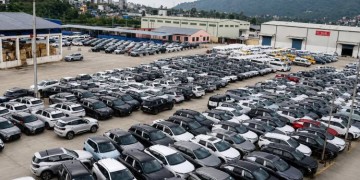
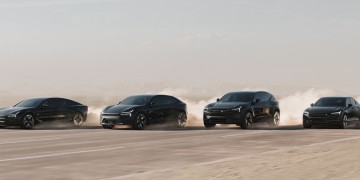
Nepal has made significant progress in electric vehicle adoption in recent years. Supported by favorable government policies, lower import duties and expanding charging infrastructure across highways and urban areas, EVs now dominate new four-wheeler imports.
In 2025, electric vehicles accounted for around 73 percent of new car sales, making Nepal the world’s second-largest EV market by share.
Since Nepal’s electricity generation is largely based on hydropower, EVs reduce dependence on imported fuel while utilizing domestically produced energy.
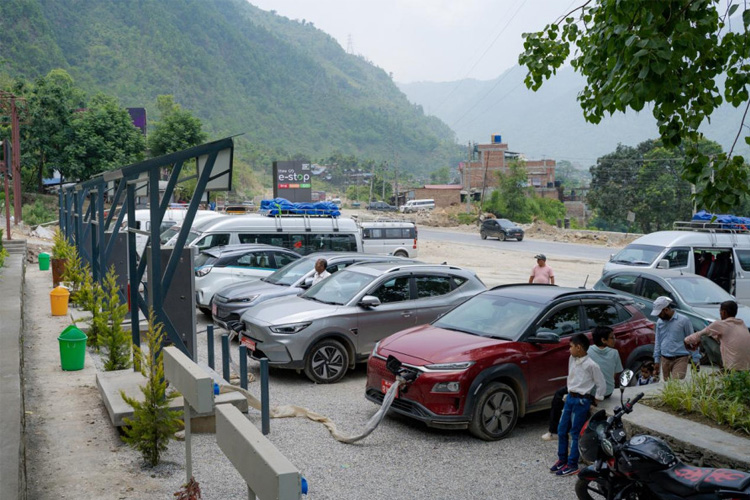
The shift is becoming equally important in public transportation. Electric buses, microbuses and three-wheelers are gradually replacing diesel-powered fleets in urban routes, helping lower operating costs and reducing exposure to global oil price shocks.
The ongoing Middle East tension demonstrates how external geopolitical events can directly influence Nepal’s daily mobility and economy. Increased adoption of EVs in both private vehicles and public transport can significantly reduce fuel import dependency over time.
Each electric car, bus or two-wheeler operating on Nepal’s roads lowers national fuel consumption and reduces the economic impact of overseas conflicts.
The road ahead
While the situation in the Middle East continues to evolve, the current oil market reaction has already served as a reminder of Nepal’s structural energy vulnerability.
Experts note that accelerating EV adoption, strengthening charging networks and electrifying public transportation systems remain key long-term measures to improve national energy resilience.
If tensions escalate further and shipping through the Strait of Hormuz faces disruption, global oil markets could tighten rapidly. For Nepal, expanding electric mobility may prove to be one of the most effective safeguards against future fuel crises driven by events far beyond its borders.