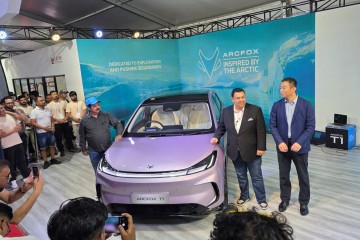
KATHMANDU : Automobile entrepreneur and NAIMA founder Aakash Golchha has said EV battery recycling cannot be handled by vehicle importers alone. He called for dedicated companies to manage battery collection and recycling in Nepal.
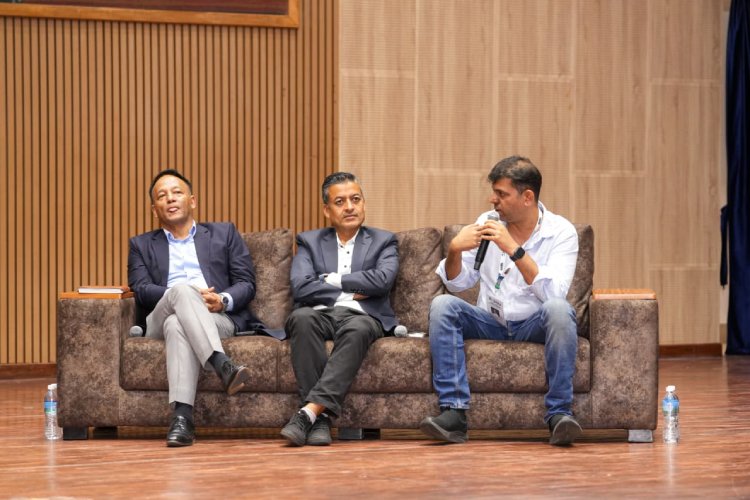
Golchha made the remarks during a discussion on ‘Battery Recycling and Ethanol Blending in Fuel’ organized by the Nepal Automobile Importers and Manufacturers Association (NAIMA) on Friday.
Citing India’s example, he said battery recycling should be handled by specialized companies rather than placing the entire responsibility on vehicle importers.
He said Nepal needs to manage batteries used not only in EVs but also in mobile phones, laptops and other electronic devices.
“Battery management has become a major challenge in Nepal. There is currently no organized system or clear legal framework,” he said.
Golchha said many used batteries from mobile phones and laptops are either taken to India or improperly discarded in rivers and landfill sites.
He also pointed out that lead-acid and lithium-ion batteries require different recycling processes. Therefore, the government should develop separate management systems based on battery type.
Lead-acid batteries are less likely to end up in landfills because they have a relatively high scrap value. Lithium-ion batteries, however, present a different challenge.
Golchha said current rules can place battery management responsibilities on vehicle importers. However, importers generally receive batteries back under warranty.
He questioned who should be responsible when an EV battery is damaged in an accident. Such batteries may remain with vehicle owners rather than importers, creating uncertainty over responsibility.
He called for a system involving importers, the government, consumers and other stakeholders instead of placing the entire responsibility on importers.
Golchha also raised concerns over the export of used batteries from Nepal. He said certain valuation requirements can make battery exports difficult, while importers often acquire used batteries at zero cost.
He said allowing used batteries to have a recognized value could help prevent them from entering the gray market.
According to Golchha, lead-acid batteries are currently being exported to India without proper taxation in some cases. He said India provides a recycling rebate of around Rs. 2 to Rs. 5 per kilogram and suggested Nepal consider a similar mechanism.
Lithium-ion battery recycling requires a different process. After collection, materials such as plastic, copper and aluminum can be separated and recovered.
Golchha said Nepal does not yet have the complete infrastructure required for lithium-ion battery recycling. In the meantime, black mass could be exported to India for further processing and value addition.
He said the government should focus on establishing clear rules and licensing systems rather than imposing overly strict mandatory requirements.
Golchha suggested that only legally licensed recyclers should be authorized to collect and process used batteries.
He also warned that excessive regulation without a proper system could create problems similar to those seen in other industries. A specialized battery recycling ecosystem would provide a more practical long-term solution for Nepal.