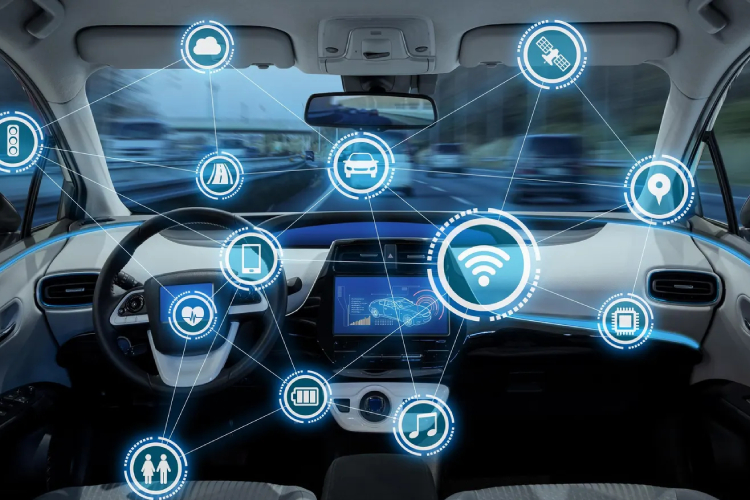
KATHMANDU: Modern connected cars are sharing vehicle and user data with automakers, service providers and third-party companies, according to a new study.
Researchers from Northeastern University, in collaboration with Consumer Reports, tested 21 connected cars from 21 brands and 30 related mobile apps. The study was conducted between October 2024 and August 2025.
The researchers monitored data exchanges through the vehicles’ Wi-Fi and cellular connections and also tested their infotainment systems. They used a special Faraday tent to isolate the vehicles from outside communications during some tests.
19 of 21 cars contacted third parties
The study found that 19 of the 21 tested vehicles contacted at least one third-party domain over the internet.
More than half of the vehicles contacted domains linked to advertising, tracking or analytics services. These included services associated with companies such as Alphabet, Amazon, Mapbox and Meta.
Seven of the 30 automaker mobile apps were also found to send sensitive identifying information to third parties. The data included vehicle identification numbers (VINs), users’ email addresses and phone numbers, and vehicle location information.
Tesla models made the most connections
The study was conducted in the US and did not include Chinese car brands. Among the tested vehicles, the Tesla Model 3 contacted 34 different domains, while the Cybertruck contacted 23. The Cadillac Lyriq contacted 10 domains, followed by Lucid with nine and the Chevrolet Blazer with seven.
In comparison, the Nissan Ariya, Land Rover/Range Rover, Mercedes-Benz and Buick Envista did not contact any of the monitored domains.
The researchers shared their findings with 17 of the 18 automakers involved in the study. Fourteen companies responded, according to the report.
The study also raised concerns about data-sharing practices used by connected-car makers such as Tesla and Rivian. According to the researchers, some companies warn that certain vehicle features may not work fully if users do not allow telematics connectivity or data sharing.
The researchers said this could leave consumers choosing between protecting their personal data and accessing some connected-car features.
The report recommends that buyers consider not only battery capacity, range, power and technology when purchasing a new car, but also what data the vehicle collects, where it is sent, how it is used and whether users can opt out of data sharing.