KATHMANDU : Stakeholders have urged the government to take a cautious approach to ethanol blending in petrol. They have raised concerns over vehicle compatibility, fuel quality and ethanol availability.
The concerns were raised during a discussion on ‘Battery Recycling and Ethanol Blending in Fuel’ organized by the Nepal Automobile Importers and Manufacturers Association (NAIMA) on Friday.
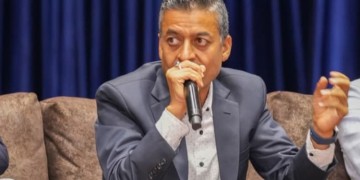
Dr. Balraj Bhanot, Chairman of India’s Center Motor Vehicle Rules Technical Standing Summit, said ethanol blending could help reduce petroleum imports. However, he said Nepal needs to assess its technical and practical challenges before implementing the policy.
According to Bhanot, many vehicles currently operating in Nepal are not compatible with ethanol-blended fuel. Using such fuel could cause engine and other technical problems.
He suggested providing separate fuel options for vehicles that are not compatible with blended petrol. Dedicated fuel pumps could also be considered for such vehicles.
Bhanot also warned about phase separation if water enters ethanol-blended petrol. In such cases, ethanol can separate from petrol and settle at the bottom of the fuel tank. This could affect the engine.
He recommended regular fuel quality checks at petrol pumps using dipsticks or other testing equipment.
Bhanot suggested starting ethanol blending at a lower percentage. He said India started blending 5% ethanol in petrol in 2006. The level increased to 10% in 2010 and has now reached E20.
He said rapidly increasing ethanol content could create problems for older vehicles and fuel systems. Rubber and other components in older vehicles may also not be compatible with high-ethanol fuel.
Such vehicles could face fuel leakage and starting problems. Mileage could also decline by around 5% to 6%, according to Bhanot.
Aakash Golchha, automobile entrepreneur and founder of NAIMA, said vehicle compatibility and market demand should be considered before implementing the policy.
He said most Indian vehicles manufactured after 2010 are compatible with E10 fuel. However, Nepal also imports vehicles from other countries. Some of these vehicles may not be compatible with ethanol-blended fuel.
Golchha suggested making both blended and pure petrol available. This would help owners of older or incompatible vehicles avoid additional costs.
He also said domestic ethanol production can currently meet only a small portion of Nepal’s potential demand. According to him, around 20-25 million liters of ethanol could be produced from molasses generated by the sugar industry.
He called for clear pricing, long-term purchase agreements and regular quality audits to encourage domestic ethanol production.
Sagar Gajurel, outgoing president of the Journalist Association for Automobile and Mobility (JAAM), said ethanol blending has been discussed in Nepal for around two decades.
He said the policy could help reduce petrol consumption. However, he questioned whether Nepal would have enough raw materials for large-scale ethanol production.
According to Gajurel, molasses from sugar mills is currently the main source of ethanol. Nepal could also explore alternatives such as Napier grass, straw, corn stalks and wheat husks. However, processing these materials remains challenging.
Nepal Oil Corporation has announced plans to initially blend 10% ethanol into petrol. Gajurel said the policy should also be assessed from the consumer’s perspective.
He said older vehicles may not benefit from E10 fuel. They could also experience lower mileage and other technical issues. However, ethanol blending could help reduce emissions.
Gajurel also said the economic benefit would depend on the price of ethanol. If ethanol costs more than petrol, the overall benefit of blending could be limited.
Suresh Shrestha, chief of the Vehicle Testing Office, said reducing petroleum imports is a key objective of the ethanol-blending policy.
He said blending 10% ethanol into petrol could potentially reduce petrol imports by around 10%.
Shrestha added that domestic ethanol production and blending could support agriculture-based industries and create new economic activities.
However, he stressed the need for a detailed cost analysis before deciding whether to import blended fuel or blend petrol and ethanol domestically.