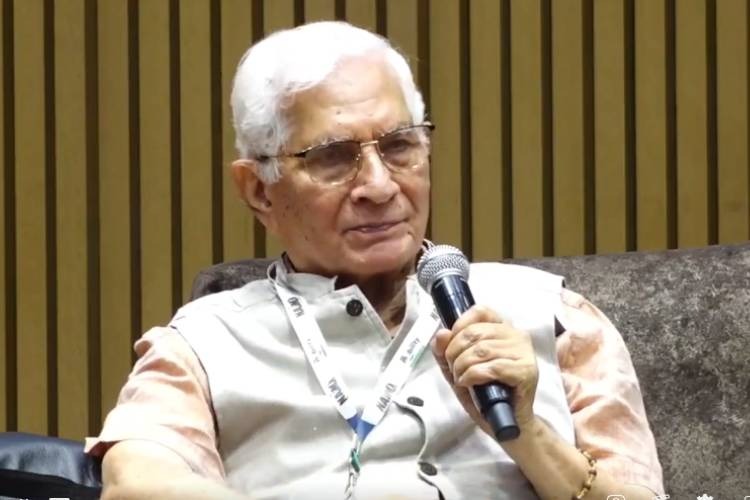
KATHMANDU: Dr. Balraj Bhanot, Chairman of India’s Central Motor Vehicles Rules Technical Standing Committee, has urged Nepal to establish a clear policy for EV battery management and recycling from now on.
Dr. Bhanot made the remarks during a discussion on battery recycling and ethanol blending organized by the Nepal Automobile Importers and Manufacturers Association (NAIMA) on Friday.
He said Nepal’s rapidly growing EV adoption makes it important to prepare for the management of used batteries. He recommended introducing an Extended Producer Responsibility (EPR) policy for EV batteries.
According to Dr. Bhanot, lithium-ion batteries generally have a lifespan of around eight to 10 years. Nepal could therefore see large-scale battery replacements in the next four to five years.
“This is the right time for Nepal to prepare,” he said. “The government should start developing a clear policy now.”
He suggested making vehicle and battery importers, sellers, and dealers legally responsible for collecting used batteries. Customers could also be required to return their old batteries when purchasing a new battery.
Dr. Bhanot said collected batteries should only be sent to registered recycling plants. If Nepal does not have enough battery waste to support a recycling plant, he suggested allowing cooperation with recycling facilities in India or China.
He also highlighted India’s vehicle fitness and scrappage system. He said commercial vehicles in India are required to obtain annual fitness certificates. More than 500 automated testing centers are used to assess vehicle conditions.
Nepal should also establish clear standards for declaring old vehicles as end-of-life vehicles, he said. A proper vehicle scrappage mechanism should then be introduced.
Caution needed on ethanol blending
Dr. Bhanot also advised Nepal to start ethanol blending at a low level if it adopts the policy.
He said India started ethanol blending at 5% in 2006. The rate was increased to 10% from 2010 and has now reached 20%, known as E20.
However, he warned that rapidly increasing ethanol content can create problems for older vehicles and fuel supply infrastructure.
Older vehicle engines and rubber components may not be compatible with high-ethanol fuel. This can lead to fuel leakage, starting problems, and a 5% to 6% reduction in mileage, he said.
Dr. Bhanot also pointed to the risk of phase separation. Ethanol can absorb water from the air and surroundings. If water enters underground fuel tanks, the fuel can separate into petrol and ethanol-water mixtures.
The heavier ethanol-water mixture can settle at the bottom of the tank. This could result in poor-quality fuel being supplied to vehicles.
He suggested that Nepal should learn from India’s experience before introducing ethanol blending or other biofuel policies. Technical infrastructure and vehicle compatibility should be considered before increasing ethanol content.