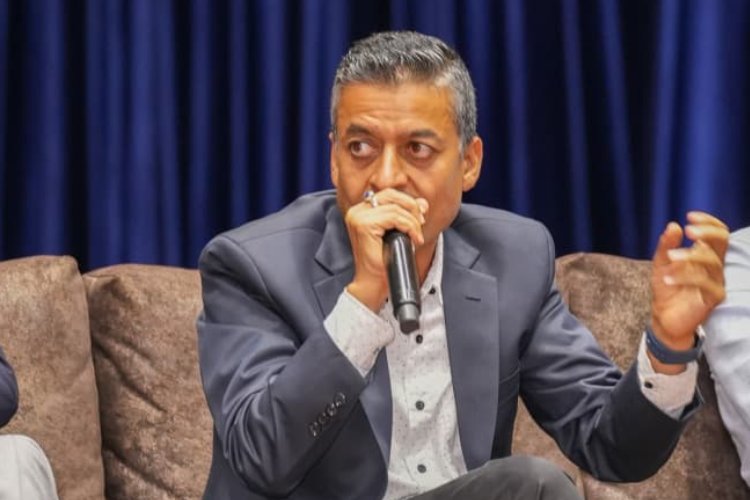
KATHMANDU : Vehicle importers should be required to invest in companies established for managing used electric vehicle batteries, according to Sagar Gajurel, outgoing president of the Journalist Association for Automobile and Mobility (JAAM).
Gajurel made the remarks during a discussion on ‘Battery Recycling and Ethanol Blending in Fuel’ organized by the Nepal Automobile Importers and Manufacturers Association (NAIMA) on Friday.
He said Nepal needs a dedicated industry to manage EV batteries as electric vehicle adoption continues to grow.
According to Gajurel, the current volume of used batteries may not be enough to justify a full-scale battery recycling plant. However, every company importing EVs should be required to invest in battery management.
He suggested that the investment should be linked to the number of vehicles sold by each importer. Companies selling more EVs should contribute more to the battery management system.
Gajurel said Nepal should initially focus on battery collection, testing and second-life applications instead of immediately establishing a full-scale recycling facility.
He compared the proposed system with the insurance sector, where insurance companies are required to participate in reinsurance arrangements.
He also referred to a study on the technical and economic feasibility of lithium-ion battery recycling facilities in Nepal. The study projects that around 150-180 GWh of batteries could reach the end of their first life and enter second-life applications by 2043.
Gajurel also highlighted the need for dedicated battery storage centers. He said used EV batteries could potentially be repurposed for energy storage.
According to him, electricity that would otherwise be wasted during off-peak hours could be stored and supplied during peak demand periods. He said this could provide a potential business opportunity for the private sector.
Ethanol blending
Gajurel also raised concerns about Nepal’s plan to blend ethanol with petrol.
He said discussions on ethanol blending have been ongoing in Nepal for around two decades. Although the policy could help reduce petrol consumption, he questioned whether Nepal has sufficient raw materials for large-scale ethanol production.
Molasses from sugar mills is currently the main source of ethanol. Gajurel said Nepal could explore alternatives such as Napier grass, straw, corn stalks and wheat husks. However, processing these materials remains challenging.
Nepal Oil Corporation has announced plans to initially blend 10% ethanol into petrol. Gajurel said the policy should also be assessed from the consumer’s perspective.
He said older vehicles, including those meeting older Nepal emission standards, may not benefit from E10 fuel. They could also experience lower mileage and potential technical issues.
However, he said ethanol blending could help reduce vehicle emissions.
Gajurel also stressed that the economic benefit of ethanol blending would depend on the price of ethanol. If ethanol is more expensive than petrol, the overall benefit of the policy could be limited.