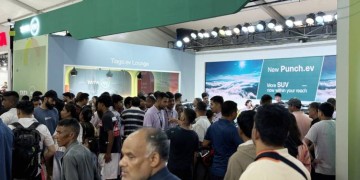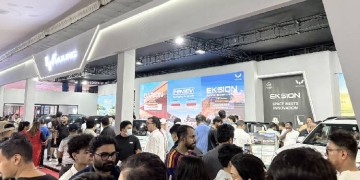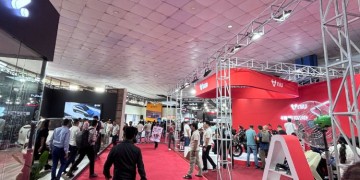
KATHMANDU: The NAIMA Nepal Mobility Expo 2026 has concluded. Regardless of the attendance figures claimed by the organizers, there is little doubt that the event attracted one of the largest crowds in the history of auto shows in Nepal.
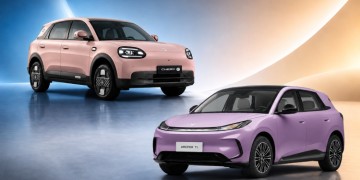
Several brands unveiled new products at the mobility expo. Naturally, affordable cars attracted strong interest from buyers. Models such as the Tata Punch EV, Chery Q, Wuling Mini and the recently available Arcfox T1 drew attention. Customers could see these cars before making their bookings.
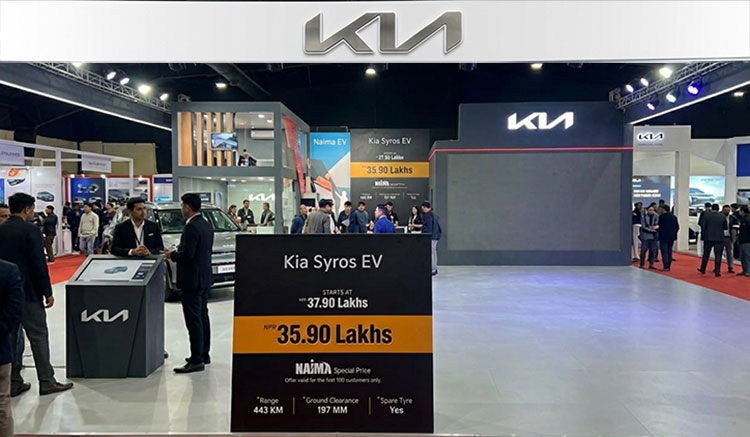
However, something unusual happened with the Kia Syros EV. The car was not available at the expo, and detailed information about its features was also limited. Continental Trading announced a price of Rs. 3.599 million. According to the company, more than 700 units were booked within four days without customers even seeing the car.
This has surprised many in the market.
We have seen companies in the past fail to achieve their announced sales targets even over an entire year. However, the high booking figure for the Kia Syros EV cannot be explained by price alone. The Syros EV is Kia’s entry-level EV and does not offer a particularly long list of features.
So, what led to such a large number of bookings? Let us try to understand it in simple terms.
This could also be seen as a sign that the dominance of Chinese EVs in Nepal may be starting to change. If an India-made EV can receive this level of bookings, it is certainly an unusual development. The Syros EV itself has not yet crossed the 1,000-unit sales mark in India.
Another important point is that the booking numbers show that the Kia brand still has strong potential in Nepal. Kia previously introduced models such as the Soul EV, Niro EV, EV6 and EV9, but none managed to establish a strong position in the market. Even today, Kia’s petrol-powered cars continue to support its presence in Nepal.
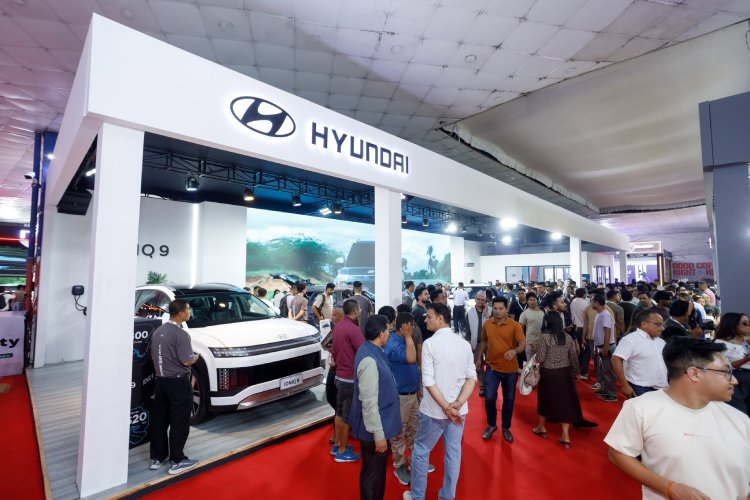
The bookings for the Syros EV indicate that EVs made in India by brands such as Tata, Mahindra, Hyundai and Kia could compete strongly with Chinese products. More than 700 bookings without customers seeing the product carries a significant message.
It also shows that buyers are not looking only at the car itself. Brand reputation and perceived product quality are also becoming important factors.
Tata also reported more than 700 bookings at the NAIMA Nepal Mobility Expo. A good number of customers were also seen booking vehicles at the Mahindra and Hyundai stalls.
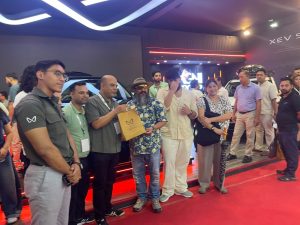
This gave the impression that consumer perception towards EVs made in India is changing.
There is another important point to understand. Bookings and actual sales are not the same thing. People who have been involved in the automobile industry for a long time say that only around 30% of auto show bookings typically convert into actual sales.
The success of any vehicle depends on several factors. These include its price, specifications, driving range, delivery timeline, charging capability, spare parts availability and after-sales service.
Most importantly, the ability of dealers to deliver vehicles to customers who booked during the festive season will determine how many of these bookings eventually become sales.
Chinese brands continue to introduce new and competitive products. BYD, MG, Chery and Leapmotor also maintained a strong presence and received bookings at the expo.
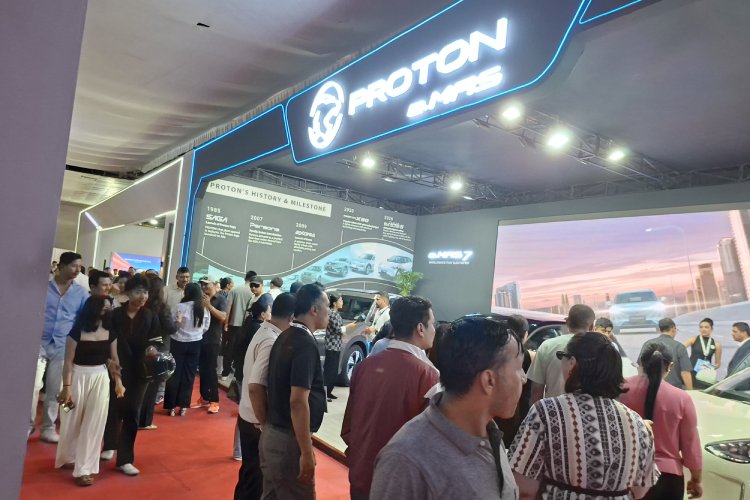
Proton e.MAS, Great Wall Motors and Wuling also attracted significant attention at this year’s event.
Brands ranging from BAIC to iCaur attracted buyers looking for lifestyle vehicles. MG cars made in India also received strong interest from consumers.
Overall, the NAIMA Nepal Mobility Expo concluded on a grand note. Like last year, the expo concluded with music, a parade, and a cultural tableau.
Most car dealers appeared satisfied with the event. The strong bookings received just ahead of the festive season naturally brought a smile to the faces of automobile dealers