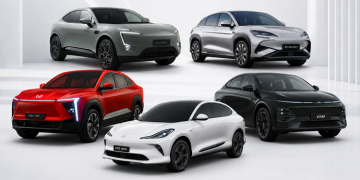
KATHMANDU: Nepal’s automobile sector has once again been left assessing the impact of changes announced in the national budget. Finance Minister Dr. Swarnim Wagle presented the budget for fiscal year 2026/27 on Friday, keeping tax rates unchanged for most vehicles while introducing major changes to the taxation of electric vehicles.
The biggest changes have been made in the EV segment, which currently leads Nepal’s automobile market. The government has revised the method used to calculate taxes on electric vehicles, creating uncertainty among industry stakeholders.
Previously, customs duties on EVs were determined based on motor peak power. Under the new budget, that system has been removed and all EVs will now be subject to a flat 20 percent customs duty based on vehicle value.
The government has also removed excise duty on EVs. In its place, a new “Clean Infrastructure Investment Fee” has been introduced. Earlier, excise duty ranged from 5 percent to 50 percent depending on motor power. The new fee ranges from 2.5 percent to 130 percent, depending on the vehicle category and value.
Industry experts say the revised tax structure is likely to increase the prices of many mid-range electric cars. While the government has announced several measures aimed at supporting consumers, the impact of the new EV tax system remains unclear.
Overall positive, but created confusion: Surendra Kumar Uprety
According to Surendra Kumar Uprety, President of NADA Automobiles Association of Nepal, the budget contains several positive measures, including higher income tax thresholds, reduced duties on some goods, support for industries and the removal of motor-power-based taxation on EVs.
However, he said the new duty structure for electric vehicles has created confusion. Uprety noted that the association is still studying the budget and related legal provisions before issuing an official position.
Technical budget, impact still unclear: Nirakar Shrestha
Nirakar Shrestha, Executive Director of Laxmi Intercontinental and a member of NAIMA, described the budget as generally positive but highly technical.
He said customs rates and tax provisions for EVs are still not fully clear. Several tax headings have been removed while new ones have been introduced. According to him, it is too early to determine the overall impact on the automobile industry until the government provides further clarification.
Now no longer facing allegations of tax evasion: Gaurav Sharda
Gaurav Sharda, Managing Director of SPG Automobiles, said the industry is still evaluating the impact of the revised tax rates.
He welcomed the government’s decision to remove the peak-power-based taxation system for EVs. According to Sharda, this will reduce disputes and allegations related to tax classification. He added that a detailed analysis will be conducted before the company releases its official view.
Budget is automobile-friendly: Meghraj Paudel
Meghraj Paudel, Director of Alpha Automotive and Secretary of NADA, said the budget is generally automobile-friendly.
He noted that tax rates on vehicles other than EVs have remained unchanged despite inflation and higher government expenditure. This, he said, provides stability to the market and ultimately benefits consumers.
Paudel also said the government has continued its support for vehicle assembly industries by retaining existing incentives. He believes the budget will encourage further growth in the industrial sector and have a positive impact on the overall economy.
While the industry has welcomed some of the reforms, most stakeholders agree that further clarification is needed before the full impact of the new EV tax structure can be assessed.