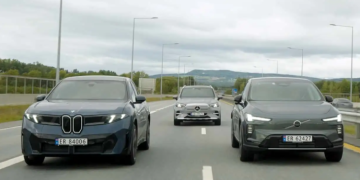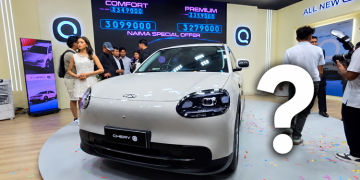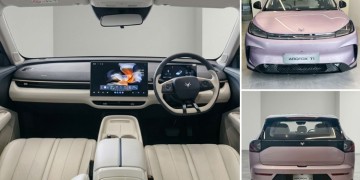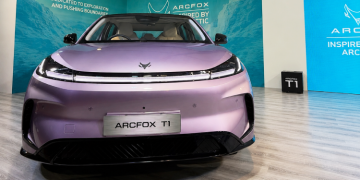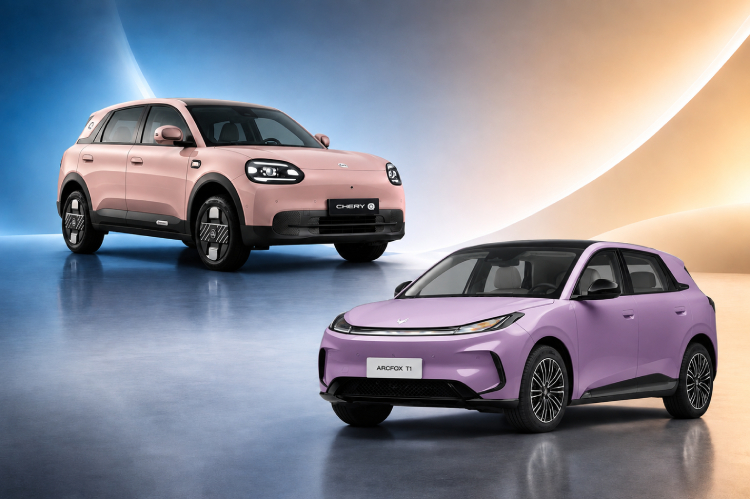
KATHMANDU: Two city-focused crossover models unveiled at the NAIMA Mobility Expo 2026 have yet to make a full entry into the Nepali market. While a few units of the Arcfox T1 have already been delivered, the Chery Q is still on its way to Nepal.
Both models entered the market in August. However, customers who booked the cars are still unsure whether they will receive them before Dashain.
If road conditions improve, both models are expected to reach the market in larger numbers within the next two weeks.
According to company sources, the Chery Q has received more bookings than the Arcfox T1. Pioneer MotoCorp, the official distributor of Chery in Nepal, is working to deliver the Q to customers before Dashain.
“Our vehicles are on the way. If the road conditions remain normal, they should arrive within a few days and we will start deliveries,” a company source said.
Laxmi MotorHub, the official distributor of Arcfox, had planned to deliver a good number of T1 units from the second week of Bhadra. However, the plan was affected by the Bhotekoshi flood on Bhadra 10, which swept away several vehicles.
“Additional vehicles are now arriving. We are planning to bring them to Kathmandu within a few days,” a source at Laxmi MotorHub said.
The two models compete in the same segment, making their rivalry particularly interesting. Here is a look at the key similarities and differences between the two crossovers.
Price difference
The Chery Q is considered a value-for-money model in China, offering several features at a relatively low price. The Arcfox T1, meanwhile, is positioned as a more premium product in its home market.
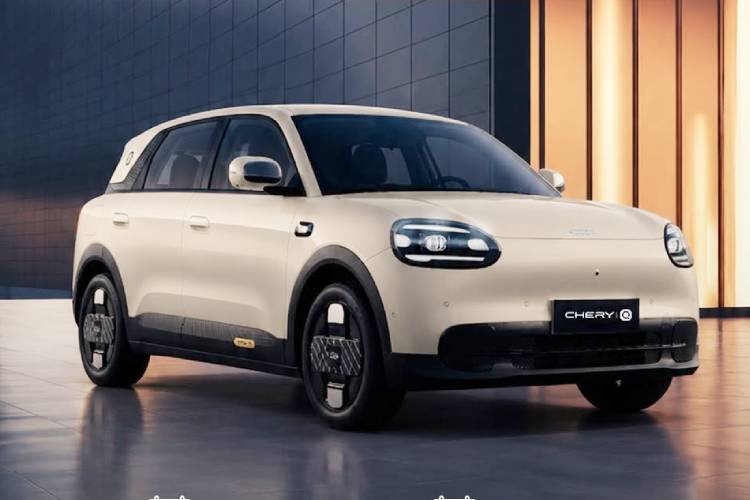
In Nepal, the Arcfox T1 LV2 is priced at Rs 3.296 million, while the LV3 costs Rs 3.596 million.
The Chery Q has a slightly different pricing structure. It is also available in two variants. The Q Comfort has an official price of Rs 3.449 million but is currently offered at Rs 3.099 million after a discount.
The Q Premium is priced at Rs 3.599 million, with the discounted price set at Rs 3.399 million. Based on their prices, the two models are direct competitors in the Nepali market.
Similarities in many areas
The Arcfox T1 and Chery Q share several similarities. Both use lithium iron phosphate (LFP) batteries, while their battery capacities and motor outputs are also quite close.
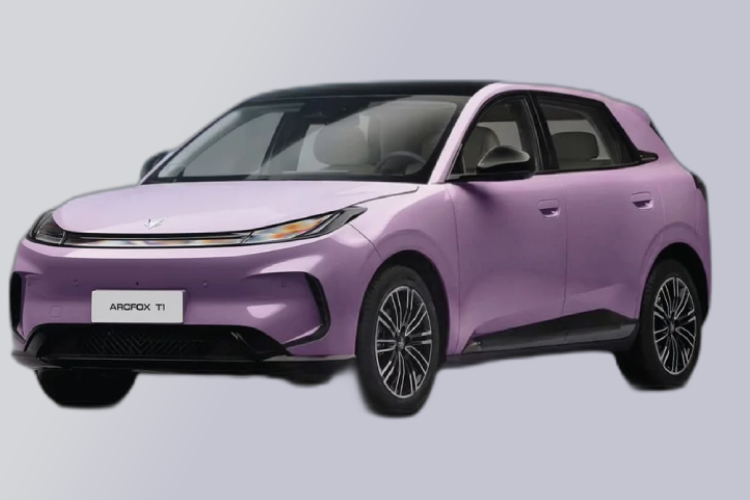
The Chery Q sold in Nepal comes with a 41.3 kWh battery. The Arcfox T1 has a slightly larger 42 kWh battery. The Chery Q uses a 90 kW motor, while the T1 gets a slightly more powerful 95 kW motor.
Based on their battery and motor specifications, both models are expected to deliver a real-world driving range of around 300-350 km, depending on driving conditions.
T1 is larger in size
The biggest difference between the two models is their body size. The Arcfox T1 is larger than the Chery Q. The T1 measures 4,337 mm in length, 1,860 mm in width and has a 2,770 mm wheelbase. The Chery Q measures 4,195 mm in length and 1,811 mm in width, with a 2,700 mm wheelbase.
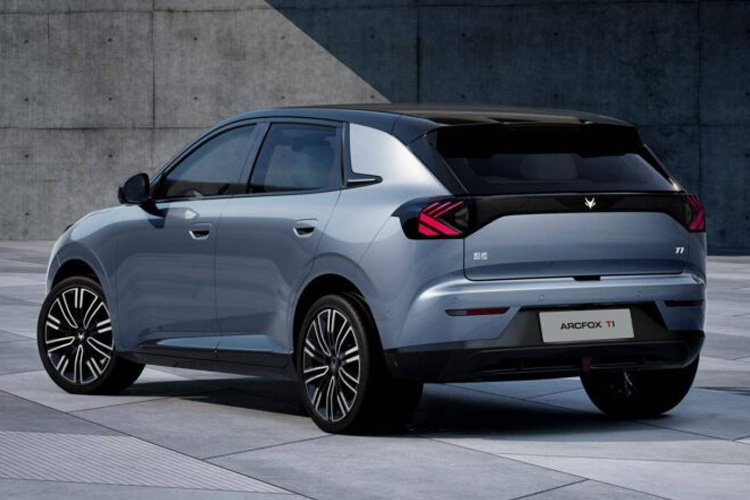
Therefore, the T1 has a clear advantage in terms of overall dimensions and wheelbase.
Both offer smart features
The competition between the two models is not limited to their basic specifications. Both come with large infotainment screens, smart connectivity and AI-based voice assistance.
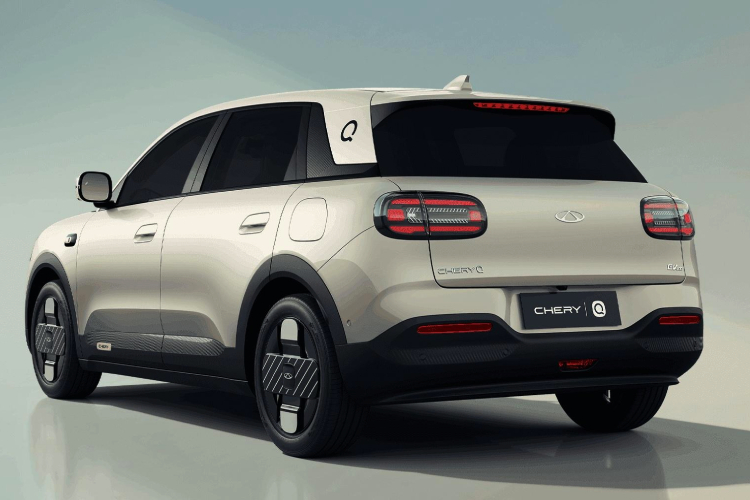
Their youthful designs, digital interiors and smart features are aimed at customers looking for something different from conventional cars.
Same market, different approach
This is where the real competition between the two models begins. The Chery Q focuses more on price and everyday usability, while the Arcfox T1 aims to attract buyers with its larger body, more premium feel and slightly higher power output.
EV buyers do not all have the same priorities. For some, price and range are the most important factors. Others may give more importance to design, space, power and premium features.
Therefore, even though the two models have similar battery capacities and expected driving ranges, they could appeal to slightly different groups of customers.
The real comparison between the Chery Q and Arcfox T1 will become clearer once both models are available in larger numbers on Nepali roads. For now, both buyers and distributors are waiting for the vehicles to arrive and deliveries to begin.