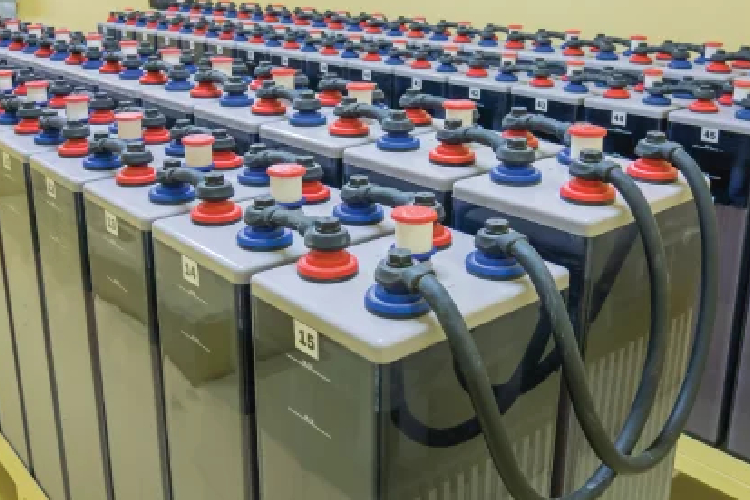
KATHMANDU: The government is preparing to regulate the tax exemptions provided on deep-cycle lead-acid and lithium-ion batteries used in electric vehicles and clean tempos.
The Ministry of Forests and Environment has prepared drafts of two separate procedures for this purpose. The proposed procedures are the “Procedure to be followed while deciding on recommendations for zero-rated VAT on deep-cycle lead-acid batteries, 2083” and the “Procedure to be followed while deciding on recommendations for customs duty exemption on deep-cycle lead-acid and lithium-ion batteries, 2083.”
The government currently provides VAT exemptions on the import of deep-cycle lead-acid and lithium-ion batteries through the annual budget. The new procedures are intended to regulate the implementation of the existing provisions.
The tax exemption is currently available for batteries used in electric rickshaws and clean tempos. The ministry has proposed the procedures to prevent misuse of the government incentive and make the recommendation process more systematic.
The ministry has also published the drafts and invited suggestions from stakeholders within one week.
According to the draft, the main objective is to make the recommendation process through the Department of Environment simple, transparent and systematic.
The proposed procedure has also tightened the documentation requirements for obtaining tax exemptions on battery imports and production.
Under the draft, domestic battery manufacturers seeking a zero-rated VAT recommendation must submit an application to the Department of Environment in the prescribed format. The application must include a copy of the industry registration and renewal certificate, the previous fiscal year’s tax clearance certificate or its extension document, and PAN or VAT registration certificate.
Manufacturers must also submit details of sales and distribution to end consumers, technical specifications of the batteries to be sold, and details including the battery name, quantity, price, date and HS code.
The draft defines an “end consumer” as an individual or organization that purchases a deep-cycle lead-acid battery for operating an electric vehicle.
It also defines a “deep-cycle lead-acid battery” as a battery produced by a domestic industry for use in electric vehicles based on a recommendation from the Department of Environment under prevailing laws. Such batteries must fall under customs subheading 8507.20.00.
Surendra Kumar Upreti, president of the NADA Automobiles Association of Nepal, said the VAT-related provisions in both proposed procedures are already being implemented.
However, he said the proposed customs duty exemption for importers requires further study. According to Upreti, approving the draft in its current form could create difficulties for domestic battery manufacturers.
“The government currently provides VAT exemption through the Finance Act on batteries imported for use in electric rickshaws, clean tempos and solar applications. It appears the government now wants to regulate this through a procedure,” he told MeroAuto.
“However, the provision for customs duty exemption for importers needs further study. If the draft is approved in its current form, domestic battery manufacturers could be forced to shut down,” he said.
Tax-exempt batteries to be tracked
The proposed procedure also includes a system to track batteries imported under the tax exemption. Importers and manufacturers will have to maintain records in the prescribed format. The form will require details such as the end consumer’s name, address, phone number and citizenship number.
It will also include the registration number of the vehicle in which the battery is installed, the date of sale and the quantity sold. The records must also include the number of batteries covered by previous recommendations, total units sold and remaining stock.