KATHMANDU: Traffic management in Nepal is becoming increasingly complex and challenging. Growing vehicle numbers, narrow roads, limited use of modern technology, restricted resources, undisciplined drivers and a state system that relies mainly on punishment have all made traffic management difficult.
It is the state’s duty to make necessary and practical laws, improve road infrastructure, arrange modern technology for regulation and ensure a transparent system. Likewise, it is the duty of every driver to follow the rules and laws set by the state. Unfortunately, neither the state nor drivers in Nepal appear to be fulfilling their responsibilities.
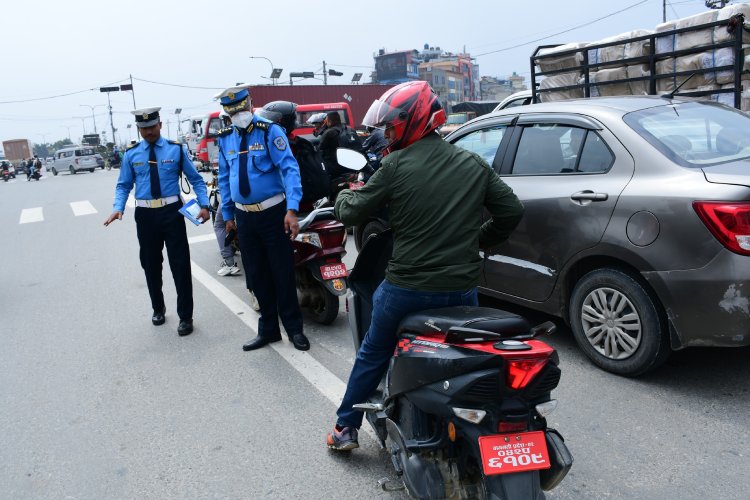
The responsibility of managing traffic in Nepal lies with the Traffic Police. But there is little harmony or understanding between traffic police and drivers. Many drivers tend to ignore road rules and traffic police, while police often impose fines even for minor mistakes. This has, in some cases, led to unfortunate accidents as well.
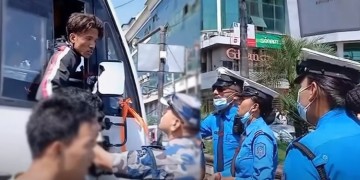
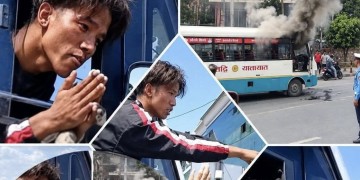
Recent examples include the self immolation of ride sharing driver Ganesh Nepali on July 9, 2026 and the bus fire incident in Tripureshwor on Monday. There is no guarantee that such incidents will not happen again in the coming days. Therefore, everyone must fulfill their responsibility and duty from their respective positions.
Despite these challenges, the state urgently needs to begin phase wise reforms for effective traffic management. A recent report has recommended several measures to the government in this regard. A judicial committee formed under the coordination of former High Court judge Keshav Prasad Bastola, to investigate the self immolation case of ride sharing driver Ganesh Nepali, has given 15 point suggestions to improve traffic management.
The Ministry of Land Management, Cooperatives and Poverty Alleviation and the Ministry of Federal Affairs and General Administration have already written to all rural municipalities and municipalities asking for immediate implementation of these recommendations. However, implementation has not yet taken place.
The committee has recommended the following works for traffic management:
- Awareness campaigns should be run on a priority basis to develop a culture of following traffic rules.
- Traffic rules and civic duties should be included in the school level curriculum, with regular teaching and study, to promote moral education.
- Traffic and municipal police should be given adequate training so that they behave in a respectful, courteous and transparent manner while enforcing the law.
- A mechanism, such as a traffic court, should be developed so that people can easily lodge complaints or appeals regarding police behavior, or in cases where they are about to face or have already faced action for violating traffic rules.
- Even in situations where traffic and municipal police must take action, the law should give them flexible authority to consider the nature of the mistake and the financial condition of the offender.
- Besides proper arrangement of road safety, marking and parking, adequate modern technological resources and means should be arranged to facilitate traffic management.
- In places where parking is not allowed, No Parking boards should be placed in well lit locations so that everyone can see them.
- Modern surveillance and monitoring systems should be installed in high traffic areas to check violations of traffic rules, and a faceless traffic management system should be implemented.
- A system should be developed to link vehicles, driving licenses and the traffic rule violation record system, so that concerned individuals automatically receive SMS notifications about violations and fines.
- Fines should not be treated as the main objective of traffic management. Instead, they should be developed as a way to build public trust, with people understanding that fines are the result of compulsory action.
- Necessary policy and practical measures should be developed to build trust, respect and cooperation between traffic and municipal police and road users.
- The driving license distribution system should be further improved, and adequate initial training should be arranged for new license holders.
- As part of policy reform, the overlapping jurisdiction between traffic police and municipal police regarding traffic management should be reviewed and related laws improved.
- A system should be developed to link the blue book, driving license and national identity card, along with an integrated data system.
- To make road safety and traffic management effective, a Road Safety Act should be drafted, and the Vehicle and Transport Management Act, 2049, should be promptly amended to keep it up to date.