KATHMANDU: Hyundai Motor Group has developed a new eMP (Electric Mobility Prime) platform for large and luxury electric vehicles. It is designed for flagship EVs and supports features such as larger batteries, high power output, rear-wheel steering and advanced air suspension.
The group already uses the E-GMP platform for models such as the Ioniq 5, Ioniq 9 and Kia EV6. The new eMP platform is a more advanced architecture developed specifically for larger and higher-end luxury EVs. The Genesis GV90 is the first production model based on the platform.
Here are six key features of Hyundai’s new eMP platform.
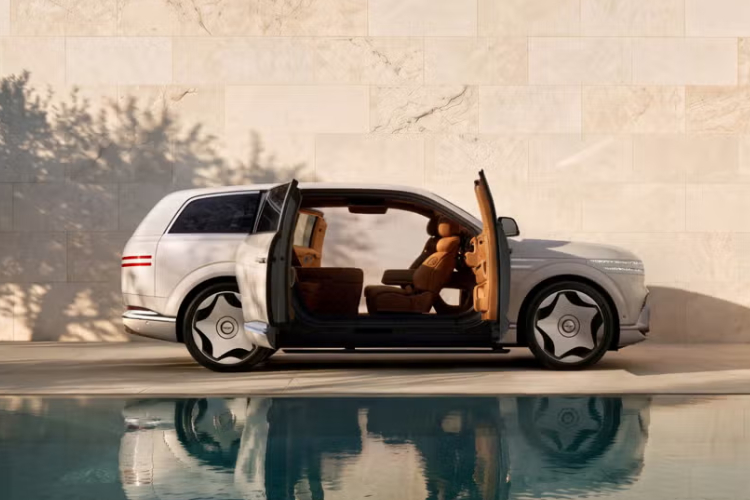
No B-pillar
One of the most interesting features of the eMP platform is its pillarless door design. Unlike conventional cars, the platform is designed to allow the front and rear doors to open without a conventional B-pillar between them. Hyundai uses a stronger body structure and reinforced passenger cell to maintain safety.
This creates a wider opening when both doors are opened and can give the cabin a more spacious, lounge-like feel.
Larger battery
The eMP platform can accommodate battery packs of up to 123.5 kWh. For comparison, Hyundai’s Ioniq 9 currently uses a 110.3 kWh battery. The larger battery capacity will allow future flagship EVs to offer higher range and performance.
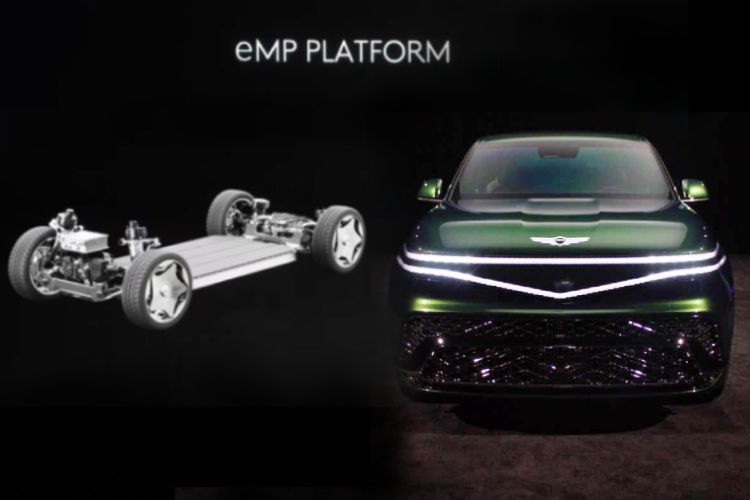
The platform can also use a wireless battery management system. This can reduce the number of wires and connectors inside the battery pack and help reduce weight.
More power and torque
The platform is designed to support high-performance electric powertrains. Flagship EVs based on the eMP platform can produce up to 490 kW (657 hp) and 800 Nm of torque.
Electronic limited-slip differentials on both axles will help manage the high power and improve traction and stability.
Rear-wheel steering
Large SUVs can be difficult to maneuver in tight city streets. Hyundai’s EMP platform addresses this with rear-wheel steering of up to 5 degrees.
At low speeds, the rear wheels can turn in the opposite direction to the front wheels. This reduces the turning circle and makes parking easier.
At higher speeds, the rear wheels can turn in the same direction as the front wheels to improve stability.
Multi-chamber air suspension
The eMP platform will also support a multi-chamber air suspension system. The system can adjust the vehicle’s ride height and suspension characteristics according to road and driving conditions.
When combined with road-sensing technology, it can also help improve ride comfort over potholes and rough roads.
A lounge-like cabin
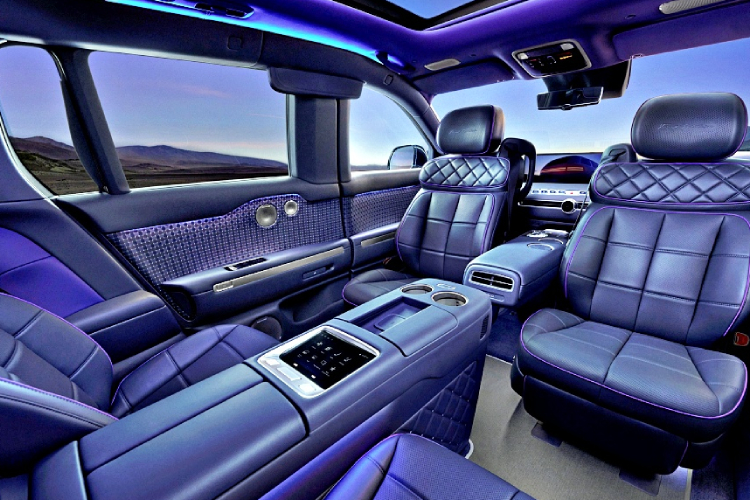
The eMP platform is also designed to offer a more flexible cabin. The front seats can rotate by up to 180 degrees, allowing occupants to face the rear passengers when the vehicle is parked.
This can turn the cabin into a lounge-like space. Hyundai’s new central computing system and Pleos Connect platform will also integrate digital features, entertainment, connectivity and smart vehicle functions.