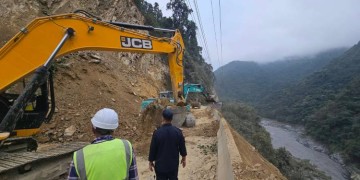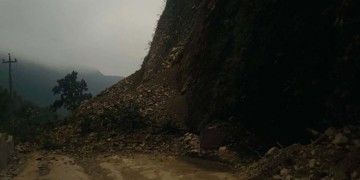
KATHMANDU: Narrow mountain roads, landslides every few kilometers, tracks washed away by the monsoon, and steep climbs and descents covered in rocks and mud. Some stretches were blacktop, some gravel, and some were rough dirt tracks where you wondered whether a car could pass at all.
Taking an electric vehicle on roads like these naturally raises plenty of questions. Will the car make it through? Will the battery hold up? Will we end up stranded halfway? And so on.
Imagining a mountain journey from the comfort of Kathmandu is one thing. Sitting behind the steering wheel and actually driving there is a very different experience.
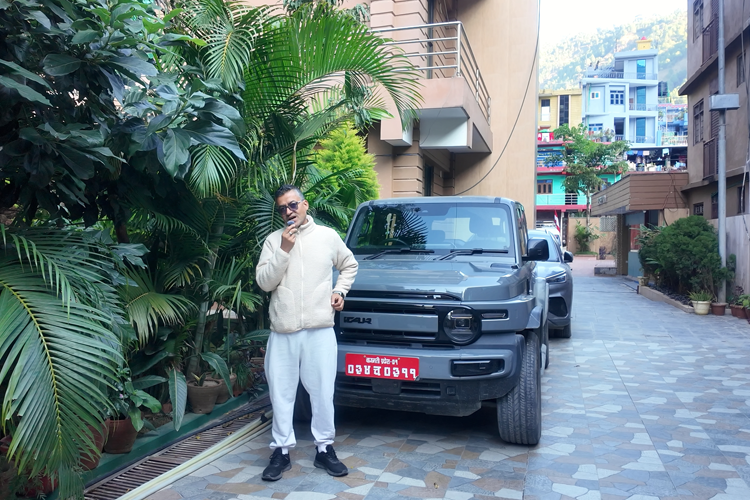
With that in mind, I decided to set out on a journey of about 1,400 kilometers in the iCAUR V23 during the Tihar holidays. I needed a companion, so I asked my wife. She agreed to come along.
This was not meant to be just a trip in one car. It was a chance to test the condition of our roads, the capability of an electric vehicle, the performance of its battery, and my own confidence as well. By the end, I had found answers to many of my questions.
Some experiences were better than I expected, while in other places we had to deal with a crisis brought on by nature.
Day 1: Kathmandu – Pokhara – Burtibang
The car showed 87 percent charge when we left home in Kathmandu. The first day’s destination was Burtibang in Baglung. The distance from home to Burtibang is about 396 kilometers, so I had planned to top up the charge in Pokhara along the way.
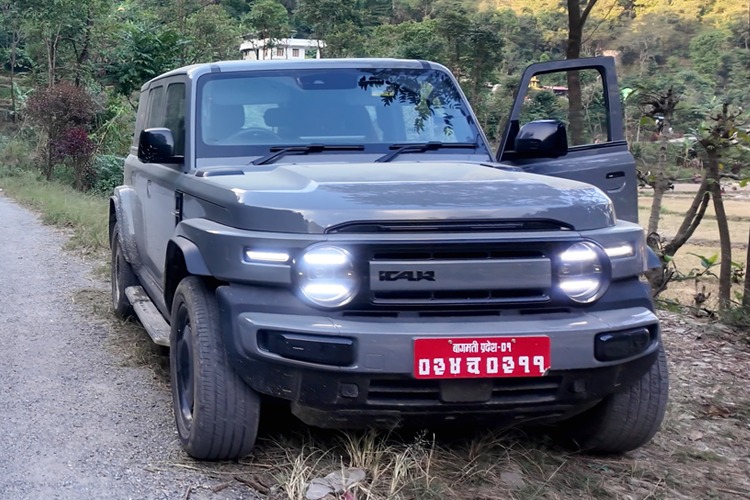
It was the second day of Tihar, a Saturday, and we started at 6 in the morning, so there was hardly any traffic. We left Kathmandu and headed towards Pokhara on the Prithvi Highway, and the start of the trip was very smooth. We reached Pokhara in about five hours.
When we arrived, the car had 41 percent charge left. We put it on charge at Elite Motors, the authorized dealer for Omoda, Jaecoo and iCAUR in Pokhara, and went for lunch. By the time we came back, the car had charged to 98 percent.
Then we started towards Burtibang. The road from Pokhara to Baglung Bazaar was generally fine. Although it was damaged in places, it was in the condition you would normally expect from a mountain highway.
But after Baglung Bazaar, the character of the road changed. The stretch up to Galkot Bazaar was unpaved. Much of it was gravel, but the rain had washed parts of it away and made it worse.
After Galkot, things became a little easier. The Madhya Pahadi Lokmarga was in satisfactory condition until about 2 kilometers before Burtibang Bazaar.
We reached Burtibang at 5:30 in the evening, with a feeling that the first day’s journey had been completed successfully. We ended the day at Hotel Durbar. From Pokhara to Burtibang, the iCAUR V23 had used 61 percent of its battery.
Day 2: Skipping the Dhorpatan road in the iCAUR, and why it was the right call
On the second morning, I put the car on charge at Hotel Durbar using a 2.2 kW travel charger. The day’s destination was Dhorpatan, but we decided not to make that trip in the iCAUR. Instead, we went towards Dhorpatan in a Mahindra Bolero Camper.
I was clear that an EV should not be forced onto every kind of road. That is why I decided not to take the risk of testing the car’s limits where the infrastructure wasn’t ready.
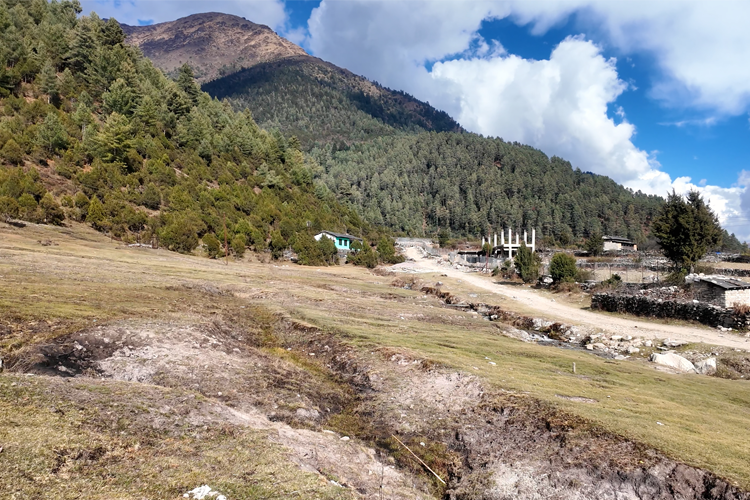
When we reached the upper parts of Dhorpatan, I felt the decision had been the right one.
Day 3: The shortcut that put the iCAUR V23 to the test
On the third day, I decided to experience more mountain roads. The destination was Swargadwari in Pyuthan. Google Maps showed two routes, one via Rolpa and the other via Gulmi. I chose the Gulmi route because it looked shorter.
But friends from Gulmi had advised me not to go to Swargadwari via Tamghas. I ignored their advice and picked the shorter route, not realizing at the time that it would become the most challenging decision of the trip.
I took the car out of Burtibang at 8 in the morning. The road from Indrageunda to Chaldikhola turned out to be in very poor shape. There was dense forest all around, very little traffic, and a badly damaged road.
Driving on it, one question kept coming back to me: what if the tires get cut? What would I do if I got a puncture in the middle of nowhere?
There was no other vehicle with us. There was no chance of finding a workshop or a settlement nearby. On a road like this, even an ordinary puncture would have been a big problem. I was afraid, but turning back was no longer possible either.
Telling myself I would deal with whatever came, I kept going.
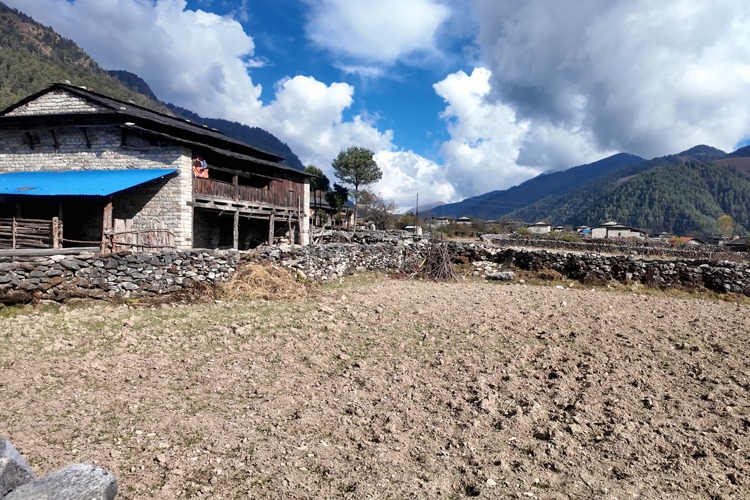
After Chaldikhola, we found blacktop road. Reaching Tamghas brought some relief. It was a festival time, so the market was quiet. Most people were at home and many hotels were closed.
It was 11 in the morning, and one hotel was serving food. After eating, I asked the locals which route to take next.
They suggested two options. The first was via Sandhikharka, which was much longer. The second was from Arkhale through Jaisithok and Bhanbhane to Sautamare. The second route was shorter, but the road was mixed, with blacktop in places, stone-paved sections, and dirt road in others.
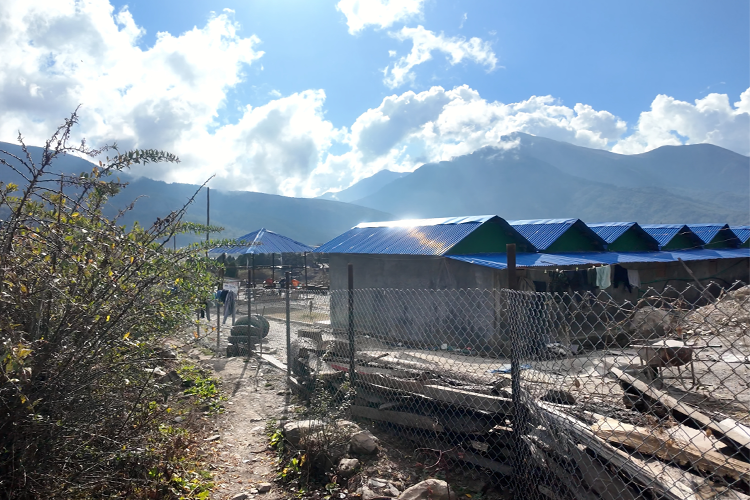
At Sautamare, I had to make another decision. It is the meeting point of three districts: Gulmi, Arghakhanchi and Pyuthan. I stopped at the temporary police post there and asked the police about road conditions.
They said that going via Arghakhanchi would lead to paved roads sooner, while heading towards Pyuthan meant crossing a long dirt road. They also mentioned that a Bolero sometimes comes from the Pyuthan side. They thought my car could make it through.
So I decided to take the Pyuthan route.
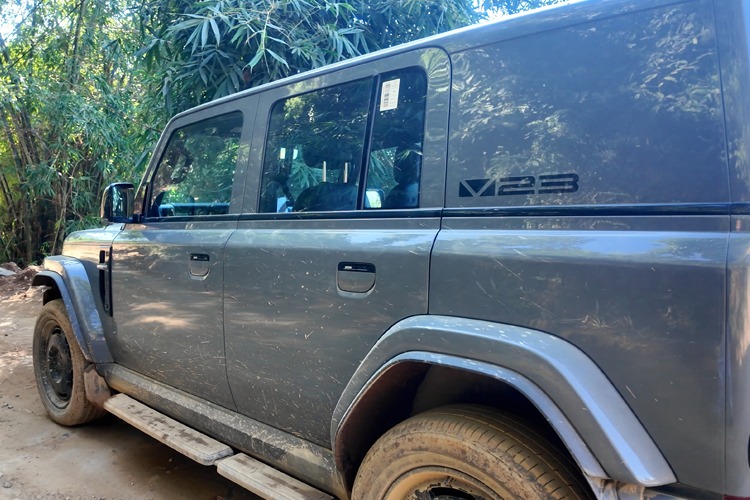
The hardest 42 kilometers: where patience met the iCAUR’s strength
After leaving Sautamare towards Pyuthan, the real test of the iCAUR V23 began. On this road, I came to appreciate the car’s high ground clearance. In some places I had to be very careful crossing rocks and potholes. I also had to use the car’s “slipper mode” again and again.
In places there were piles of stones, in others mud and slush. In some spots the road was so broken that I worried the underside of the car would hit the ground. A distance that would normally be covered easily took a great deal of patience and caution.
Driving the roughly 42 kilometers from Sautamare to Bagdulla felt like one of the hardest road journeys of my life.
Still, there was an interesting side to it. There were no settlements around and we met no other vehicles. In some places, when I stopped and looked outside, there was nothing but empty forest and the winding road.
I had assumed even the mobile network would fail in such a place. But surprisingly, Ncell’s network and data were working perfectly.
Driving on such a deserted road, I felt both fear and excitement. But the car did not let me down. It kept moving forward through the difficult terrain.
When I finished this tough 42-kilometer stretch, the car still had 55 percent charge. Once we reached the paved road, I felt a little lighter. It now seemed possible to reach Swargadwari the same day.
From Bhingri Bazaar, reaching Swargadwari meant a steep climb of about 15 kilometers. At that point the car had around 45 percent charge. We reached Swargadwari at 5 in the evening.
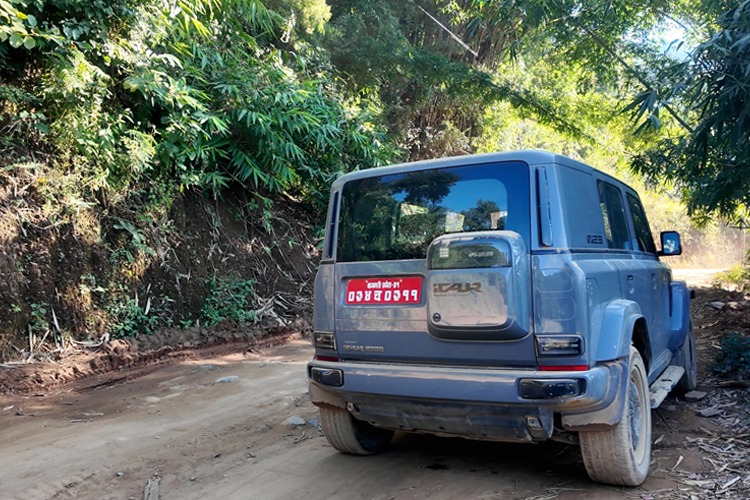
After a day of difficult driving over climbs, descents and damaged roads, arriving at Swargadwari brought a special satisfaction. After spending some time there, I decided to head towards Dang. The car had 30 percent charge left.
On the way down from Swargadwari, regenerative braking added about 4 percent charge. That is one practical benefit of downhill roads on a mountain journey.
But going downhill didn’t solve every problem. I needed to manage the charge before reaching Dang. By the time we reached Banadanda in Pyuthan, the car had 23 percent left. It was clear that we would have to get to Bhaluwang and charge there.
So I changed my original plan of going to Ghorahi. I decided to spend the night at Pauwa Hotel in Bhaluwang and charge the car. That is how the third day’s journey ended. Even now, remembering that day brings two feelings at once: thrill and fear.
But one thing was certain: even on the toughest road, the iCAUR V23 never let me down.
Day 4: Dang’s towns by day, Bhairahawa’s Tihar by night
The fourth day was comparatively easy. I planned to take the family around popular towns in Dang such as Ghorahi, Tulsipur, Deukhuri and Lamahi.
Compared with the difficult road of the previous day, the roads in this region were much smoother: good roads, normal traffic and orderly driving. After visiting different places through the day, we reached Bhairahawa in the evening.
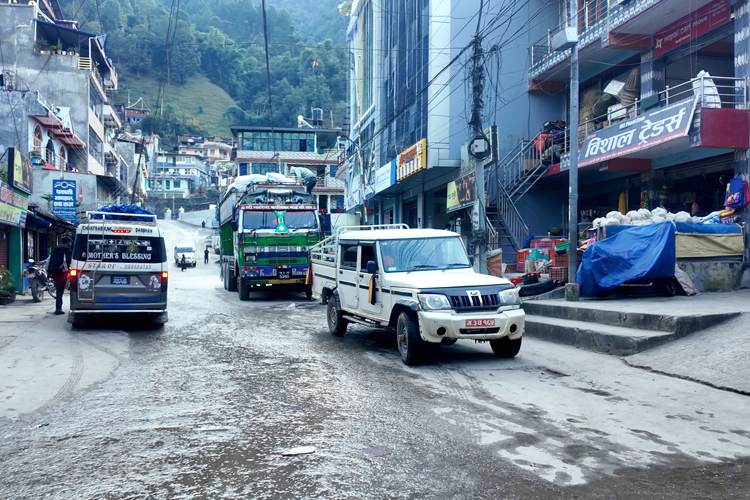
Tihar in Bhairahawa had an atmosphere of its own. The streets and houses of the city were decorated with twinkling lights. The sound of Deusi-Bhailo made the atmosphere even more lively. Compared with the previous day on the empty mountain roads, the bustle here gave the journey fresh energy.
There, I got the chance to spend a few hours at the home of Krishna Prasad Sharma, vice president of the Federation of Nepalese Chambers of Commerce and Industry. The warmth and relationships we found along the way made the long journey even more memorable.
Day 5: Empty roads and a record run back to Kathmandu
The fifth day’s journey was just as interesting. The plan was to return from Bhairahawa to Kathmandu. But a pleasant surprise was waiting: there was very little traffic on the road.
On most sections of the road from Bhairahawa towards Narayangadh, we could drive at 80 kilometers per hour. Since the road was empty, I was able to use cruise control. It was the first time I had driven such a long distance with the help of cruise control.
We reached Narayangadh in about 1 hour 31 minutes. From there, it took another 30 minutes to reach Mugling.
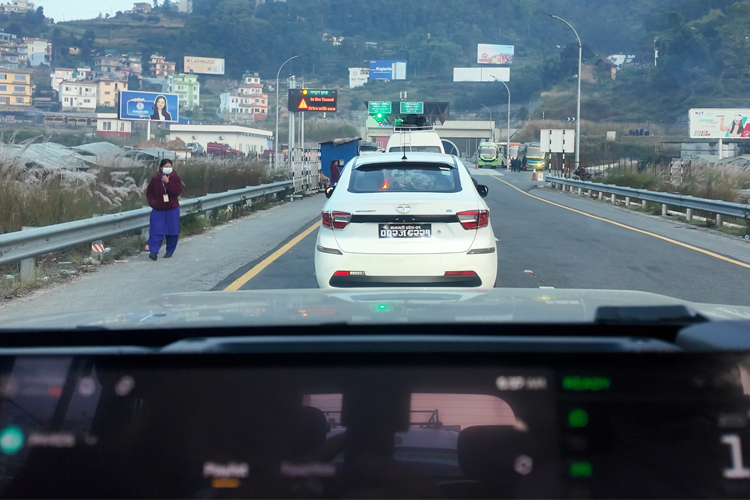
The roughly 110 kilometers from Mugling to Kathmandu was also covered in two and a half hours because the road was clear. In total, it took just 4 hours 30 minutes to get from Bhairahawa to Kathmandu.
Covering the distance from Bhairahawa to Kathmandu in such a short time was a new experience for me. The good, high-speed road from Bhairahawa to Narayangadh, and the light traffic from Narayangadh to Kathmandu, made the journey smooth.
Beyond the distance: what this trip left me with
Driving about 1,400 kilometers over mountain and Terai roads in the iCAUR V23 over these five days taught me a lot, not just about the car but also about our road infrastructure and the reality of travel.
On a single trip, we experienced very different kinds of roads. There were wide roads where you could drive at high speed, ordinary mountain highways, and badly damaged dirt tracks where you’d think twice before taking a vehicle.
When driving an electric vehicle across such variety, it is not only the car’s capability that matters. The driver’s judgment and preparation matter just as much.
I learned that the journey can be very enjoyable if you manage the battery well, plan your charging, and estimate the road conditions and distances between destinations correctly.
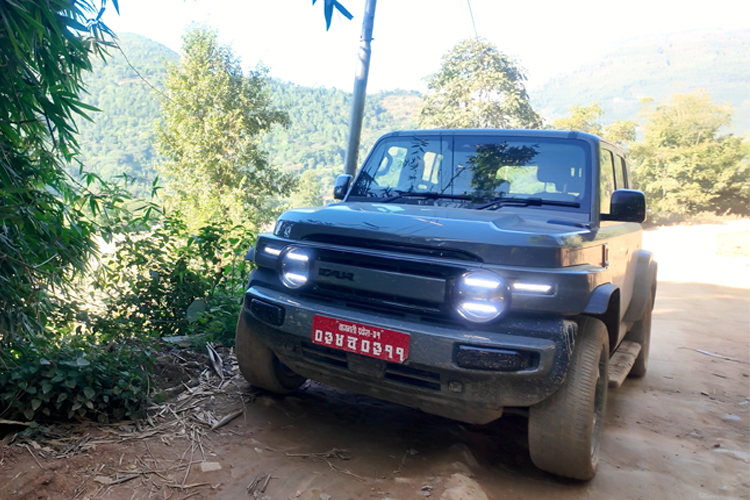
I also got to experience up close the usefulness of good ground clearance, good control on difficult roads, and regenerative braking on descents.
On this trip, there were places where I felt afraid and places where I felt disappointed on seeing the road. At some turns I kept worrying about the tires and the underside of the car.
But in the middle of those difficulties, the joy of reaching new places, the satisfaction of climbing to Swargadwari, Tihar in Bhairahawa, and the easy highway drive on the last day made the experience unforgettable.
When I returned to Kathmandu, I had just one feeling. The 1,400-kilometer journey in the iCAUR V23 was not merely about covering a distance. It was a chance to get to know myself, the roads and the car in a new way.