I have been driving an electric vehicle (EV) since 2019, when I became one of Nepal’s first MG ZS EV users. Over the years, I have seen both the promises and pitfalls of EV adoption in this country. My recent trip from Kathmandu to Siraha and back through the BP Highway was a reminder that while we have made progress, we are still far from worry-free travel.
On the way to Siraha, everything went smoothly. I charged at Nepalthok, enjoyed a relaxed meal and reached Mirchaiya without trouble. On my return, I charged again at Bardibas and the whole experience felt exactly how EV travel should be—simple, predictable and full of confidence.
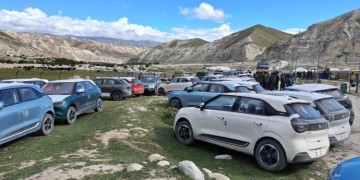
But the next day told a different story. I headed back to Kathmandu, thinking I would repeat the same charging routine at Nepalthok. The attendant there, however, told me: “Voltage might not be enough; too many cars are charging.” We tried to charge anyway, but failed.
The number of charging stations has grown and EV adoption has picked up. But the basics—reliable voltage, universal compatibility and fair access—are still not guaranteed.
With just 85 kilometers of range left, I pushed on to Bhakundebesi and tried again at an MAW charging station. But I encountered the same problem. CG had a lot of charging stations, but they did not have CCS charging guns.
By then, a little fear set in. I turned off the AC, rolled down the windows and drove in “power-save” mode. The uphill stretch to Dhulikhel drained the battery even faster. Luckily, I found a charger between Dhulikhel and Banepa and managed to top up.
Even after all these years, peace of mind remains elusive in Nepal’s EV ecosystem. The number of charging stations has increased, and EV adoption has gained momentum. But the basics—reliable voltage, universal compatibility and fair access—are still not guaranteed. When multiple cars plug in, the voltage drops. We need to find a solution to this problem. Charging stations have increased, but so have the EVs. Therefore, there is no alternative to waiting. However, many stations give priority to commercial vehicles, which bring clients to eateries and shops on their premises, leaving private EV drivers waiting. The charging network has expanded, but its dependability has not caught up.
When I first drove an EV in 2019, I carried constant anxiety: Will I find a charger? Will it work? Will my battery last? I had hoped those worries would fade by now. Instead, they remain largely the same.
(Based on Jha’s post on Electric Vehicle Group-Nepal’s Facebook page. Jha is the founder of the page.)