KATHMANDU: A government study has recommended installing at least 10,000 EV charging stations across Nepal within the next four years, targeting completion by 2030.
The report, titled ‘Opportunities, Challenges and Prospects of EV Promotion in Nepal’, was prepared by the Ministry of Physical Infrastructure and Development. It highlights the need for large-scale charging infrastructure to accelerate electric vehicle adoption.
According to the report, Nepal currently has around 1,000 charging stations in operation. Most of them have been set up by private EV distributors. Major contributors include Vishal Group, Paramount Motors, VG Automobiles, MAW Vriddhi, Cimex Inc., theeGo Pvt. Ltd., and Sasheela Motors.
The Nepal Electricity Authority is operating 62 fast chargers with a capacity of 142 kW. Most charging stations are concentrated in major cities such as Kathmandu, Pokhara, and Bharatpur.
The report identifies several key challenges. These include limited charging infrastructure, high battery cost, weak road infrastructure, and lack of battery recycling and disposal systems.
Other issues include shortage of skilled manpower, limited private sector participation, lack of technical training, and dependence on imported vehicle components. High upfront cost and low resale value of EVs are also noted as barriers.
The report also highlights the limited use of EVs in heavy-duty and cargo transport. Concerns over vehicle quality and shortage of trained drivers remain additional challenges.
Policy gaps have also been identified. These include lack of clear standards, limited focus on battery swapping systems, and insufficient investment in EV-friendly infrastructure and R&D.
The government is promoting EV adoption to increase domestic electricity consumption, especially from hydropower. The upcoming fiscal budget also prioritizes EV promotion.
Energy, Water Resources and Irrigation Minister Biraj Bhakta Shrestha stated that the ministry is working on a planned approach to expand EV usage. The ‘Energy Consumption Growth and Export Strategy 2026’ includes plans to expand charging infrastructure nationwide by FY 2028/29.
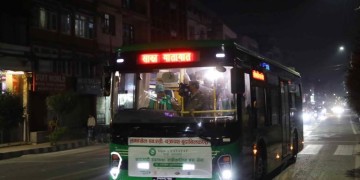
The strategy also aims to install charging stations at fuel stations and prioritize EVs in public transport. The Nepal Electricity Authority has been assigned as the implementing agency. The government also plans to introduce electric buses and trolley buses in major cities to boost internal electricity consumption.