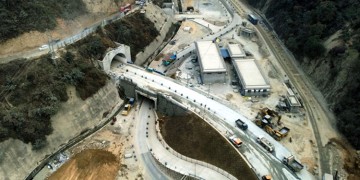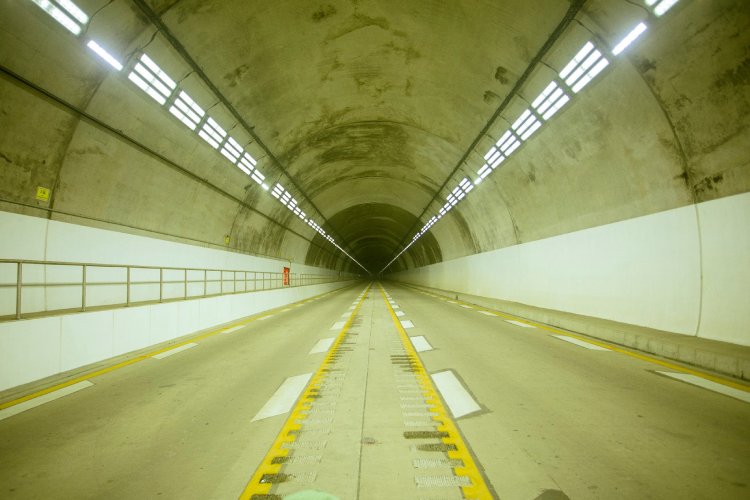
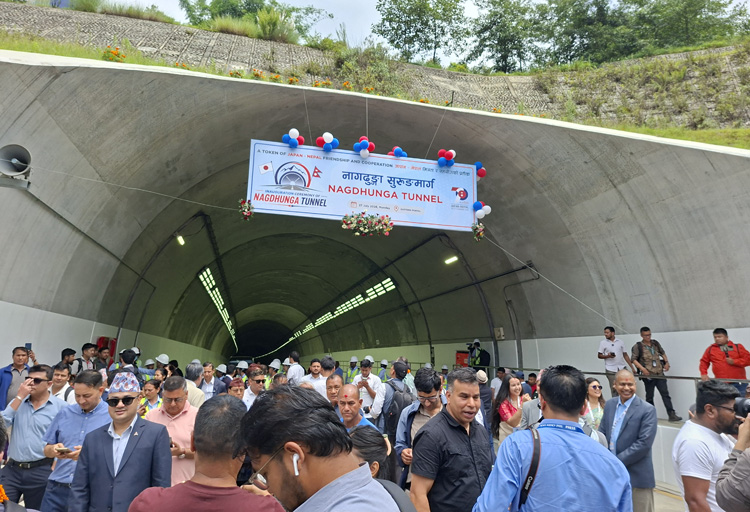
KATHMANDU: Nepal has officially entered the era of modern road tunnels following the opening of the Nagdhunga-Sisnekhola Tunnel, the country’s first modern commercial road tunnel.
While the Churiyamai Tunnel in Makwanpur, built in 1917 during the Rana period, is regarded as Nepal’s first road tunnel, it was not developed as a modern commercial transport corridor. Shorter tunnels built for hydropower projects, including those at Upper Marsyangdi and Upper Tamakoshi, are also used by vehicles but were not designed for public road transport.
The opening of the Nagdhunga tunnel marks a significant milestone in Nepal’s transport infrastructure. According to Gopal Prasad Sigdel, Secretary at the Ministry of Physical Infrastructure and Transport, the project demonstrates that large-scale infrastructure can be delivered even in Nepal’s challenging terrain through political commitment and technical cooperation.
The ministry is currently overseeing eight road tunnel projects under construction, while feasibility studies, DPR preparation and environmental assessments are underway for more than a dozen additional tunnel proposals. The government has allocated Rs 670.1 million for tunnel-related projects in the current fiscal year.
Siddhababa Tunnel nears completion
The Siddhababa Tunnel on the Siddhartha Highway is expected to become Nepal’s second operational modern road tunnel by October 2026.
According to project chief Navaraj Bastola, around 70 percent of the overall project has been completed. The 1,126-meter tunnel has already finished excavation, lining and invert works.
Installation of ventilation systems, lighting, communication equipment and other electrical components remains pending. Bastola said the equipment has been delayed due to monsoon-related shipping disruptions from China but is expected to arrive within the next few weeks.
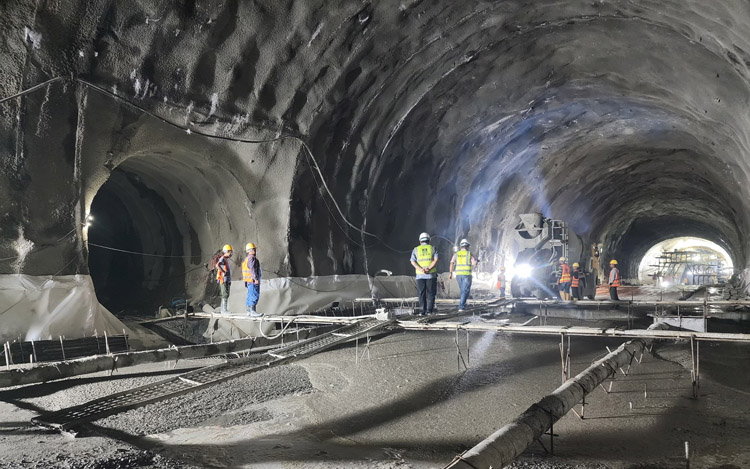
Once operational, traffic will be diverted through the tunnel before work continues on the existing hillside road, including slope protection, rock sheds and bypass sections.
The project is being constructed by China State Construction Engineering Corporation under a contract worth Rs 7.34 billion. The contractor will also operate and maintain the tunnel for five years after completion.
Seven Tunnels under construction on fast track
The Kathmandu-Tarai/Madhesh Fast Track, one of Nepal’s national pride projects, includes seven twin-tube tunnels with a combined one-way length of 11.21 km, accounting for around 15.5 percent of the 70.8-km expressway.
Originally designed with three tunnels, the project was later revised to include four additional tunnels after geological assessments found tunneling to be more practical than hillside road construction.
According to the Nepal Army, which is implementing the project, excavation is progressing across all tunnel sections.
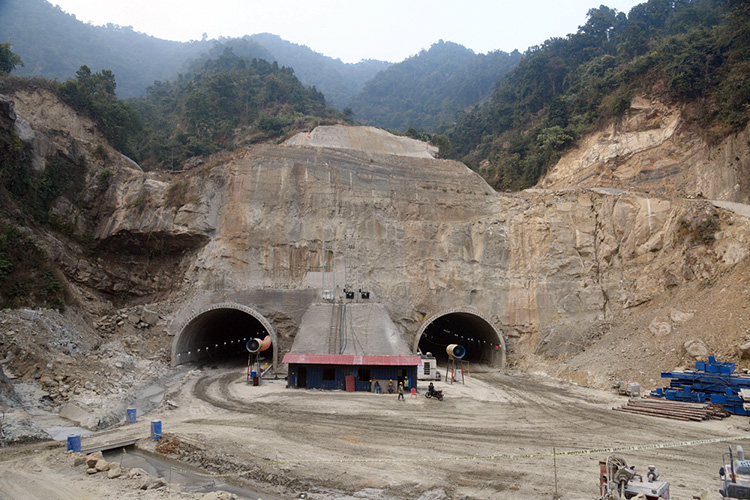
Lendada Tunnel
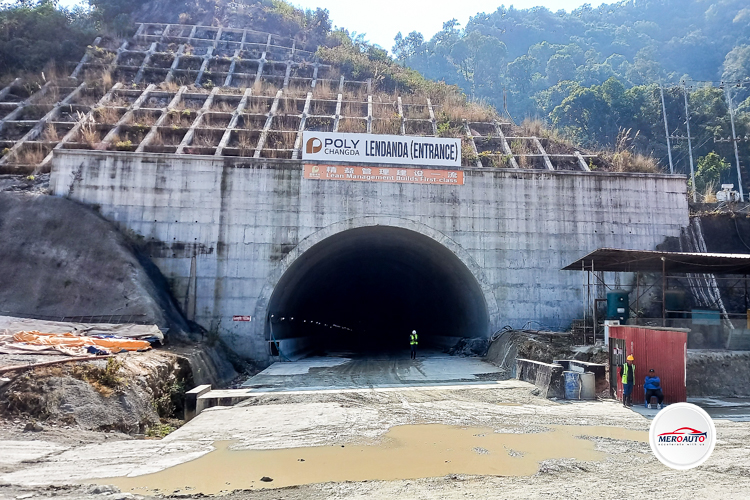
The Lendada Tunnel became the first tunnel on the expressway to achieve breakthrough in 2024. Secondary lining has already been completed, and preparations are underway for installation of tunnel equipment.
Dhedre Tunnel
The 1,690-metre Dhedre Tunnel achieved breakthrough in 2024. Secondary lining is now nearing completion on both tubes before electrical and mechanical systems are installed.
The contracts for the Lendanda and Dhedre tunnels were awarded to Poly Changda Engineering Co. Ltd. for Rs 28.53 billion.
Mahadevtar Tunnel
The Mahadevtar Tunnel, which will become Nepal’s longest road tunnel, is about 89 percent excavated. Excavation and concrete lining are progressing simultaneously, with breakthrough expected soon.
The tunnel is being built by China State Construction Engineering Corporation under a contract worth Rs 21.61 billion.
Chandram Bhir Tunnel
Excavation at the Chandram Bhir Tunnel, the second-longest on the expressway, has reached around 26.5 percent. Secondary lining has also begun on completed sections.
Devichaur Tunnel
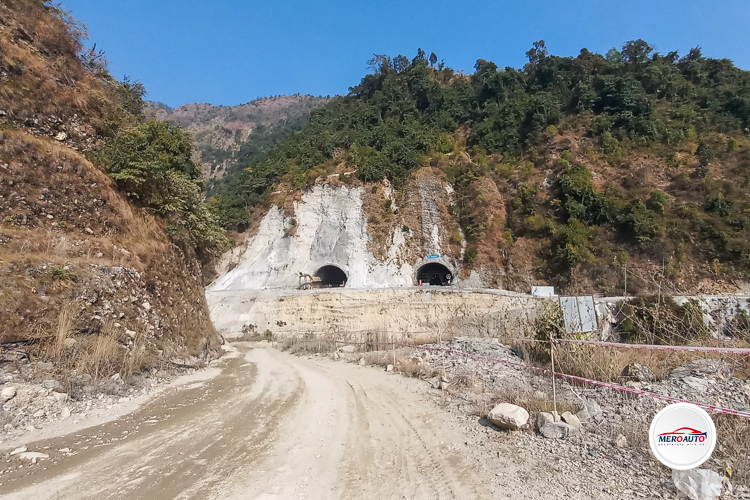
Work on the Devichaur Tunnel, added after the project redesign, began only a few months ago. Around 7 percent of excavation has been completed, while portal construction continues on the second tube.
Sisautar Tunnel
Excavation has started on one tube of the Sisautar Tunnel, the shortest tunnel on the expressway, while portal works continue on the other side.
Mahuribhir Tunnel
Construction at the Mahuribhir Tunnel is currently limited to portal works. Full excavation is expected to begin after portal construction is completed.
Fast track still several years away
Despite steady progress on tunnel construction, the Fast Track itself remains several years from completion. The tunnels cannot be opened independently until the entire expressway is operational.
Construction of the expressway began in 2017, and overall physical progress has reached 48.72 percent. The government has spent approximately Rs 92.68 billion on the project so far.