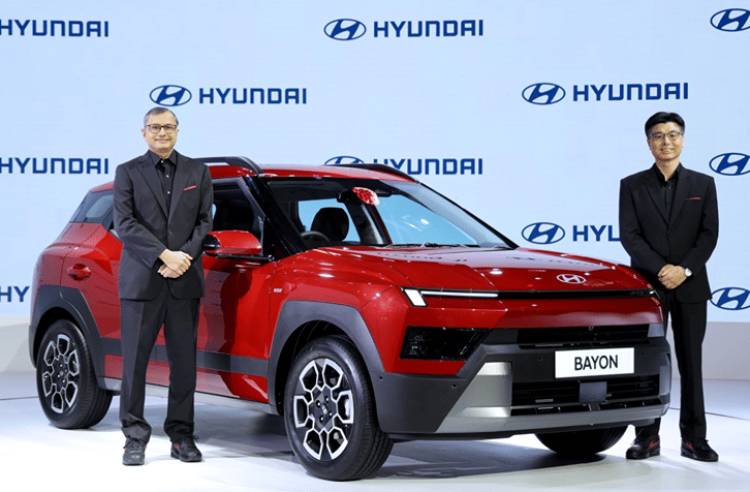
KATHMANDU: Hyundai has launched the new Bayon SUV in India at an introductory ex-showroom price of 999,000 Indian rupees. The new model sits below the Creta in Hyundai’s SUV lineup and will also be exported to international markets.
The Bayon will be manufactured in India for both domestic and international markets. It will be available in left-hand-drive (LHD) and right-hand-drive (RHD) versions.
The SUV is offered in seven variants: HX2, HX3, HX3+, HX5, HX6, HX8 and HX10. Prices go up to 1.6 million Indian rupees, depending on the variant. Automatic transmission options are available from the HX5 variant.
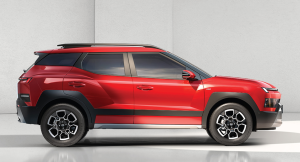
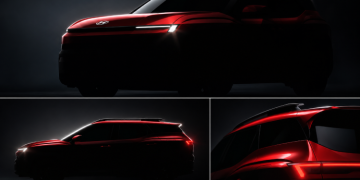
The Bayon follows Hyundai’s ‘Art of Steel’ design language, with sharp body lines, wide wheel arches and black body cladding. It gets LED projector headlights and L-shaped daytime running lights at the front.
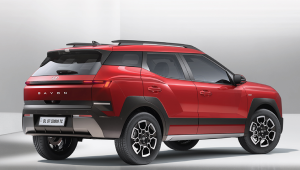
The side profile features 17-inch alloy wheels and traditional door handles. At the rear, the SUV gets LED tail-lamps, BAYON lettering on the tailgate and a roof spoiler.
The Bayon measures 4,245 mm in length, 1,810 mm in width and 1,605 mm in height. It has a wheelbase of 2,600 mm, ground clearance of 205 mm and boot space of 505 liters.
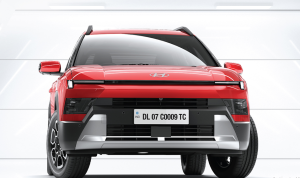
Color options include Fiery Red, Classy Blue, Atlas White, Titanium Black, Golden Bronze and Ecotronic Grey. Selected colors are also available with a matte finish, while red and white options can be paired with a black roof.
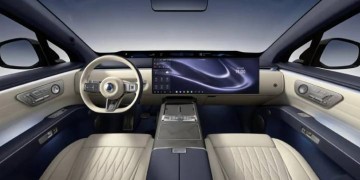
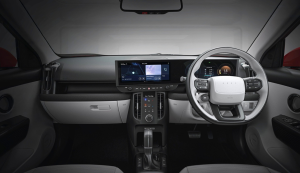
Inside, the Bayon gets two 12.3-inch screens for the digital instrument cluster and infotainment system. The dashboard also has physical buttons and dials for easier access to key functions.
Features include ventilated front seats, a powered driver’s seat, a panoramic sunroof, wireless phone charging, Type-C USB ports and ambient lighting. It also gets a Bose sound system, reclining rear seats, rear AC vents and an electronic parking brake with auto hold.
The infotainment system supports wireless Android Auto and Apple CarPlay. Other features include Hyundai Bluelink connected services, over-the-air updates and a generative AI voice assistant. Hyundai has also included technology from Nvidia, Perplexity and SoundHound AI.
The SUV is powered by a 1.5-litre naturally aspirated petrol engine that produces 115 hp and 144 Nm of torque. Buyers can choose between a six-speed manual gearbox and a CVT automatic transmission. Hyundai claims a fuel efficiency of 18.6 km/l for the CVT version under ARAI testing standards.
The Bayon also gets a Dash Boost mode, which is designed to provide extra power during overtaking.
A factory-fitted CNG version is planned for January 2027. Hyundai has not announced turbo-petrol or diesel options for the SUV.
In terms of safety, the Bayon gets six airbags and Level 2 advanced driver assistance systems (ADAS) with 23 functions. Other features include a 360-degree camera, disc brakes on all four wheels, electronic stability control, hill-start assist and a tyre-pressure monitoring system.
The SUV is built on Hyundai’s Global K enhanced platform. The company says the vehicle has been developed to meet five-star Bharat NCAP safety standards. Official crash-test results are expected by the end of 2026.
According to Hyundai, high-strength steel makes up 69% of the Bayon’s body structure. In the Indian market, the Hyundai Bayon will compete with models such as the Kia Seltos, Tata Sierra, Honda Elevate, Skoda Kushaq, Volkswagen Taigun and MG Astor. It will also rival the Maruti Suzuki Grand Vitara and Victoris.
The Hyundai Bayon is also expected to arrive in Nepal following its launch in India. Laxmi Intercontinental, the authorized distributor of Hyundai vehicles in Nepal, is expected to introduce the new SUV to the local market.
However, the company has yet to announce an official launch date for Nepal.