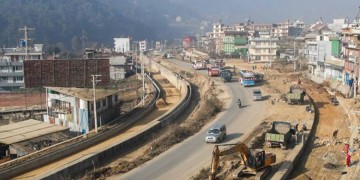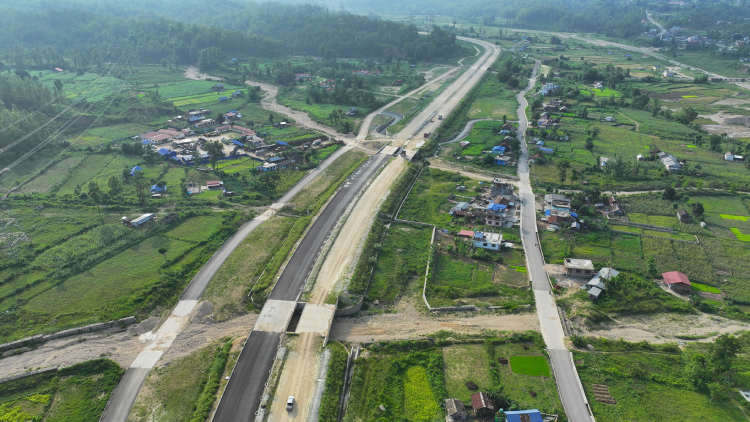
KATHMANDU: Only half of the construction work on the Kathmandu-Terai/Madhesh Fast Track, a national pride project, has been completed in nine years.
The project, which was inaugurated on May 28, 2017, had achieved 50.54% physical progress by the end of October 17, 2026 in the current fiscal year.
The project was initially planned for completion within four years. However, delays in contract management, land acquisition and compensation, disputes with local residents, difficulties in tree clearance, and repeated revisions to the Detailed Project Report (DPR) have slowed construction.
The 70.977-km expressway was handed over to the Nepal Army for management through a Cabinet decision on May 4, 2017. The Army began awarding construction contracts in 2021.
Nepal Army Information Officer Brigadier General Rajaram Basnet said the project had achieved 50.54% physical progress and 52% financial progress by the end of October 17, 2026.
The expressway has been divided into 13 packages. Contracts have been awarded for 12 packages, and construction is progressing in all of them. Package 11, covering the Khokana-Dukuchhap section, remains pending due to unresolved land acquisition issues and decisions regarding traffic movement at the starting point.
Construction work across the contracted sections includes bridges, tunnels, roadways, interchanges, toll plazas, slope protection, box culverts, optical fiber ducts, and electrification ducts.
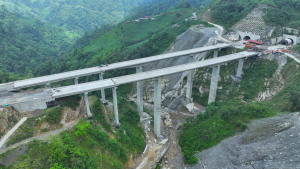
17 bridges completed, one kilometer of main road black-topped
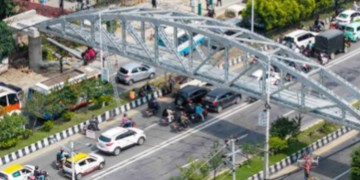
The expressway includes 89 bridges with a combined length of 12.885 km. Some bridges reach heights of up to 81 meters. According to Basnet, contracts have been awarded for 85 of the 89 bridges. The four bridges in the Khokana section remain pending due to land disputes.
Of the 85 contracted bridges, 17 had been completed by the end of October 17, 2026. Foundation work has been completed on 57 bridges, while the substructure of 40 bridges has been completed.
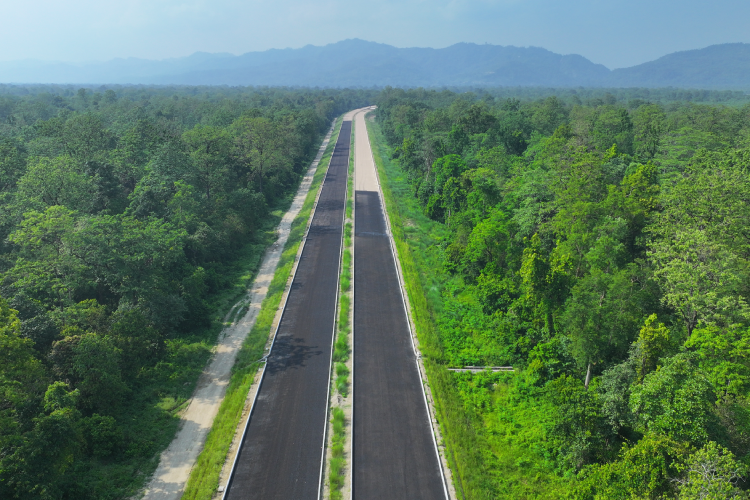
Blacktopping has also started on the expressway. One kilometer of the main road in Package 3, at Rajdammar in Makwanpur, has been blacktopped. An additional seven kilometers of service lanes in the same area have also been paved.
A total of 11.02 km of road in Packages 3 and 5, covering Rajdammar and Nijgadh, has received the sub-base layer. The base layer has been laid on 5.8 km.
The expressway will have a width of 25 meters in hilly areas and 27 meters in the Terai. An animal underpass has been completed in the Nijgadh area of Bara. Construction of toll plazas and interchanges is also underway.
The project includes two rest areas at Budhune, along with one interchange and one toll plaza each at Khokana, Budhune, and Nijgadh.

Three tunnels break through
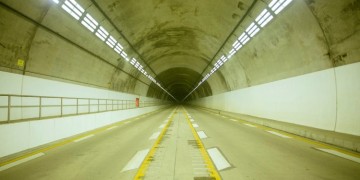
The Fast Track includes seven tunnels with a combined length of 11.210 km. Separate tunnels have been designed for incoming and outgoing traffic.
So far, three tunnel bores have achieved breakthrough: two bidirectional tunnel sections and one unidirectional section.
According to Basnet, the 1,622-meter Len Danda tunnel and the 1,690-meter Dhedre tunnel have achieved breakthrough. Secondary lining work in both tunnels has also been completed.
The Mahadevtar tunnel, the longest on the expressway, has achieved breakthrough on its 3,486-meter left-side bore. Excavation has reached 3,297 meters on the right-side bore and 3,343 meters of the 3,422-meter left-side bore. Lining work is progressing alongside excavation.
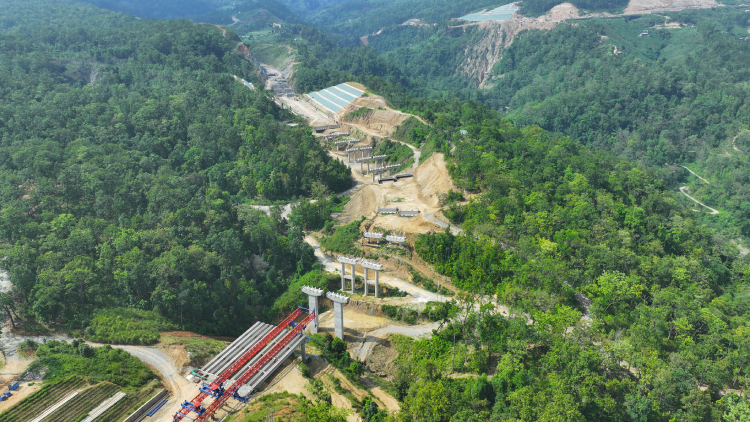
Of the 2,250-meter Chandram Bhir tunnel, 847.7 meters have been excavated. Excavation has reached 153.6 meters of the 1,087-meter Daibichaur tunnel and 64.4 meters of the 520-meter Sisautar tunnel.
Preparatory work for the portal of the 583-meter Mauri Bhir tunnel is underway.
The project has spent approximately Rs 95.17 billion so far, including mobilization advances. Its estimated total cost is Rs 211.93 billion, making it the largest ongoing infrastructure project in Nepal in terms of budget.
Starting point dispute remains unresolved
While construction is progressing in other sections, the starting point of the expressway remains unsettled. The current DPR identifies Khokana as the starting point. However, disputes over land acquisition and compensation, along with opposition from local residents, have prevented construction from moving forward in the area.
On February 17, 2026, then-Prime Minister Sushila Karki directed the authorities to explore alternative plans after the dispute remained unresolved.
In March 2024, professors from Pulchowk Engineering Campus and a technical team from the Department of Roads had submitted a report proposing three alternatives for the expressway’s starting point.
The first option proposed making Dukuchhap the starting point and using the right bank of the Bagmati River. The second suggested starting from Bungamati and constructing a four-lane corridor road. The third proposed building a bridge over the Bagmati River while avoiding the Sikali Ghat area.
However, the DPR has yet to be revised and approved. Basnet said the Nepal Army had prepared a revised DPR incorporating different alternatives for the starting point and submitted it to the Ministry of Defence. The proposal has not yet received approval.
“We have submitted the DPR for revision with the alternatives suggested by professors from Pulchowk Engineering Campus and the technical team from the Department of Roads,” he said. “We have not yet received information about a decision.”
He added that the contract process for the Khokana section would move forward once the revised DPR receives Cabinet approval.
Deadline extended by three more years
After two previous extensions failed to bring the project to completion, the government has granted a third extension. A Cabinet meeting on August 5, 2026, extended the deadline by three years, until mid-April 2029.
When the Nepal Army was assigned responsibility for managing the project, the initial deadline was set for four years, until August 2022. As the work remained incomplete, the deadline was first extended to December 2024 and later to the end of March 2027.
The Fast Track is considered a potential game changer for Nepal’s economic development. Once completed, it is expected to reduce travel time between Kathmandu and the Terai to around one hour.
The project is also expected to save more than Rs 50 billion annually through lower transportation and fuel costs.