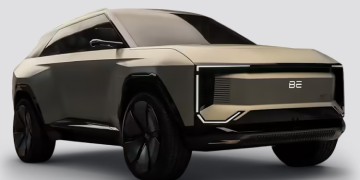
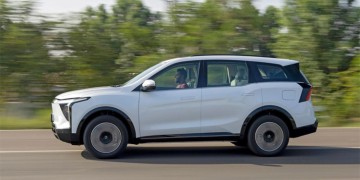
Indian automotive giant Mahindra showcased its newest line of electric vehicles (EVs) at the NAIMA Nepal Mobility Expo, signaling a stronger push into Nepal’s evolving EV market. In an interview with MeroAuto, Sachin Arolkar, Head of Mahindra’s International Operations, Automotive Division, discussed the company’s roadmap for Nepal, its approach to competing in a price-sensitive market, the challenge posed by Chinese brands and what lies ahead for Mahindra customers in the country. Excerpts:
Mahindra climbed to the second spot in car sales in India last month. However, its share in Nepal’s passenger vehicle market remains limited. From your perspective, what are the main reasons for this gap?
In terms of our presence in Nepal, we have been here for the last 35 years now, both in the pickup and SUV segments, which is what we primarily focus on. In pickups, we have a very sizable market share and I would say we are the preferred pickup brand in Nepal.
In terms of SUVs, we have been present primarily with the Scorpio. In that segment as well, our presence is notable. However, in recent years, Nepal has moved significantly towards EVs, and that is where we are now ready to venture.
We are introducing our EV lineup, starting with the BE6 and XEV, and bringing in the same products we recently launched in India. We will also introduce a compact SUV, typically the volume driver in most markets, in Nepal. This will help fill the gap in our portfolio and strengthen our presence in the Nepali market.
For many customers, this segment represents their first car purchase, so it is a critical price point. We acknowledge that EV penetration in Nepal has been significant, and that has been a gap in our offerings. With our upcoming EV launches, we aim to be in the top three in the electric vehicle segment as well. With the right products and approach, we hope to close this gap soon.

How does Mahindra plan to compete with Chinese brands which have already gained a strong foothold in Nepal?
The EV space in Nepal has many players—so many that it is difficult to count all the brands. However, we believe we have the right to win, in terms of styling, technology, features and the overall driving experience. What sets Mahindra apart is our legacy. Our 35-year presence in Nepal has helped us build a strong after-sales and service infrastructure across the country. Starting with pickups that reach the remotest corners of Nepal, we have developed a unique ability to support customers nationwide.
This infrastructure and experience give us a new dimension in terms of ownership experience. Second is the trust factor.
Mahindra has been here for decades and will continue to be here. This trust is critical when it comes to vehicle ownership and long-term support. We are not just offering products, but a complete customer experience built on Mahindra’s engineering, service and legacy. These elements are unique to Mahindra.
Nepal is considered a highly price-sensitive market. What is stopping Mahindra from gaining ground in the SUV segment?
We absolutely understand that pricing is a critical factor for customers. We will price our products in a way that is attractive and competitive. However, pricing is just one part of the total value proposition. We aim to offer a complete ownership experience that includes reliability, resale value, and service and product quality. We will not compromise on value for short-term discounts.
Mahindra e2o did very well in Nepal and still has good resale value, even though it has discontinued. Do you have plans to bring it back?
Interestingly, on my way from the airport, I was in a Scorpio and saw an e2o ahead of me. You are right, it still runs well and holds value. But now, we want to offer something more relevant for today’s buyers.

That is where our born electric platform—BEV—comes in. Between our BE and XEV electric lineups, we will offer the right mix of design, features, technology and driving experience.
The XUV400 EV did not perform well in Nepal. Why do you think that happened?
The XUV400 entered the market at a time when things were changing rapidly. We could not follow it up with quick or additional launches. That is something we have learned from. Now, we are working with a proper product launch calendar, just like in India. We will continue introducing new variants regularly to keep the lineup fresh and relevant. You will see a more consistent flow of new products going forward.
Mahindra recently announced a lifetime EV warranty in India. Will this apply in Nepal too?
We tailor our offerings to suit local relevance in global markets. So, while some features may be available in India, they may or may not be applicable in Nepal. However, we will always offer competitive and relevant after-sales support for Nepal as well.
Do you have any plans for dedicated EV service centers across Nepal?
We will have a dedicated EV service center in Kathmandu. While we may not have separate workshops in major towns, we will have facilities equipped to handle EV servicing and spare parts. All major towns will be covered.
Given Nepal’s price-sensitive market and the heavy discounts offered by Chinese brands, how does Mahindra plan to stay competitive?
We will launch our products at a very attractive price point. But we also want to emphasize that it is not only about pricing. We want to deliver a complete ownership experience. We have seen that excessive discounting can backfire. Customers start waiting for better deals, and existing buyers feel left out. We want to avoid that. Instead, we will offer a strong value proposition and a sustainable pricing approach.
Nepal’s passenger vehicle market is dominated by Chinese EVs with aggressive pricing and features. How will Mahindra compete in such a market?
We are bringing in a very well-packaged compact SUV, Mahindra 3XO, that addresses what compact SUV buyers really want: trendy design, elevated driving stance, performance and safety. Most customers in this segment are first-time four-wheeler buyers, and 3XO delivers on all fronts. It has five-star Bharat NCAP and G-NCAP safety ratings, outstanding performance and excellent design.

We have already seen success with this model in competitive markets like South Africa and Australia, where it gained significant market share within months. So, even though Nepal is EV-focused, the compact SUV segment still has strong potential.
Mahindra has done very well in India with lifestyle vehicles like the Thar. Why is Thar still not available in Nepal?
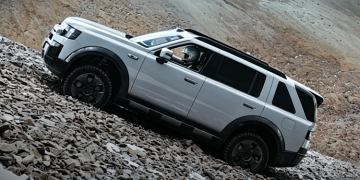
As of now, we do not have plans to bring the Thar to Nepal. However, we do have other vehicles in the pipeline. We have already unveiled the electric Thar concept in South Africa. But it is not just an EV, we are also working on an ICE version.
There is something coming in that space, and it is under development.
Mahindra is doing well in the commercial vehicle segment too, especially in the three-ton category. Any updates?
Yes, we are performing very well in the light commercial vehicle segment, especially in the three-ton category. That remains a strong area for us.
Mahindra recently acquired a sizable stake in SML Isuzu. Can you share anything about that?
We already have our own trucks, and while SML is a part of the picture, we will unveil specific product plans related to that at the right time.