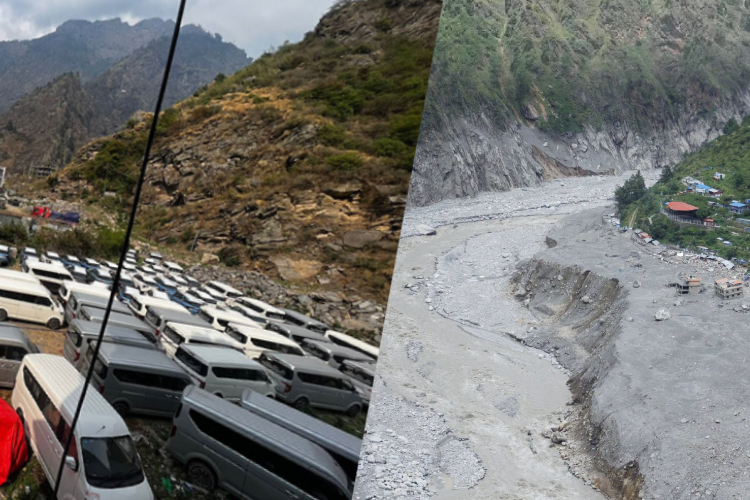
KATHMANDU: For the second year in a row, Rasuwagadhi, Nepal’s biggest trade point with China, has been hit by a massive natural disaster. A severe flood in the Bhotekoshi River has wrecked towns, roads, bridges, customs offices, and hydropower plants with a combined capacity of around 450 megawatts, spread across nearly 70 kilometers along the riverbank.
The damage is not limited to Nepal’s side. The port on the Chinese side has also been destroyed. Thousands of people are still missing. The death toll and number of missing keep rising each day. Even 25 days after the disaster, the human cost keeps growing.
Initial estimates put the economic damage at more than 725 billion rupees. Amid all this, one issue deserves special attention: hundreds of vehicles parked at the customs yard were swept away by the flood.
This raises a serious question is Rasuwagadhi really a reliable trade point with China, or is it a high-risk “concentrated storage zone”?
Last year, on 26 August, a flood at the Rasuwagadhi customs area swept away new electric vehicles, trucks, and containers. The damage was not limited to the auto business alone, it hit the broader economy too.
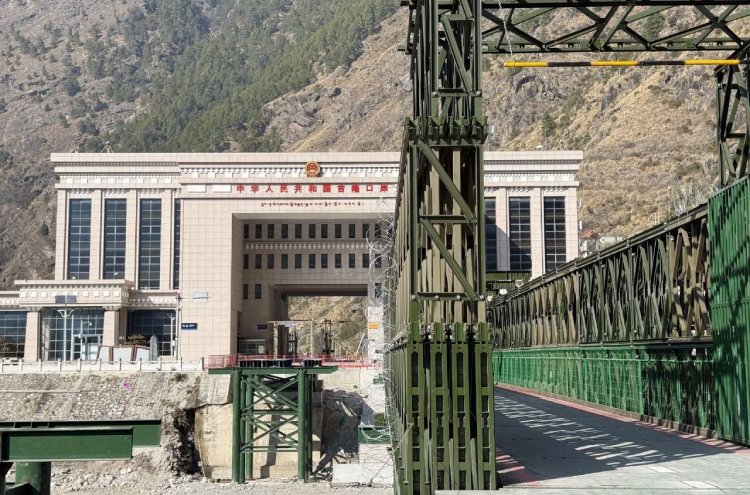
Same mistake, repeated
Last year’s flood had already shown how much financial risk a natural disaster in Rasuwagadhi can create for the auto business. But neither the government nor businesses learned from it. Vehicles kept piling up by the hundreds in a place with no proper parking system. The government, too, kept holding vehicles there instead of sending them on to their destinations.
Early reports from this year’s flood show hundreds of vehicles at the Rasuwagadhi customs area have again been swept away. With two major auto shows running in the country and strong vehicle bookings, festival-season vehicles had been arriving steadily. So far, damage has been reported to 315 vehicles, with insurance claims already reaching 1.55 billion rupees.
Brands like BYD, MG, BAIC, iCAUR, JAECOO, and NAMMI are among those with the most losses. Electric light commercial vans, which are also imported through Rasuwagadhi, have suffered heavy damage too. Cargo containers, trucks, buses, and a large number of private cars are among the losses as well.
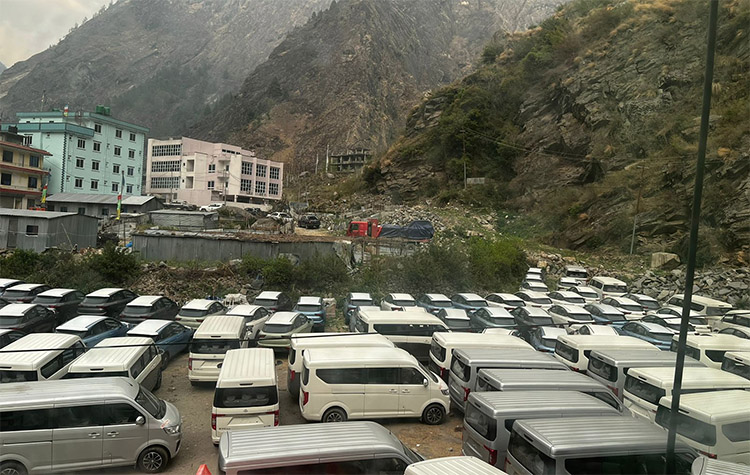
How big a blow to the auto business?
The number of vehicles entering Nepal through Rasuwagadhi has grown significantly in recent years. With rising imports of Chinese electric vehicles, this border point has become even more important for the auto trade.
Considered a relatively easy route for importing vehicles from China, Rasuwagadhi has seen long vehicle holdups for years now. Hundreds of vehicles have been piling up near the riverbank, waiting for customs clearance, paperwork, inspection, and transport.
This latest destructive flood appears to have hit importers, dealers, banks and finance companies, insurance companies, and even government revenue, all at once.
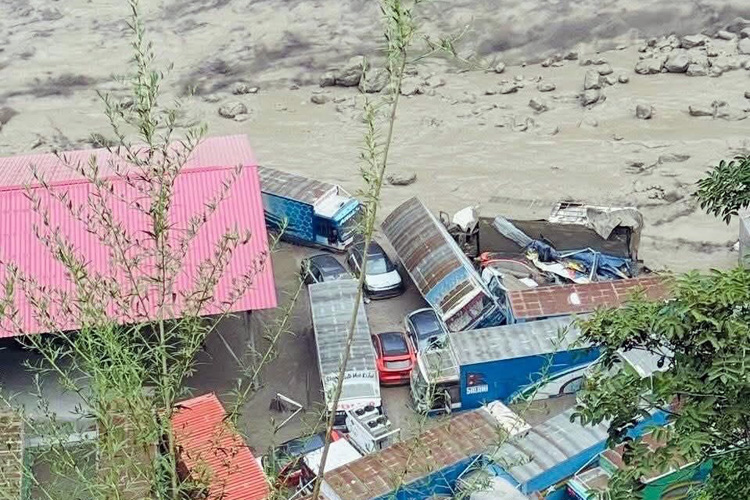
A risk that keeps repeating
From a business standpoint, the most serious concern is that a major loss has struck the same area again, in less than a year. After last year’s flood, many questions were raised about the geographical risk at Rasuwagadhi. But no major changes were made to how vehicles and other goods were imported. So once again, a large number of vehicles piled up in the same area, and once again, disaster came and swept them away.
This year’s flood did not stop at Rasuwagadhi either. Its destruction reached as far as Mugling. With roads and bridges damaged, transport was disrupted, causing stock holdups, demurrage, interest costs, delivery delays, and even shortages of new vehicles in the market.
Rasuwagadhi and risk management
Shutting down Rasuwagadhi and looking for an alternative route is not a practical solution. It holds major strategic importance for trade with China and isn’t a border point that opened only in recent years, trade with Tibet has long passed through here. But the system of keeping hundreds of vehicles in one place for long periods clearly needs to be rethought.
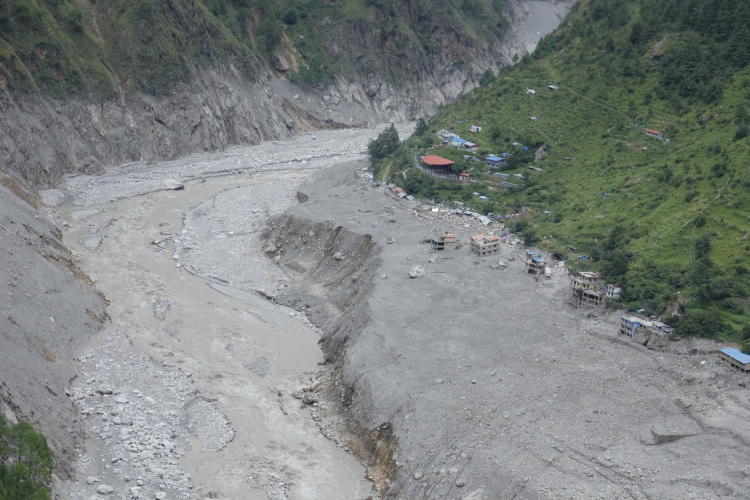
The government and businesses now need to find new ways to operate this border point. The first step should be assessing the risk at the customs yard and creating a system where vehicles are moved directly to Chobhar instead of being stacked up near the riverbank.
Right now, all three trade points with China, Korala, Rasuwagadhi, and Tatopani, sit in risk-prone locations. Using the Kathmandu customs yard for vehicles and other imported goods, wherever possible, could help reduce this risk.
What should the auto market learn?
The repeated incidents at Rasuwagadhi carry an important lesson: a cheap, short import route alone is not enough for business, a safe and sustainable supply chain matters just as much.
Nepal’s Chinese EV market is expanding fast, and with it, the strategic importance of border points like Rasuwagadhi will only grow. But a business that ignores natural risk can suffer huge losses. Everyone involved needs to stay alert to that.