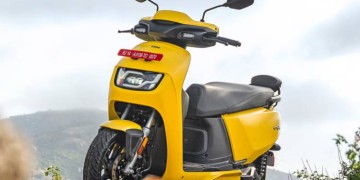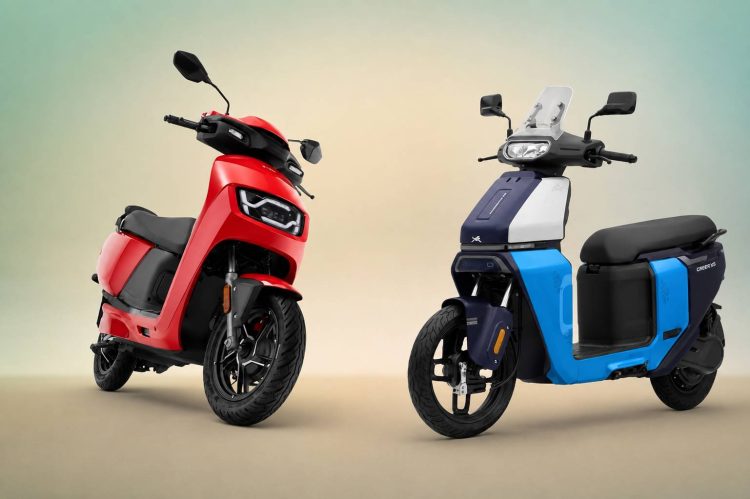
KATHMANDU: The Nepali electric scooter market is expanding rapidly, with Indian brands continuing to introduce new models. The latest additions are the TVS Orbiter V2, launched by Jagdamba Motors, and the Hero VIDA VX2, introduced by CG Motors.
The Orbiter V2 is TVS’ second electric scooter in Nepal after the iQube, while the VIDA VX2 marks Hero’s first international electric scooter to enter the Nepali market.
Both scooters are designed for daily commuting, comfortable riding, and modern connectivity. However, they differ significantly in design, performance, battery options, range, and features.
Design and comfort
The TVS Orbiter V2 has been developed with family buyers in mind. It features a premium yet simple design, a wide seat, generous legroom, and an upright riding position.
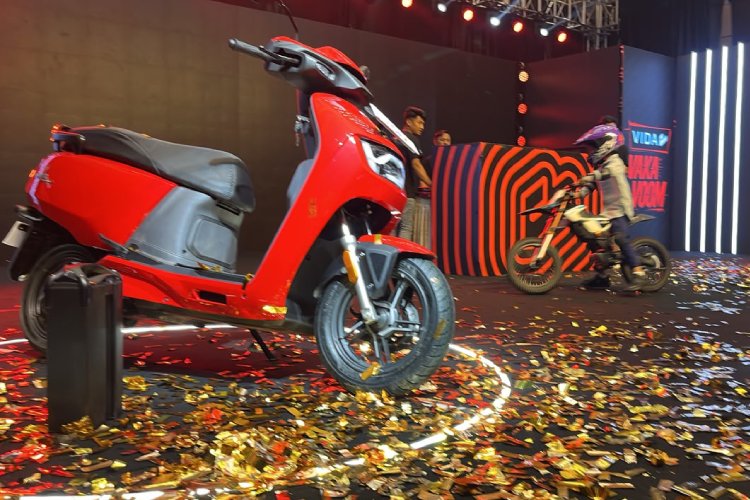
The Hero VIDA VX2 has a sportier look aimed at younger riders. It also offers a spacious seat and comfortable ergonomics. The Orbiter gets a front visor, while the VIDA VX2 comes with a rear backrest.
Battery and range
The VIDA VX2 is available in two variants.
The VX2 Go comes with a 2.2 kWh battery and delivers an IDC-certified range of 93 km. The VX2 Plus uses a 4.4 kWh battery with an IDC-certified range of 187 km. Both variants support fast charging, taking 2 hours 19 minutes and 2 hours 28 minutes, respectively, to charge from 20 to 80 percent.
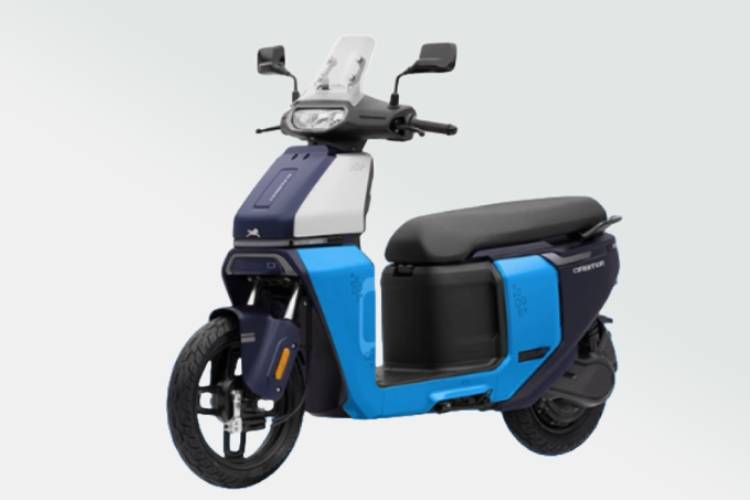
The TVS Orbiter V2 is equipped with a 3.1 kWh removable battery. It offers an IDC-certified range of over 158 km. Charging from 0 to 80 percent takes 4 hours 10 minutes, and the scooter does not support fast charging.
On paper, the VIDA VX2 has the advantage in battery options, charging speed, and maximum range.
Engine and performance
The Hero VIDA VX2 uses a 6 kW electric motor. The Go variant has a top speed of 70 km/h, while the Plus reaches 90 km/h. Although both versions use the same motor, the larger battery and different software tuning allow the Plus to achieve a higher top speed.
The TVS Orbiter V2 focuses more on practicality than outright performance. It features a 2.5 kW peak rear hub motor and has a top speed of 68 km/h.
Features and technology
The VIDA VX2 Plus is equipped with a TFT display, Eco, Ride, and Sport riding modes, dual removable batteries, and a front disc brake.
The VX2 Go gets an LCD display, Eco and Ride modes, a single battery, and a drum brake.
Both VIDA variants include full LED lighting, smartphone connectivity, OTA updates, app support, a combined braking system, reverse mode, a charging port, alloy wheels, telescopic front forks, and a rear monoshock.
The TVS Orbiter V2 comes with a color LCD display featuring the TVS Connect app. It also offers Bluetooth connectivity, turn-by-turn navigation, live location, OTA updates, hill hold assist, anti-theft protection, crash alerts, cruise control, regenerative braking, motor cut-off technology, riding modes, reverse mode with parking assist, a USB charging port, twin rear shock absorbers, alloy wheels, drum brakes, and a removable battery.
Storage
Storage is one of the strongest points of both scooters.
The TVS Orbiter V2 offers 34 liters of under-seat storage, while both VIDA VX2 variants provide 33.2 liters.
Price
The Hero VIDA VX2 Go is priced at Rs. 299,900, while the VIDA VX2 Plus costs Rs. 399,900.
The TVS Orbiter V2 is more affordable at Rs. 281,900. It offers a long feature list despite having a smaller motor and only one battery option.
Verdict
Both the TVS Orbiter V2 and Hero VIDA VX2 are strong new contenders in Nepal’s electric scooter segment.
If your priority is longer range, stronger performance, and fast charging, the Hero VIDA VX2, especially the Plus variant, is the better choice.
If you want a feature-rich family scooter at a lower price, with practical storage and enough range for daily commuting, the TVS Orbiter V2 offers excellent value for money.