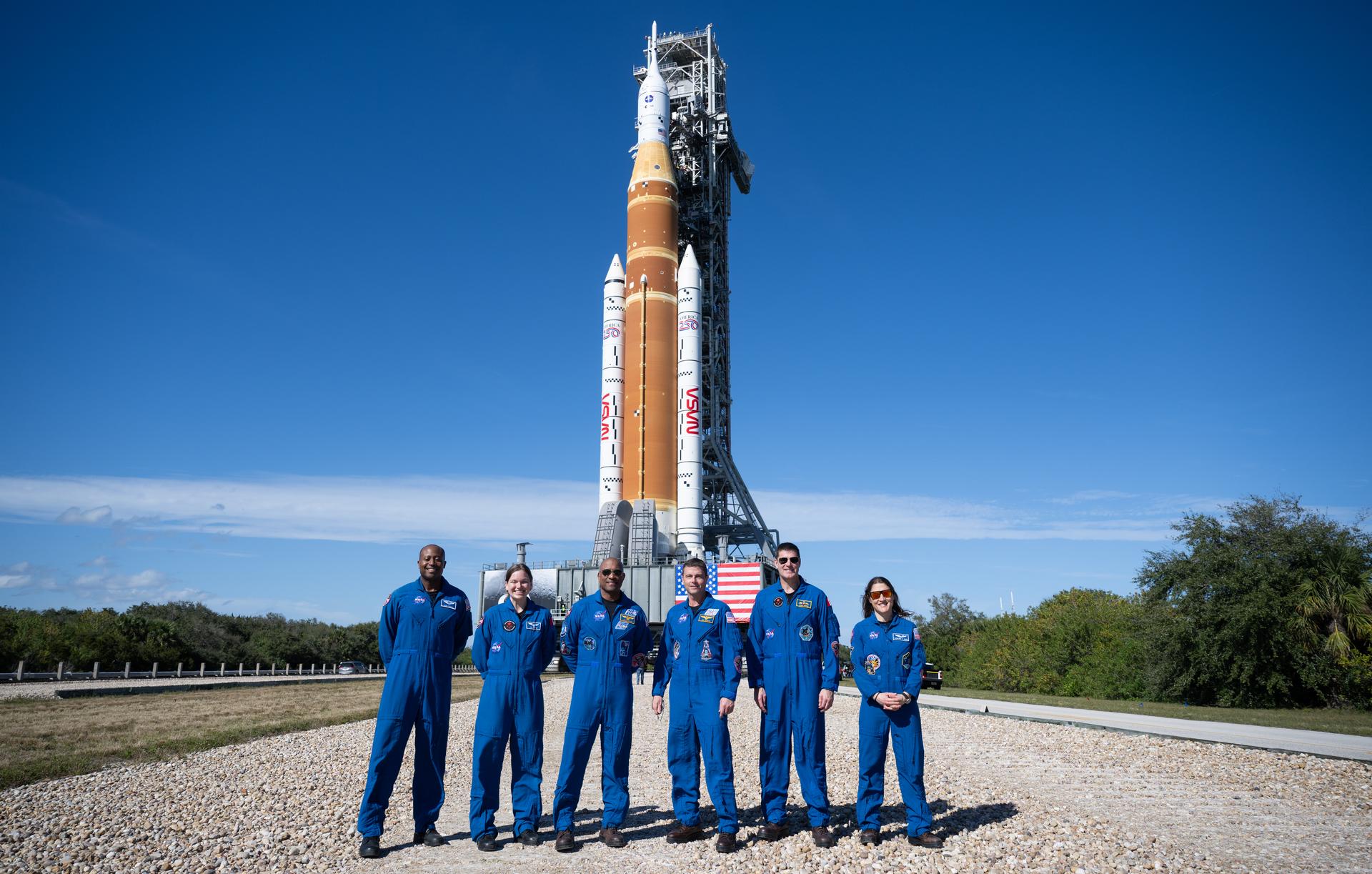
KATHMANDU: NASA is preparing to send astronauts back towards the Moon for the first time in more than 50 years through its Artemis II mission, marking a major step in the agency’s long-term plan to return humans to deep space.
The mission, now targeted for no earlier than February 8, will carry four astronauts on a journey around the Moon before returning safely to Earth. Although the spacecraft will not land on the lunar surface, NASA calls Artemis II a key test for future Moon missions.
What is Artemis II?
Artemis II is the second mission under NASA’s Artemis program, which began in 2017 with the goal of returning humans to the Moon and eventually sending astronauts to Mars.
It follows Artemis I, an uncrewed mission that successfully orbited the Moon in 2022.
For the first time, astronauts will fly aboard NASA’s Orion spacecraft, launched using the powerful Space Launch System (SLS) rocket. This will also be the first human mission to travel near the Moon since Apollo 17 in 1972.
Why no Moon landing?
Unlike later missions, Artemis II will not land on the Moon. Instead, the crew will orbit the Moon and fly around its far side before returning to Earth.
NASA is using this mission as a full system test, checking whether the rocket, spacecraft, life-support systems, and safety technologies can reliably carry humans into deep space. The mission is similar in purpose to Apollo 8, which orbited the Moon in 1968 without landing.
Artemis II will carry a four-member international crew, highlighting the global nature of NASA’s Moon program. The astronauts include Reid Wiseman, Victor Glover, and Christina Koch from NASA, along with Jeremy Hansen from the Canadian Space Agency.
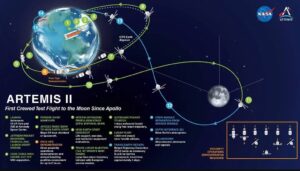
During the roughly 10-day mission, the crew will focus on testing the Orion spacecraft in deep space. Key objectives include evaluating life-support systems such as air, water, and safety equipment, assessing overall spacecraft performance beyond Earth orbit, and testing a new onboard toilet system that significantly improves on Apollo-era designs. Orion is expected to re-enter Earth’s atmosphere at around 25,000 miles per hour, making the astronauts the fastest-moving humans during atmospheric re-entry.
Although Artemis II will not land on the Moon, it is considered a critical step in NASA’s long-term human exploration strategy. Crewed missions help demonstrate technical readiness, strengthen political and financial support, and reinforce international cooperation in ways robotic missions cannot.
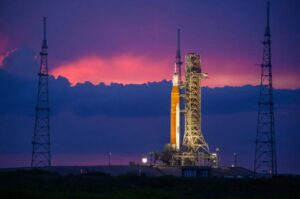
A successful Artemis II will clear the path for Artemis III, which aims to return astronauts to the lunar surface, and for future missions supporting the Lunar Gateway, a planned space station in lunar orbit.
Europe plays a key role in Artemis II, with Orion relying on the German-built European Service Module for power, water, oxygen, propulsion, and temperature control, vital for crew safety and mission success.