KATHMANDU: The newly formed Balen Shah government is taking strong steps to make development projects faster, more effective, and results-driven.
The first meeting of the Balen Cabinet, held on March 27, approved 100 governance reform agenda items. Among them, 9 immediate actions related to development and physical infrastructure were decided.
The government plans to digitize and make the tender process transparent and trackable. It will also prepare a national project pipeline, review stalled projects, and simplify processes like land acquisition, Environmental Impact Assessment (EIA) approvals, and contract cancellations.
Additionally, the government will remove unnecessary delays and repeated procedures. The Prime Minister’s Office will directly monitor project implementation. Projects that have failed the tender process more than twice will be handed over to a government infrastructure company. A project monitoring schedule will also be created immediately to complete ongoing road projects.
The government’s 9 immediate actions
- Reform the Public Procurement Act within 30 days. To control delays, cost overruns, poor quality, and corruption in public procurement, the Act will be amended. Concepts like Value for Money, Life Cycle Costing, e-Gov Marketplace, and Performance-Based Contracting will be introduced. The entire procurement process will be made fully digital, transparent, and trackable. Healthy competition will also be encouraged.
- Prepare a National Project Pipeline within 2 months. The National Planning Commission will create a clear list of priority development projects. Each project will be ranked based on economic, social, and environmental factors. The right investment model, government, PPP, or foreign investment will be decided for each project.
- Review stalled and sick projects within 30 days. Projects that have been stuck for a long time or failed to complete on time will be reviewed. A study team will be formed within 30 days. The team will assess whether each project should continue or be stopped. The Prime Minister’s Office will coordinate between agencies wherever needed.
- Fast-track approvals for national pride and strategic projects. Land acquisition, compensation, tree cutting, and EIA approvals will be processed under a fast-track mechanism. All related agencies will be connected through a single automated approval system. Unnecessary delays and duplicate processes will be removed. The Prime Minister’s Office will directly monitor and facilitate these projects.
- Handle repeatedly failed tender projects through a government company. Projects where the tender process has failed more than twice will be directly implemented by a government infrastructure construction company. Laws for this will be drafted within 30 days. The company will be given the necessary resources, manpower, and equipment.
- Launch end-to-end e-procurement monitoring within 90 days. Currently, projects are not tracked properly across different stages from selection to payment. This leads to irregularities, misuse of variation orders, and delays. A data-based digital monitoring system will be set up within 90 days to fix this.
- Draft an umbrella law for project facilitation within 60 days. Many projects get stuck in various legal approvals and inter-agency processes for years. To solve this, a draft umbrella law on project facilitation will be prepared within 60 days.
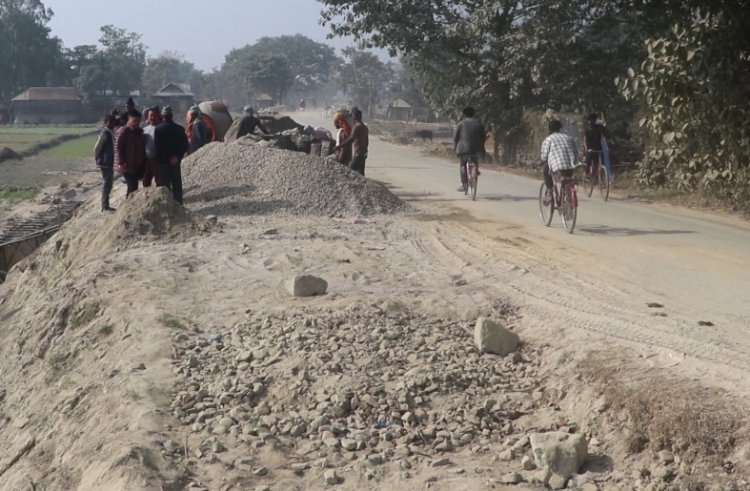
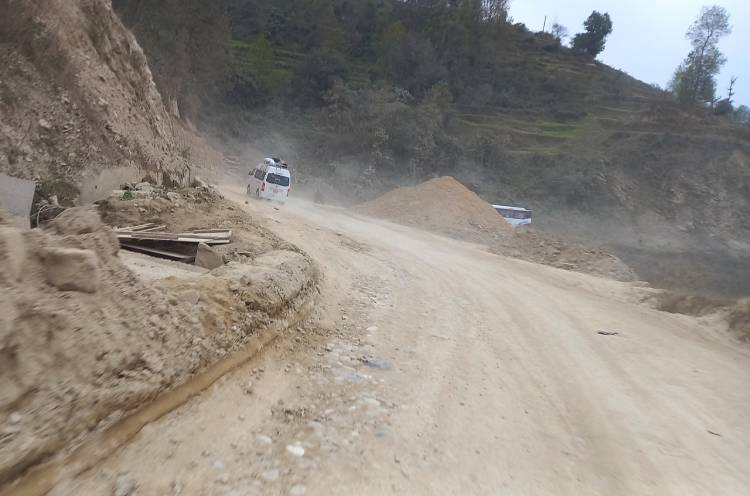
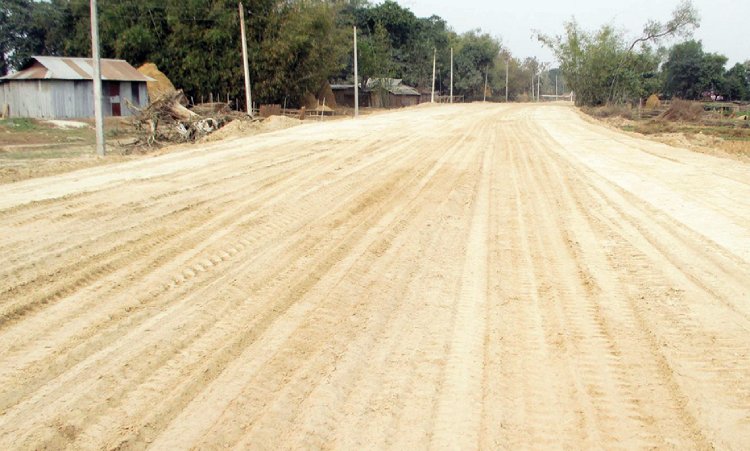
- Create an immediate monitoring schedule for road projects. Major road and transport projects have been troubling citizens for years without being completed. An immediate monitoring schedule will be created and implemented. Weighbridges will also be installed in strategic highway areas within 45 days after study.
- Classify all projects by investment model within 90 days. To make infrastructure development faster and investment-friendly, all national pride projects and projects registered with the Investment Board will be classified. The National Planning Commission, Investment Board Nepal, and the Ministry of Finance will jointly classify every project into government-funded, PPP, private, or mixed investment. A full National Structured Project Pipeline with capital mobilization, risk sharing, implementation framework, and timelines will be published within 90 days. Projects will then be made bankable and implementation will move forward quickly.