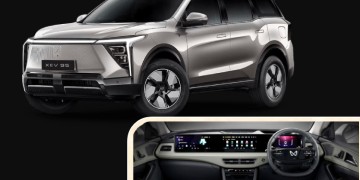
KATHMANDU: Toyota was the first major Japanese brand to commercially produce an electric vehicle. In 1997, it launched the electric version of its popular Toyota RAV4 EV. The move showed that EVs had real market potential.
Electric vehicle development, however, started much earlier. Work on EV technology began around 1832. Interest grew strongly in 1890 after William Morrison built an electric wagon that could carry six passengers.
American companies like Ford and General Motors also tried to meet the demand for electric vehicles. But early efforts did not succeed on a large scale. Toyota’s RAV4 EV was mainly developed for the US market, but production remained limited.
It was only in 2003 that Tesla was founded. After Tesla entered the market, EVs became practical and desirable for mainstream consumers.
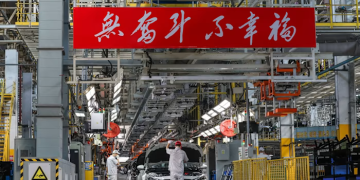
While EV discussions were growing in the US, China was focused on internal stability and economic growth. Over the last five decades, China transformed many industries. The automobile sector became one of its biggest success stories.
China first invested heavily in conventional fuel vehicles. Results were mixed, but its ambition to build a strong auto industry never weakened.
In 2001, China included EV development in its five-year national plan. It then accelerated investment. From 2009 to 2023, the country provided more than $231 billion in support. Subsidies include tax breaks, charging infrastructure and research funding.
That strategy is now creating pressure for other countries. Europe has raised tariffs on Chinese EVs. The United States has also moved to restrict Chinese vehicle entry. At the same time, affordable Chinese EVs are reshaping markets in middle-income and lower-income nations.
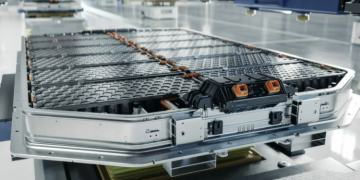
China did not focus only on building cars. It aims to control the full EV ecosystem. Battery production became the core priority.
Today, China dominates much of the global supply chain for lithium, cobalt and nickel. These materials are essential for high-voltage EV batteries.
China also invested in electric motors and electronics. As a result, many Chinese automakers can locally produce up to 90 percent of vehicle parts.
After nearly 25 years of focus, China now produces around 70 percent of the world’s EVs. It is strong in batteries, battery management systems and motors. Even traditional auto leaders like Japan, Europe and the US now recognize China’s rapid rise.
Nepal benefited early
Nepal has also gained from China’s EV success. Chinese-made EVs entered Nepal even before they gained full trust among Chinese consumers.
Today, Chinese brands dominate Nepal’s EV market. This includes passenger cars and light commercial vehicles.
After the 2015 blockade imposed by India following the earthquake period, many Nepalese began looking for alternatives to fuel-powered transport. Interest in EVs started rising.
Government policy also helped. Nepal imposed lower taxes on EVs compared to petrol and diesel vehicles. That made EV ownership more attractive.
Electricity supply has become more stable. Charging infrastructure is expanding fast. Charging stations are now available across highways, making long-distance EV travel easier.
Nepal’s dependence on imported petroleum has also started to reduce. That improves national energy security.
Even with high fuel prices, more EVs are now visible on Nepal’s roads. The shift is increasingly being seen as positive for both consumers and the national economy.