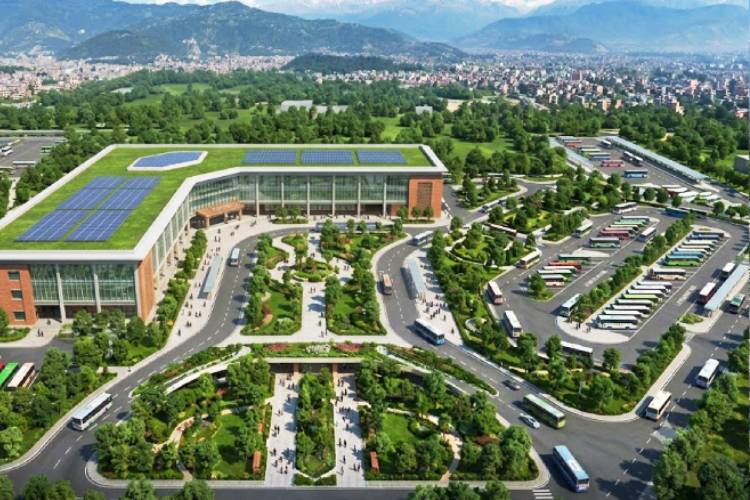
KATHMANDU: The government has proposed developing nine modern bus terminals and introducing organized public transport infrastructure across Kathmandu Valley. The proposal is part of the Kathmandu Sustainable Urban Transport Project (KSUTP) report prepared to improve public transportation management in the valley.
The report, prepared in 2014, was recently made public by the Ministry of Urban Development. The ministry has said the recommendations will be updated according to current requirements before implementation.
The plan aims to restructure Kathmandu Valley’s public transport system by making it more organized, modern, and environment-friendly. The project was initiated with support from the Asian Development Bank (ADB) and the Global Environment Facility (GEF).
The KSUTP report identifies problems including a high number of small public vehicles, weak regulation, overlapping routes, poor service quality, and a lack of proper bus terminals.
To reduce traffic congestion in major commercial areas, the report has proposed relocating major bus operations away from the central business district. It has suggested developing an intercity and urban bus terminal in Lokanthali, near Koteshwor, along the eastern bank of the Manohara River on the north side of the Araniko Highway.
The report notes that removing the old bus park area could support redevelopment. Currently, bus park facilities are operating in Gongabu and Jadibuti.
The report has proposed nine major bus terminals at key points of the valley. The proposed locations include Narayan Gopal Chowk, Jorpati, Koteshwor, Suryabinayak, Satdobato, Ekantakuna, Kalanki, Naikap, and New Bus Park.
These terminals will be connected with feeder services from secondary and tertiary routes operating inside and outside the Ring Road. The system is designed to allow passengers to easily transfer between different routes.
The plan also includes developing interchange facilities around Ratna Park. Instead of starting or ending routes in the central business area, buses will pass through major areas such as Ratna Park.
Modern passenger exchange facilities are proposed in Ratna Park, Kantipath, and Durbarmarg. These locations will be used for passenger pickup and drop-off without allowing buses to remain parked. Similar facilities are proposed in Chabahil, Gaushala, and Thapathali.
The implementation of terminals and interchange facilities will be carried out in phases. The first priority will be the design and construction of an intercity bus terminal in Koteshwor, followed by other locations.
The report has also proposed modern bus stops every 400 to 600 meters across the valley. Dedicated bus lanes on major roads have been suggested to reduce travel time and improve fuel efficiency.
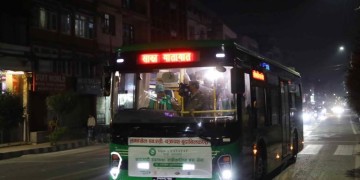
The government plan also recommends replacing small and old public vehicles with larger, low-emission, and disability-friendly buses. Around 200 existing public transport routes are proposed to be merged or reorganized into three categories.
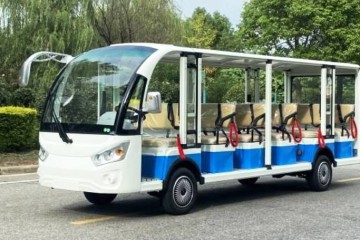
Under the proposed route system, primary routes would operate buses with around 80 seats, secondary routes would use 60-seat buses, and tertiary routes would operate smaller electric vehicles.
The report has recommended transforming scattered transport operators into operating companies or cooperatives. It has also proposed establishing a separate Public Transport Division under the Department of Transport Management.
For long-term management, the report suggests creating the Kathmandu Transport Management Committee (KTMC) and Kathmandu Valley Bus Agency (KVBA).
The government estimates that full implementation of the proposed plan could reduce traffic congestion in Kathmandu Valley by around 12 percent and save approximately USD 34 million in annual operating costs.