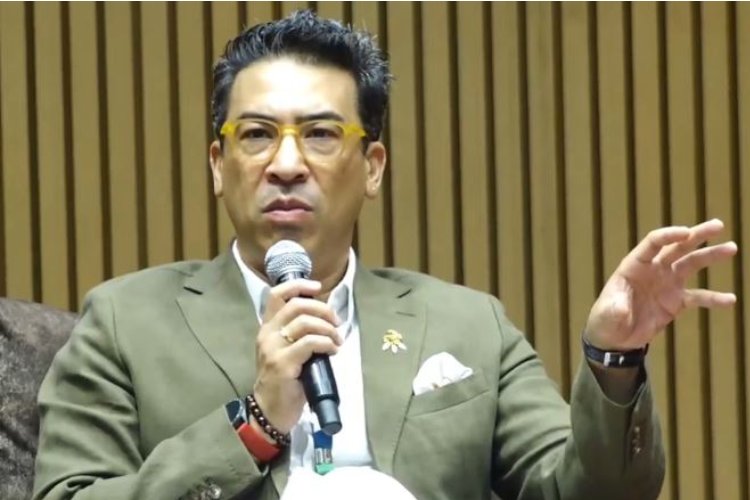
KATHMANDU : Industrialist and NAIMA founder Saurabh Jyoti has said Nepal can gradually move the automobile industry from ‘Make in Nepal’ to ‘Made in Nepal’ over the next five to 10 years.
Jyoti made the remarks during a discussion titled ‘Bringing Talent Home and Sending Workers Abroad: Bridging Nepal’s Education, Skills and Entrepreneurship Gap’ held during the NAIMA Nepal Mobility Expo 2026.
He said automobile assembly industries have expanded in Nepal in recent years. The next step should be to increase local production of parts and components and develop a stronger domestic supply chain.
According to Jyoti, importing parts and assembling vehicles locally is a natural first step in the industrialization process. Nepal can then gradually increase the share of locally produced components and materials.
“‘Make in Nepal’ is the first step towards ‘Made in Nepal’ in the automobile sector,” he said. “We can move from ‘Make in Nepal’ to ‘Made in Nepal’ in five to 10 years by increasing the use of locally produced parts, components and domestic materials.”
More than a dozen vehicle assembly plants have been established in Nepal in recent years. Hyundai has an assembly operation in the four-wheeler segment, while several major motorcycle and scooter brands are also assembling vehicles locally.
However, Jyoti said establishing assembly plants alone would not complete the industrialization process. He stressed the need to increase domestic production of parts and components.
He also called for clear government timelines and consistent industrial policies to support investment in the sector.
Jyoti said the automobile industry makes a significant contribution to Nepal’s economy and government revenue. According to figures he cited for fiscal year 2082/83, the sector contributes around 7% to GDP and generates approximately Rs. 89 billion in government revenue.
He also welcomed policies encouraging the use of electric and other clean-energy vehicles. He said increasing ethanol blending in petrol could help reduce dependence on imported fuel and lower pollution.
According to Jyoti, greater use of ethanol could also increase the use of locally available resources and reduce the amount of money spent on petroleum imports.
He said the growth of the automobile industry is also supporting employment and technical skill development. Many assembly plants in Nepal now have limited dependence on foreign workers, with Nepali employees handling roles ranging from management and production to quality testing.
Jyoti, however, pointed to a mismatch in Nepal’s labor market. While industries sometimes need to bring skilled workers from abroad, many Nepali skilled workers are leaving the country.
He attributed the gap partly to weak coordination between educational institutions and the private sector.
“There is a big gap between academia and the private sector. We have theoretical knowledge, but there is a significant gap in the skill sets required by industries,” he said.
Jyoti said educational curricula should be updated according to the needs of industries.
He also claimed that the private sector currently creates around 86% of employment in Nepal and contributes approximately 82% of GDP.
He said stronger respect for private-sector entrepreneurs and better protection for investments could help Nepal achieve significant economic growth over the next decade.