KATHMANDU: Hybrid car imports in Nepal increased in 2025 (January–December 15), but their overall market presence remains limited. According to import data, 489 units of hybrid cars were imported during the period, up by 60 units, or 14 percent compared to 429 units in 2024.
Despite the growth, hybrids accounted for just 3.36 percent of total car imports. Nepal imported 14,518 units of passenger cars in 2025, highlighting the marginal share of hybrid vehicles.
Hybrid vehicles are widely considered suitable for Nepal’s geography and road conditions. However, their adoption has been constrained by government tax policy.
While electric vehicles enjoy tax incentives, hybrids are taxed at rates similar to internal combustion engine vehicles, up to 350 percent, making them significantly more expensive.
Globally, hybrid technology has seen rapid adoption as a proven and reliable solution, especially in markets where EV infrastructure is still developing. In Nepal, however, high taxation has slowed their growth, despite hybrids not requiring external charging and offering better fuel efficiency.
Maruti Suzuki leads hybrid market
Out of the 489 hybrid cars imported in 2025, Maruti Suzuki dominated the segment with 422 units, securing an overwhelming 86 percent market share.
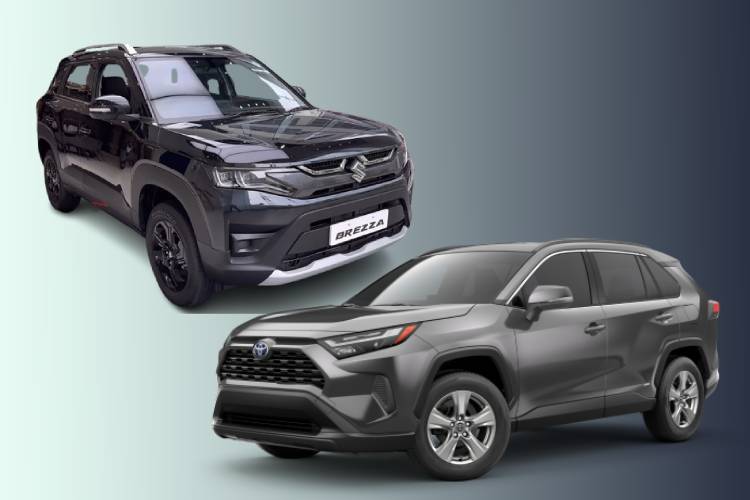
CG MotoCorp, the authorized distributor of Suzuki in Nepal, imported two hybrid models during the period, led by the Suzuki Brezza Hybrid with 411 units, followed by the Grand Vitara Smart Hybrid with 11 units.
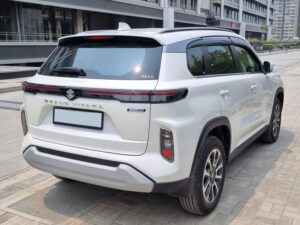
The Brezza Hybrid is powered by a 1.5-liter K15B SHVS petrol engine, delivering 90 PS of power and 200 Nm of torque, positioning it as the most widely adopted hybrid vehicle in the Nepali market.
Japanese brand Toyota ranked second in hybrid imports during the period. United Traders Syndicate Pvt. Ltd., Toyota’s authorized distributor in Nepal, imported a total of 54 hybrid vehicles in the past 11 and a half months.
This included 25 units of the RAV4 Hybrid, 19 units of the Yaris Cross Hybrid, and 10 units of the Corolla Cross Hybrid.

Toyota’s hybrid models use 1.5-liter and 2.5-liter engines. These vehicles offer fuel efficiency of around 15 to 20 km/l. Toyota’s hybrid technology is known for its reliability and ease of use, as it does not require plug-in charging and is widely proven in global markets.
Hybrid vehicles from other manufacturers arrived in very limited numbers in Nepal in 2025. Imports included seven units of the Land Rover Defender Hybrid, three units of the Subaru Cross-Trek Hybrid, two units of the BMW X5 Hybrid, and just one unit of the GWM Tank 500 Hybrid.