KATHMANDU: The government’s incentive policy is increasing the use of electric vehicles in Nepal each year. EV adoption is being promoted through tax exemptions on EV purchases, investments in charging infrastructure, and incentives for the private sector.
The government has set an ambitious target of increasing the share of EVs among private vehicles to 95% within the next 10 years (by 2035). To support this goal, it has introduced policies ranging from major investments in EV infrastructure to retrofitting combustion engine vehicles into electric ones.
After assuming office, Minister for Physical Infrastructure and Transport Kulman Ghising formed a task force in September to recommend ways to promote electric vehicles.
As per a ministerial decision on September 16, the task force, coordinated by Krishnaraj Pantha, Joint Secretary and Chief of Infrastructure Construction and Transport Division was assigned to study policy, legal and institutional needs, current status, opportunities, challenges, and prospects for EV promotion in Nepal.

The task force reviewed existing EV-related laws, policies, tax structures, battery management, and charging infrastructure. It submitted its report on October 26 with detailed recommendations.
According to the report, promoting EVs can unlock several opportunities for Nepal. Key opportunities identified are:
- Increase in domestic hydropower use: Nearly 90% of electricity in Nepal is generated from hydropower. While hydropower can be generated continuously from rivers, it is difficult to store excess electricity. By expanding EV charging infrastructure, domestic power consumption can increase, helping Nepal avoid global fuel price fluctuations and supply challenges through the use of local renewable energy.
- Savings in foreign exchange: A significant portion of Nepal’s foreign reserves is spent on fuel imports. Shifting to domestic hydropower for transportation will reduce dependence on imported fossil fuels, saving foreign currency.
- Reduction in air pollution: EVs have zero tailpipe emissions, which can help reduce pollution in cities like Kathmandu often ranked among the world’s most polluted. Reduced smog can decrease long-term respiratory illnesses, which currently shorten life expectancy by an average of 3 years. EVs also produce less noise, reducing noise-related health issues.
- Low operating costs: Charging costs for EVs are up to 12 times lower than gasoline. EVs also require less maintenance due to fewer moving parts, significantly reducing overall operating costs.
- Employment creation: A fully developed EV ecosystem could create new jobs in areas like maintenance, charging infrastructure, battery production and repair, and local vehicle assembly strengthening the automotive sector.
- Support for SDG goals: EV adoption is vital for meeting Nepal’s Nationally Determined Contributions (NDCs), including 90% private EV usage by 2030 and net-zero emissions by 2045, both key Sustainable Development Goals (SDGs).
- Potential EV production hub: Nepal has an affordable labor force and abundant hydropower, which can provide low-cost electricity. By adopting technology from China, the global leader in affordable EV tech, Nepal could become an EV manufacturing hub with export potential.
- Modernization of public transport: Nepal’s public transport sector involves around NPR 1.5 trillion in investments and employs 1.5 million people. Electrification and digitalization can restore public confidence, modernize urban mobility, and improve public transport efficiency.
- Reduction in road accidents: Global EV brands like BYD and Tesla feature advanced safety technologies such as AI and ADAS. Widespread adoption of such features can help reduce road accidents in Nepal.
- Expansion of renewable energy: Growing EV demand will increase electricity consumption, attracting the private sector to invest in renewable energy projects like hydropower and solar. This will boost energy production capacity and promote local innovation in EV and software technologies.
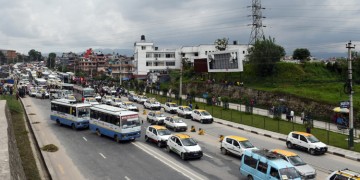
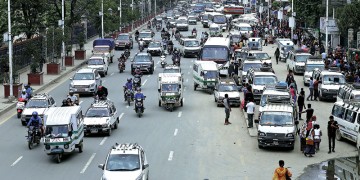
- Improvement in urban transport and tourism: Modern electric buses and smart technologies can reduce traffic congestion, travel time, and costs in cities like Kathmandu. A clean, quiet transport system enhances tourist experiences, supporting heritage and eco-tourism.
- Education and skill development: Training in EV maintenance, charging operations, and battery technology can provide technical skills to youth. With around 900,000 Nepalis seeking foreign employment annually, many in low-skilled, high-risk jobs, EV-related skills can create opportunities both abroad and at home.
- Adoption of new battery technology: There is potential to use advanced battery technologies such as lithium-ion and lithium iron phosphate (LFP) in electric vehicles.
- Vehicle tracking and charging management: The integration of Internet of Things (IoT) and digital systems enables advanced vehicle tracking, charging management, and smarter fleet operations.