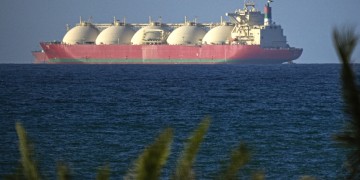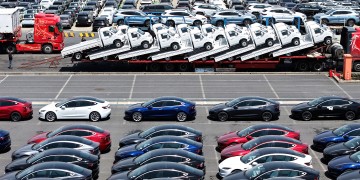
KATHMANDU: Escalating tensions linked to the Iran-Israel conflict are beginning to affect global vehicle logistics, with shipments from Asia to the Middle East slowing down due to security concerns around the Strait of Hormuz.
According to a report by Reuters, the Middle East remains one of the most important export markets for Asian automakers. However, fears of possible attacks on commercial shipping routes have disrupted vehicle transport along the key maritime corridor.
China
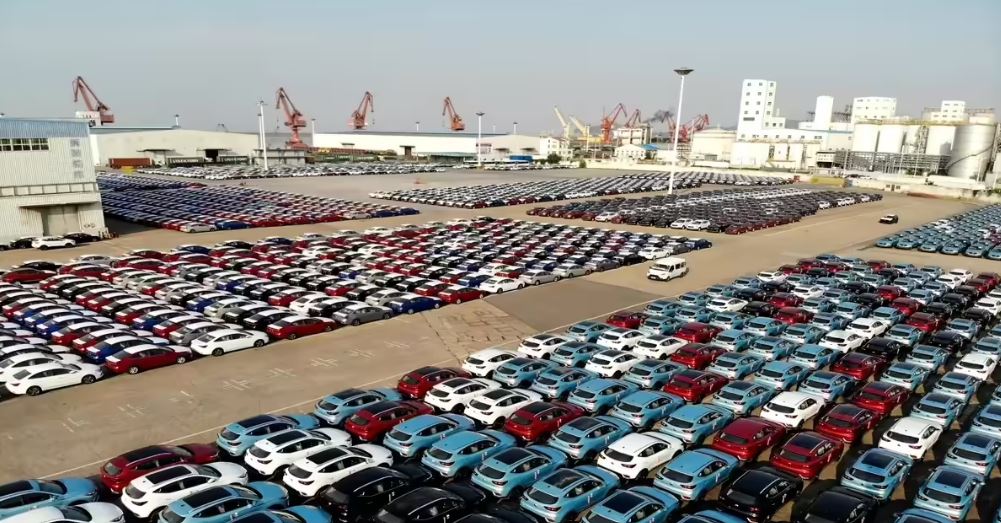
China continues to dominate vehicle exports to the region. Data from the China Passenger Car Association shows that Chinese automakers exported 8.32 million vehicles globally in 2025, with 1.39 million units shipped to Gulf countries including Saudi Arabia and the United Arab Emirates.
Major Chinese automobile exporters to the Middle East include Chery Automobile, BYD, SAIC Motor, Changan Automobile, and Geely.
Joint ventures in China involving Hyundai Motor Company, Kia Corporation, and Toyota Motor Corporation also rank among the top exporters to the Middle East, according to the Gasgoo Automotive Research Institute.
India
India exported $8.8 billion worth of vehicles in 2025, with about 25 percent of shipments heading to the Middle East, primarily to Saudi Arabia.
Among automakers exporting from India, Hyundai Motor Company sent around half of its $1.8 billion exports from India to Gulf markets. Toyota Motor Corporation exported over $300 million worth of vehicles to the region out of its $470 million India exports.
Maruti Suzuki shipped $457 million worth of vehicles to the Middle East out of total exports of $3.2 billion, while Nissan Motor exported vehicles worth $318 million from India to Gulf markets, accounting for about 38 percent of its total exports.
South Korea and Japan
Vehicle exports from South Korea reached a record $72 billion in 2025, with $5.3 billion worth of cars shipped to the Middle East, according to the Korea International Trade Association.
Hyundai Motor Company shipped about 317,000 vehicles to the Middle East and Africa, representing 8 percent of its global wholesale sales.
Kia Corporation also sent 8 percent of its 3.1 million wholesale sales to the same region.
Meanwhile, Toyota Motor Corporation exported 320,699 vehicles from Japan to the Middle East in 2025, a 5.4 percent increase from the previous year. The shipments accounted for more than 15 percent of Toyota’s total exports.
However, Japanese media reports suggest Toyota may produce around 40,000 fewer vehicles intended for Middle Eastern markets due to logistical risks linked to the ongoing regional conflict.
The Strait of Hormuz remains one of the world’s most critical shipping routes for oil and vehicle exports between Asia and the Middle East. Any prolonged disruption could impact supply chains for automakers across China, India, South Korea, and Japan.