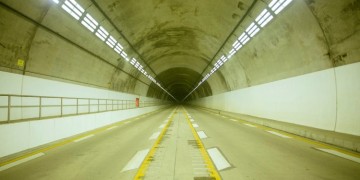
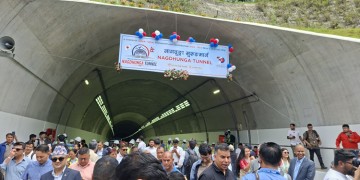
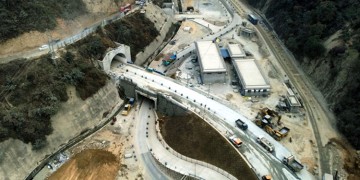
KATHMANDU : Nepal’s first road tunnel, the Nagdhunga-Sisnekhola Tunnel, will officially comes into operation today, marking a major milestone in the country’s transport infrastructure after more than six years of construction.
The tunnel is being inaugurated jointly by Minister for Physical Infrastructure Development Sunil Lamsal and the President of the Japan International Cooperation Agency (JICA). Built with Japanese support, the project was completed at a cost of around Rs. 21 billion.
The 2,688-meter tunnel is expected to ease congestion on the Nagdhunga-Naubise section, reduce travel time, and lower fuel consumption for vehicles entering and leaving Kathmandu.
Here are five key things to know:
Emergency vehicles first
The tunnel is opening in phases. During the initial stage, only emergency vehicles, including ambulances, fire engines, and security force vehicles, will be allowed to use the tunnel. It will later be opened gradually to private and public transport.
Not all vehicles are allowed
Under the Nagdhunga-Sisnekhola Tunnel Traffic Operation Directive 2081, motorcycles, scooters, three-wheelers, fuel tankers carrying petroleum products, vehicles transporting explosives, foul-smelling cargo, or non-motorized vehicles are prohibited.
Vehicles longer than 18 meters, wider than 2.5 meters, or taller than 4.25 meters are also not permitted. Cars, SUVs, vans, buses, trucks, minibuses, and mini trucks can use the tunnel if they meet the size limits.
Digital toll system
The government has introduced a digital toll collection system based on RFID-enabled N-Tag stickers.
Vehicle owners can obtain N-Tag cards from Global IME Bank, Kumari Bank, Nabil Bank, Nepal Investment Mega Bank, and Sanima Bank. The RFID sticker is attached to the vehicle’s windshield and toll charges are deducted automatically.
During the initial operation period, QR code payments and cash payments will also be accepted. Foreign tourists arriving from India and China can pay in cash.
Toll charges vary by vehicle type. Cars and vans will pay Rs. 65 when entering Kathmandu through the tunnel and Rs. 60 when traveling out.
Speed limit set at 60 km/h
The maximum speed inside the tunnel is 60 km/h. Vehicles exceeding the speed limit will face penalties under the tunnel’s operating rules.

Private operator to manage the tunnel
Operation and maintenance of the tunnel have been awarded to the Nepal-China joint venture Yusin ART Company under a five-year contract worth Rs. 1.10 billion.
The company will manage tunnel operations around the clock, including maintenance, monitoring, and staffing. Around 150 personnel will be deployed for daily operations.
According to project estimates, about 8,000 four-wheelers and larger vehicles pass through the Nagdhunga checkpoint each day. Authorities expect 4,000 to 5,000 vehicles, or around half of the daily traffic, to use the tunnel once it is fully opened.