KATHMANDU : Sodium-ion batteries are gaining momentum as a potential alternative to conventional lithium-ion batteries, with U.S. startups beginning to scale up production.
The technology replaces lithium and other critical materials with sodium, which is widely available and can be sourced from common salt. This could reduce dependence on China for battery materials and production.
Sodium-ion batteries are initially being developed for stationary energy storage, including power grids and data centers. They can store electricity when supply is high and release it when demand increases.
The technology offers several potential advantages over lithium-ion batteries. Sodium-ion batteries can be cheaper, safer and more durable. They also require less intensive cooling in some stationary storage applications.
According to WSJ, U.S. Startup Peak Energy is among the companies working to bring sodium-ion batteries into large-scale production. The company plans to start production at a new facility in Sacramento, California, in early 2027.
The planned factory is expected to produce around 4 GWh of battery packs annually. This would be about 40 times the capacity of Peak Energy’s current pilot facility.
Peak Energy has already announced more than $1.1 billion in customer deals with companies including Jupiter Power, Energy Vault and RWE Americas.
General Motors is also developing its own sodium-ion battery technology. The automaker has made a strategic investment in Peak Energy and plans to develop sodium-ion batteries for different applications.
Another U.S. Startup, Inlyte Energy, is developing a sodium-based battery using iron, steel, aluminum oxide and food-grade table salt. The company claims its battery cells have significantly lower fire risk than conventional lithium-ion cells.
However, sodium-ion batteries still face an important limitation. They store less energy per kilogram than lithium-ion batteries.
This makes lithium-ion technology more suitable for applications where weight and range are critical, particularly electric vehicles.
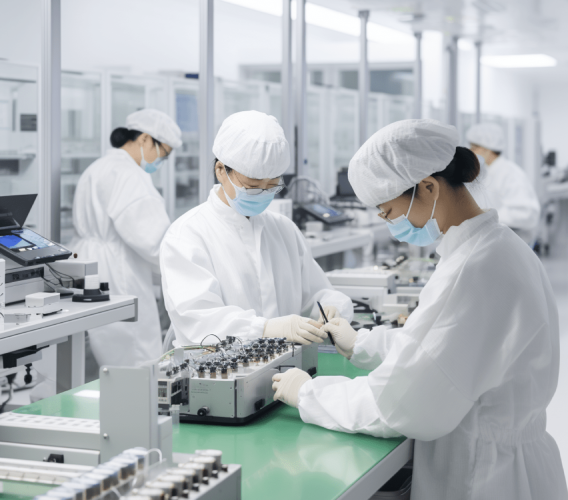
Most sodium-ion batteries are currently produced in China. However, companies in the U.S. and other markets are now racing to develop domestic production.
Chinese battery makers including BYD and CATL have also announced plans for large-scale sodium-ion battery production.
Analysts expect sodium-ion technology to grow significantly over the next decade. It could become an important alternative for grid storage and other applications where battery weight is less important.