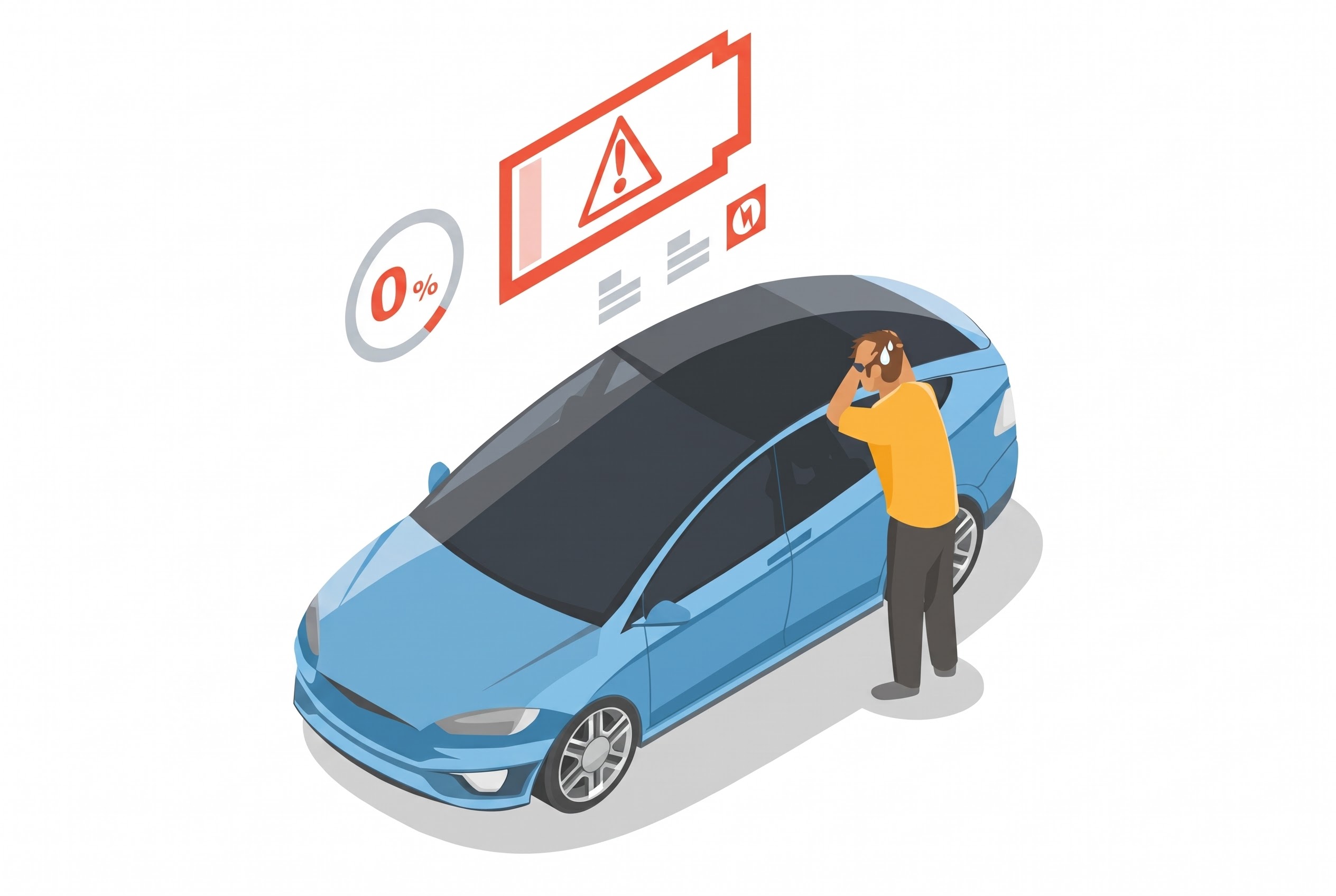
KATHMANDU: There is ongoing debate in different places about what you can and cannot do when an electric vehicle breaks down while driving. But not everyone can tell how much of that talk is true.
The number of electric vehicles in Nepal is approaching 70,000. If you add two-wheelers, the total goes beyond 100,000. So here, we want to talk about what to do and what not to do if your electric vehicle breaks down on the road.
When a petrol or diesel car breaks down, you can put the gearbox in neutral and tow it. But in most EVs, the motor and the drive wheels are permanently connected mechanically, so towing isn’t an option. The main reason is that even when the vehicle is off, the turning wheels spin the motor, which then produces electricity like a generator.
The vehicle’s system cannot safely handle this electricity. As a result, there is a high chance of damage to the motor, inverter or other power electronics.
That is why you should not tie a rope to an EV and tow it a long distance with another vehicle. The safest way is to carry it on a flatbed tow truck.
Which parts can be affected by towing?
The first impact can be on the electric motor. If the motor gets damaged and has to be replaced, it can take five to six months in Nepal. Being without a vehicle for so long will also raise your expenses, especially if the vehicle is a taxi or used for work.
The inverter and motor controller can also fail. If these parts are damaged by uncontrolled electricity generation or voltage, the financial loss can be large.
The drive system and reduction gear can be damaged too. Mechanical damage has occurred when vehicles were dragged or towed the wrong way.
The high-voltage battery system, the most expensive part, can also develop faults. However, this does not mean that all of these parts will fail at the same time in every case.
Besides these, problems can also arise with the parking lock and the electronic parking brake.
How much does it cost to repair the damaged parts?
If an EV is damaged during towing, the repair cost depends on the brand, the model, the availability of parts and how many parts were affected. For a minor electrical problem or a faulty sensor, the cost is small. But if the motor controller, inverter or high-voltage battery is damaged, the cost can be very high.
So, what should you do if your EV breaks down on the road?
First, stop the vehicle in a safe place. If possible, move it to the side of the road or into a safe parking area.
Next, try to work out the problem. Check whether the battery has run out, a tire is punctured, the 12-volt battery has an issue, or the system is showing a warning.
If there is a message on the display, follow it. If not, call an authorized service center, ask for their help and act on their instructions.
What not to do when your EV breaks down
Don’t rush to tow it with a rope. In particular, never tow it over a long distance with the drive wheels turning on the road.
Don’t touch high-voltage wires or the battery. Do not try to open the orange high-voltage cables, the battery pack or any damaged electrical parts yourself.
If there is smoke, unusual heat, a strange smell, battery damage or a high-voltage warning, do not plug the vehicle into a charger or try to restart it.