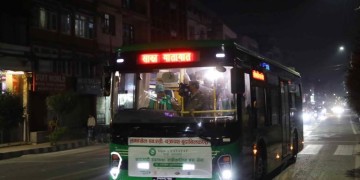
KATHMANDU: Traffic management in Kathmandu Valley is getting more complicated by the day. Growing vehicle numbers, narrow roads, disorganized parking, chaotic public transport, and weak road infrastructure have all made the capital’s traffic situation increasingly messy.
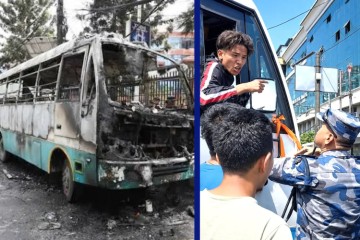
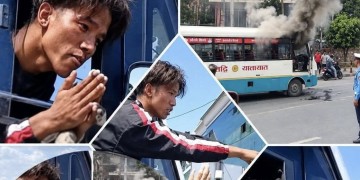
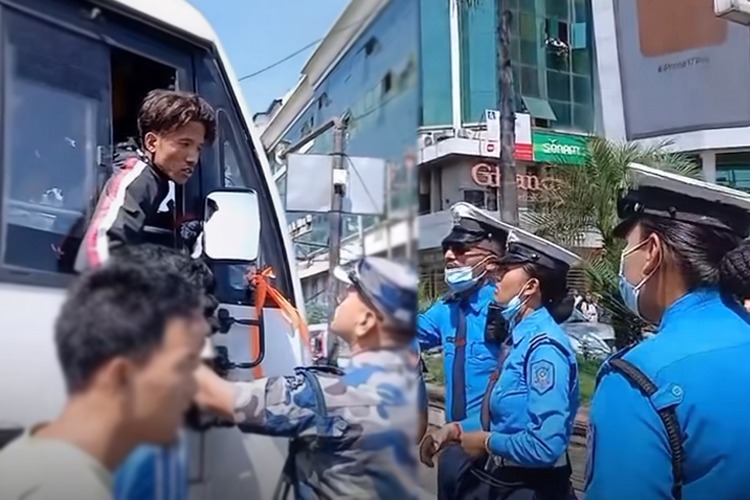
More and more drivers are ignoring traffic rules. And when traffic police try to enforce the law strictly, some drivers are now choosing self-immolation instead. In Tripureshwor alone, two such incidents have happened in the last three months.
These incidents raise a serious question. Is our traffic enforcement system actually making citizens more disciplined? Or is it creating unnecessary conflict between citizens and the state? The people running this system need to answer this soon.
Taking action against those who break road rules is necessary. Without discipline on the roads, a civilized society simply cannot exist, and safe transportation becomes unimaginable. But when the very officials meant to enforce these rules end up humiliating citizens, that too becomes part of the problem, as we’ve seen in recent incidents.
Traffic police exist to enforce rules. But their job should not be limited to handing out fines. They also need the wisdom to teach people the rules of the road. Only calm and patient people are really suited for this kind of work.
When a driver, after being penalized, ends up taking an extreme step like self-immolation, we cannot simply reduce that to “he didn’t want to pay a fine.” There are probably many layers behind it, personal, social, economic, and psychological stress. Still, these incidents force us to ask how sensitive, fair, and citizen-friendly our traffic enforcement system really is.
Right now, a traffic officer’s performance tends to be judged by how many vehicles they penalize. But the success of traffic management should not be measured by how many tickets were issued. It should be based on how many accidents were prevented, how much rule-breaking went down, how much traffic congestion eased, and how much safer the roads became.
Another important question is whether the process, police identifying violations, issuing tickets, and reviewing citizens’ complaints, actually works smoothly in practice.
This is not to say that all the fault lies with the traffic police. Drivers make plenty of mistakes too. Not following lane discipline, overspeeding, stopping wherever they like, honking unnecessarily, ignoring traffic lights, or driving under the influence, these are all real violations on the road.
But when all the authority sits only with traffic police, where does a citizen go if they feel they were wrongly penalized? Who do they show evidence to, proving they didn’t break any rule? Is there an effective mechanism to correct a wrong decision by police? The state needs to play a concrete role here.
Countries like India, which deal with far heavier traffic, have gradually organized their enforcement and hearing processes through electronic tickets, surveillance cameras, digital evidence, and virtual courts. Several European countries also apply punishment proportionally, based on the severity of the violation, the risk involved, and the driver’s past record.
Nepal needs to learn from these international practices too. Traffic police should keep issuing tickets, but citizens should also have the right to an independent review of whether that ticket was fair. This alone would solve half the problem.
In Nepal, traffic fines are mostly just about money. But a driver who makes a small mistake and one who commits a serious violation that puts others’ lives at risk cannot be treated the same way.
Traffic police should be given the responsibility of identifying violations and issuing e-tickets. Besides that, a “driver points system” should be introduced, based on the type of violation committed.
The state’s goal should not be to issue as many fines as possible. It should focus on reducing violations, cutting down accidents, easing congestion, and building safer roads. This is what would actually make citizens feel that the state is responsible and accountable.
Minor mistakes could carry fewer points, serious violations more, and repeat offenders even more. Once a driver crosses a certain point threshold, there could be provisions for retraining or license suspension. This would help reduce accidents, avoid unnecessary conflict on the roads, and most importantly, actually improve driver behavior over time.
That said, not all the blame lies with traffic police, drivers who break lane discipline, overspeed, stop carelessly, honk excessively, ignore traffic lights, or drive under the influence are equally responsible. If drivers simply followed the rules, traffic police wouldn’t need to fine anyone in the first place.
Right now, when issuing a driving license, we only test basic driving skills, not things like lane discipline, giving priority to pedestrians, recognizing risks, emergency braking ability, maintaining safe distance, or actual driving behavior in city traffic.
Traffic police need more technology in their hands than tickets, more accountability than authority, and more good judgment than punitive action. And drivers shouldn’t just be handed a fine slip, they should also have a proper place to voice their side and seek justice. As previous study committees have recommended, a traffic court should be established as soon as possible.
The state’s goal should not be more enforcement for its own sake, but fewer violations, fewer accidents, less congestion, and safer roads. That is what will truly make citizens feel that the state is responsible and accountable.