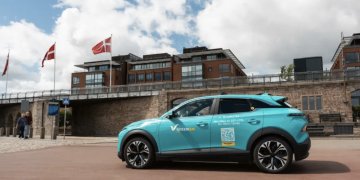
KATHMANDU: Vietnamese electric vehicle manufacturer VinFast is expanding its presence in India, but its long-anticipated entry into Nepal remains uncertain. Despite initial reports of a local distributor being selected nearly two years ago, the company has yet to officially enter the Nepali market, reportedly due to concerns over vehicle pricing.
VinFast is not the only brand facing this challenge. Electric vehicles from established manufacturers such as Tata and Hyundai have also struggled to compete with Chinese brands in Nepal, largely because of their higher prices. The need to import vehicles at prices similar to those in India, despite additional costs in the Nepali market, has made local businesses less enthusiastic about bringing Indian-made models into Nepal.
Meanwhile, VinFast appears to be strengthening its plans for India. The company’s recent patent filing for the facelifted version of its compact electric SUV, the VF 5, indicates its intention to expand its product portfolio in the neighboring market.
Although several international brands selling vehicles in India have entered Nepal, VinFast has yet to establish its presence here. The company initially attracted attention after reports emerged that it had selected a potential distributor for Nepal. However, no official market entry has followed.
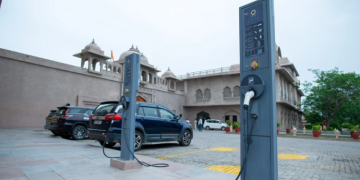
With a product range covering small urban EVs to premium electric SUVs, VinFast could have several models suitable for Nepal. Its vehicles have also entered India’s commercial taxi market, suggesting potential opportunities in Nepal’s growing electric mobility sector.
Which VinFast models could suit Nepal?
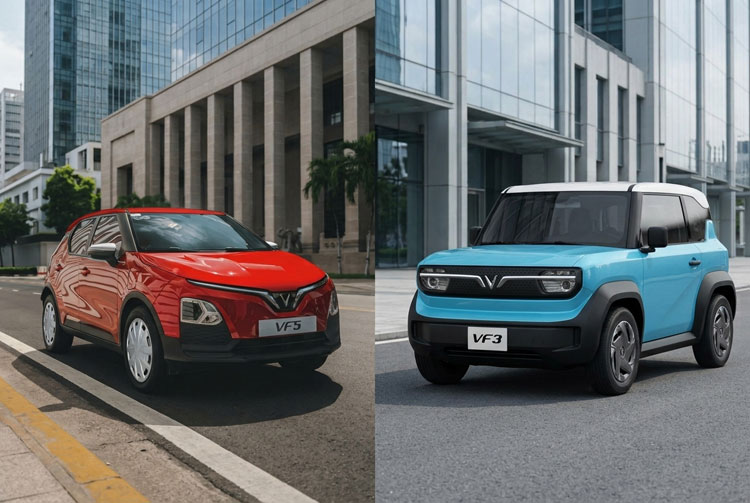
VinFast offers electric vehicles in different sizes and price segments. Its smallest SUV, the VF 3, is a three-door, four-seat electric vehicle designed primarily for urban use. Its compact dimensions make it suitable for narrow roads and areas with limited parking space.
The VF 5 is a five-seat compact SUV that could also appeal to Nepali buyers. Internationally, it is available with 29.6 kWh and 37.23 kWh battery options.
The VF 6 is another five-seat compact SUV. The model is already available in India and comes with a 59.6 kWh battery pack.
At the upper end of the range, the VF 7 is a larger premium electric SUV featuring modern technology, powerful motors and a more sophisticated design.
Updated VF 5 gets major design changes
The facelifted VF 5, recently patented in India, features several exterior design changes compared with the existing model.
At the front, the updated SUV is expected to receive slimmer headlights, a revised bonnet and a redesigned bumper. The rear gets connected LED tail lamps, with the reverse lights and indicators, previously positioned on the bumper, apparently integrated into the new tail-light assembly.
The patent images also reveal newly designed alloy wheels.
Inside, the facelifted model is expected to feature a large floating touchscreen, a new two-spoke steering wheel and a revised center console. The conventional digital instrument cluster could also be removed, with vehicle information displayed through the central screen.
However, details regarding the battery, motor specifications and driving range of the updated model have not yet been disclosed.
The facelifted VF 5 is expected to cost around 1.2 million Indian rupees in India. If introduced in Nepal at a competitive price, it could become an interesting option in the sub-Rs 4 million electric SUV segment.
Could the VF 5 become a game-changer in Nepal?
Competition in Nepal’s electric vehicle market is increasing, particularly in the price segment below Rs 4 million. Brands such as Tata, BYD, MG, Nammi and Kia already offer several options for buyers.
A competitively priced VF 5 could provide another alternative and help VinFast establish a foothold in this segment.
However, pricing alone will not determine its success. Ground clearance, suspension performance, battery safety and charging capability are equally important considerations for Nepali road conditions. The VF 5 could attract buyers if it delivers a suitable combination of these features and competitive pricing.
After-sales service will be key to success
Entering Nepal would offer VinFast an opportunity to tap into the country’s growing electric vehicle market. However, competing with established brands will require more than an attractive product portfolio.
A reliable after-sales network will be essential. The company or its local distributor would need to ensure sufficient service centers, readily available spare parts, battery warranty support and trained technical personnel.
Bringing vehicles into the market first and gradually developing a service network could create problems for both customers and the brand.
For VinFast to succeed in Nepal, it will need to establish a strong service and support system before expanding sales. Without that commitment, even competitively priced electric vehicles may struggle to gain long-term customer confidence.