In a country where nearly everything we use—fuel, fertilizers, phones, or even basic household goods—is imported, there is one thing Nepal produces entirely on its own: electricity. Generated from our rivers by our engineers, and delivered through our own grid, electricity is a rare example of national self-reliance in a heavily import-dependent economy. That, in itself, should be reason enough to take it seriously. But there is more to it.
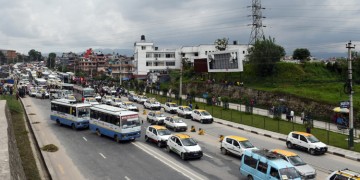
Every liter of petrol we burn is money flowing out of Nepal. Every unit of electricity we consume, on the other hand, is money staying in. This strengthens our economy, support local jobs and fund more hydropower projects. This becomes even more important when one considers how volatile global oil prices are. In 2022, petrol prices in Nepal shot past Rs 199 per liter. This was not due to our internal reasons, but because of a war half a world away. Such is the nature of fossil fuel dependency: unpredictable, uncontrollable and costly.
Electricity, especially generated from our rivers, is different. We generate it ourselves. In fact, we sometimes waste surplus electricity during the monsoon because we do not have enough domestic demand. What if we used that energy to move people instead of letting it go unused? Just imagine this. A father in Biratnagar plugs in his electric vehicle (EV) at night. The power may have come from the very river he swam in as a child. A young woman in Pokhara commutes without worrying about fuel queues or rising petrol prices. Her monthly energy bill? Less than what she would spend on two pizzas.
In 2022, petrol prices in Nepal shot past Rs 199 per liter. This was not due to our internal reasons, but because of a war half a world away. Such is the nature of fossil fuel dependency.
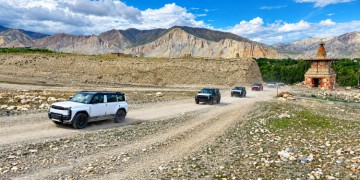
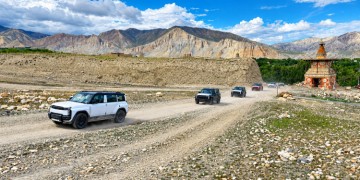
This is not a fantasy. It is already possible with electric vehicles like the Proton e.MAS7, a fully electric SUV priced Rs 5.699 million. This is about the same as many mid-range petrol SUVs. The price difference, which was once a major barrier, is gone. The question now is what are we really paying for over time?
The Numbers Make It Obvious
Let’s say you drive 1,200 km a month. A petrol SUV will cost around Rs 14,720 in fuel. An EV like the e.MAS7 will cost just about Rs 2,220. That is a monthly saving of over Rs 12,000, or more than Rs 140,000 a year. In eight years, you could save enough to buy another small car or take your family on a Europe tour.
The maintenance story is just as convincing. Petrol cars need oil changes, filters, belts, spark plugs—and the list goes on. EVs need none of these. Over eight years, the estimated maintenance cost of a petrol SUV is about Rs 270,000, while the Proton e.MAS7 comes in at just Rs 60,000. With a standard 8-year battery and motor warranty, it offers longer peace of mind than most petrol SUVs, which typically offer just three years of coverage.
Clean Air, Clear Value
Kathmandu’s air routinely ranks among the most polluted in the world. While transitioning to EVs will not fix this overnight, it will be a concrete step in the right direction.

As public charging networks expand and fuel prices continue to fluctuate, the resale value of EVs will only improve. A quiet, clean, cost-effective car will soon become the smarter secondhand choice too.
As public charging networks expand and fuel prices continue to fluctuate, the resale value of EVs will only improve. A quiet, clean, cost-effective car will soon become the smarter secondhand choice too.
A Patriotic Choice
This is not just about money or convenience, it is about dignity, independence and national pride too.
Nepal does not make petrol, does not control its price and does not benefit from its use. But electricity is ours; from start to finish. We produce it, manage it and grow with it. So why not use it where it matters most—on the roads we travel every day?
Maybe it is time we stopped chasing imported oil and started following the current.