KATHMANDU: The government has begun preparations to add 100 more smart electric buses in Kathmandu Valley.
A discussion was held at the Office of the Prime Minister on Sunday on different technical and logistics aspects of expanding the fleet of electric buses in the Valley.
During the discussion, Bhupendra Aryal, the CEO of Sajhya Yatayat, made a presentation on various aspects of managing and operating electric vehicles that are expected to join its fleet shortly. He highlighted the lack of land to build necessary infrastructure as the most important challenge in ensuring the sustainable use and operation of electric vehicles by Sajha Yatayat.
According to Binod Bahadur Kunwar, a member of Prime Minister KP Sharma Oli’s Secretariat, the discussion covered issues such as parking and holding centers, charging stations, maintenance facilities and availability of spare parts for the new buses.
After the meeting, the Office of the Prime Minister formed a committee under Secretary Raj Kumar Shrestha to facilitate inter-agency coordination and study land availability for Sajha Yatayat.
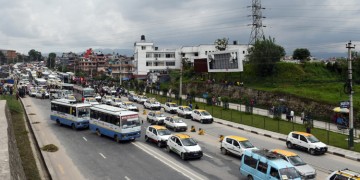
Small 12–15 seater electric vans operate on short intercity routes and within the Kathmandu Valley. However, large electric buses remain scarce in public transport, primarily due to high upfront costs.
The government is preparing to add 100 more electric buses to Sajha Yatayat’s fleet in the coming few months to ease the growing pressure on Kathmandu’s public transport system and adopt a more advanced urban mobility model.
Prime Minister Oli’s Chief Advisor Bishnu Prasad Rimal, Economic and Development Advisor Dr Yuba Raj Khatiwada, Communications Advisor Kiran Paudel, Secretary of the Ministry of Land Management, Cooperatives and Poverty Alleviation Kedar Nath Sharma, and Director General of the Department of Transport Management Rajiv Pokharel, among others, attended the meeting.
While Nepal has made significant progress in electric vehicle adoption in the passenger car segment, the same cannot be said for public transport. Small 12–15 seater electric vans operate on short intercity routes and within the Kathmandu Valley. However, large electric buses remain scarce in public transport, primarily due to high upfront costs.
Currently, Sajha Yatayat operates a fleet of 40 large electric buses, while a few are run by the private company Sundar Yatayat.