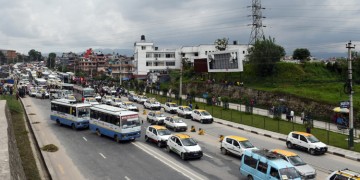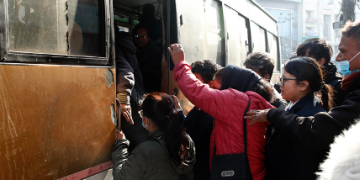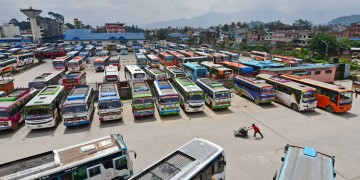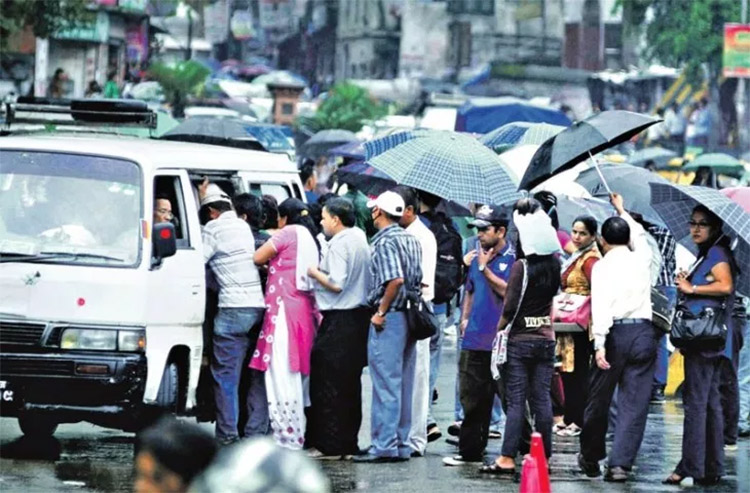
KATHMANDU: Every morning in Kathmandu, the same scene repeats itself. Thousands of people stand on dusty roadsides waiting for buses. Office-going employees are stuck in traffic. Students are forced to travel by hanging on the doors of crowded microbuses. Bus drivers shout their destinations over the noise of traffic, while foreign tourists struggle to understand where the bus is going.
For many Nepalese, this has now become a normal daily life. Which is negatively affecting our society, economy and lifestyle and even production relations. Therefore, this terrible situation must be changed. But how?
Nepal’s public transport is not just about travel. It is directly linked to people’s livelihoods, economy, social relations and sustainable development. Public safety, economic productivity, sustainable tourism, environment, traffic management, and the quality of citizens’ daily lives. But this system, which carries millions of people every day, is still running with old-fashioned methods, weak regulations, disorganized planning and a lack of a long-term national vision.
On the other hand, Nepal is also changing. Electric buses are starting to appear in Kathmandu. QR payment systems are expanding into public transport. Digital technology is growing rapidly. The younger generation is demanding a clean, organized and smart city.
The problem is that the country is moving forward, but Nepal’s public transport system is still stuck in the same style as the past.
This article is not written to blame only the drivers or co-drivers. They are also forced to work within Nepal’s weak legal and managerial structure, irresponsible policies and systems, traffic and administrative pressures, and profiteering vehicle owners and a disorganized system.
The real problem is even bigger. Nepal does not have a clear and long-term public transport vision that is consistent with a modern urban society. Where there is no government investment, there is no interest from policymakers and stakeholders.
And if this situation continues, the problem will become even more serious as the city expands and private vehicles increase and people rely on motorcycles.
Ground reality of public transport in Nepal
Anyone who regularly uses public transport in Kathmandu understands the reality. Many buses are overcrowded, poorly ventilated, noisy, dirty, and poorly maintained.
During the summer, dust, traffic, and sun make traveling inside buses extremely uncomfortable. During the monsoon, passengers are forced to stand on muddy roadsides waiting for buses. Many buses have torn seats, dirty floors, broken windows, and poor sanitation. While these problems may seem minor, they define the daily travel experience of millions of Nepalis. Public transportation should not be a struggle. It should be organized, safe, reliable, and respectful.
Bus system still confusing
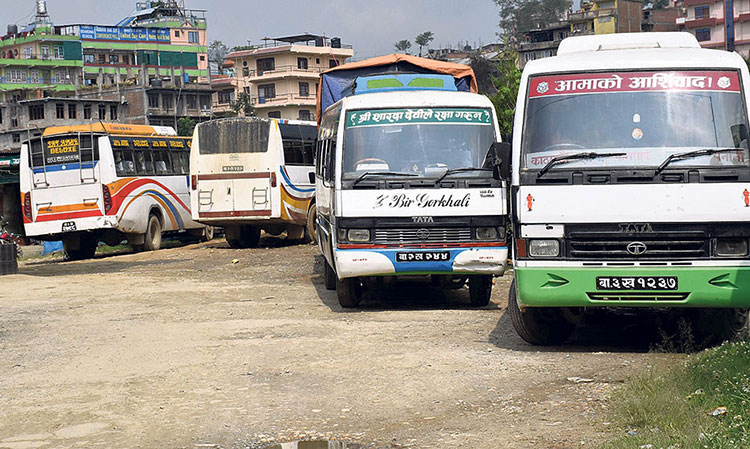
One of the biggest problems with Nepal’s public transportation system is the confusion of routes. Even today, passengers rely on handwritten notes, haphazardly pasted stickers, blurry boards, or the shouts of the driver. Even the bad behavior of passengers. Even local passengers sometimes find it difficult to understand whether the bus is going inside or outside the Ring Road, whether it is going through Baneshwor or not, whether it is stopping at Koteshwor or not, whether it reaches Bhaktapur or stops in between, or which bus is leaving and when, or whether it is leaving or not.
For tourists, this system is even more difficult. Nepal should now implement a clear color-based route system. For example, red route → Ring Road service, blue route → Airport service, green route → Lalitpur service and yellow route → Bhaktapur service.
Every bus should have a route number, destination, digital display, and consistent route information. South Korea, Singapore, Japan, and India are also successfully using such systems. Nepal does not need the most expensive system. Nepal needs a systematic system.
Buses should stop at bus parks and stops or at designated places
One of the main reasons for traffic jams in Kathmandu is that buses stop indiscriminately. Public vehicles stop at intersections, in the middle of the road, near traffic lights, at schools or sensitive areas, or suddenly in front of moving vehicles. This increases traffic jams, accident risks, quarrels, rudeness, uncomfortable and difficult travel, and endangers the safety of pedestrians and motorcyclists.
Nepal should now strictly enforce the system that buses stop only at designated bus stops. In addition, bus stops should be improved. A modern bus stop should have a roof and toilets, route information with time, lights and water, all types of seating, and clear signage. Even simple improvements can make a big difference in the passenger experience.
Smart public transport system needed
Kathmandu’s traffic can no longer be controlled manually. Nepal needs a centralized transport control system linked to GPS tracking, traffic police, route management, timetables, and emergency monitoring.
Every public vehicle should have GPS tracking, speed monitoring, digital registration, and route tracking systems. This will help control reckless driving, reduce bus racing, improve time management, and respond quickly to accidents. Passengers should be able to get information about the whereabouts of the bus through a mobile app.
Public transportation should be clean
A harsh reality of Nepal’s public transport is the lack of cleanliness. Many buses are not cleaned regularly. Dust, dirt, bad smell and damaged seats make the passenger experience worse. The government should implement mandatory cleanliness standards for public transport. This should include daily cleaning, weekly deep cleaning, random inspections, and fines for violations. Clean public transport is not just a luxury and a business. It is also a fundamental right and the basis of development. Public respect is a right.
CCTV and passenger safety should be mandatory
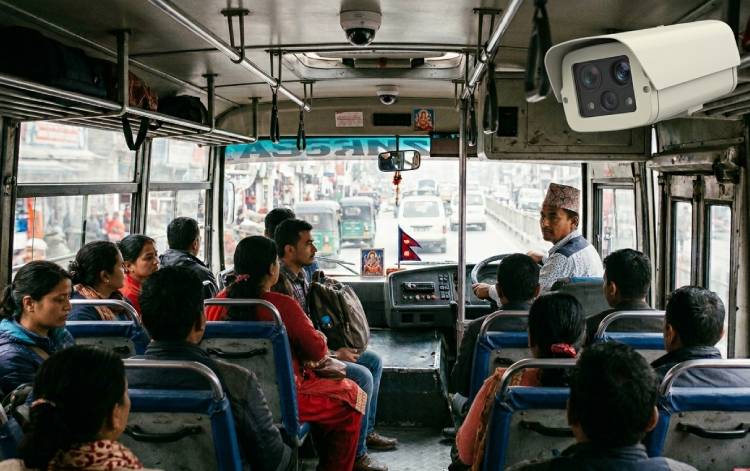
Especially women, students, and senior citizens still do not feel completely safe on many public transport vehicles. Buses should have CCTV cameras, complaint numbers, driver identification, and emergency alert systems. This will reduce abuse, control theft, increase accountability, and help in accident investigation.
Drivers and co-drivers need professional training
Drivers and co-drivers work in difficult conditions. But professionalism needs to be improved. Passengers frequently complain about dangerous overtaking, abuse, smoking, lack of cleanliness, and competition to pull passengers. Nepal should implement mandatory training and development, health screening and health insurance, road safety and passenger-friendly education, technical knowledge, skills and training, and a modern character certificate renewal system.
Digital payments are transforming Nepal
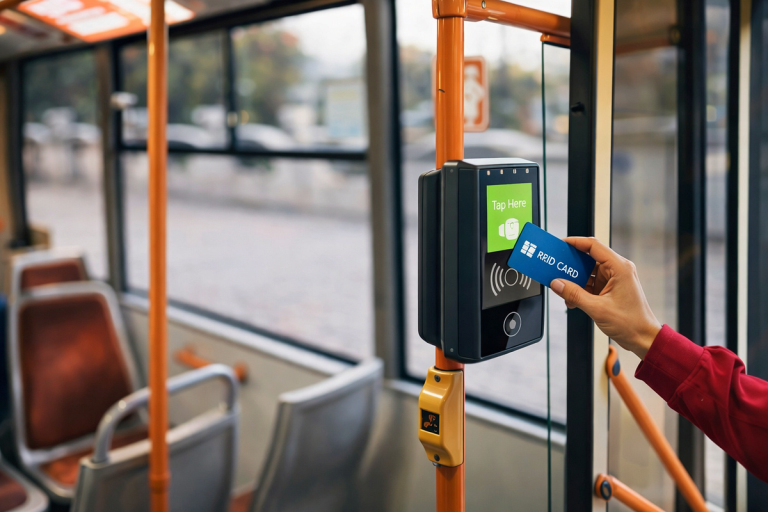
Systems such as eSewa, Khalti, IME Pay, and Phone Pay have rapidly expanded digital payments in Nepal. Even world-class service providers are interested in coming to Nepal. Some public buses have started accepting QR payments. This is a positive start. But the banking charges for the service are very expensive and impractical. This needs to be improved, otherwise digitization will only feed the middlemen. The digital system will reduce fare disputes, facilitate cash management, increase transparency, be more reliable and less expensive, and modernize the passenger experience.
Electric public transport is a big opportunity
Air pollution in Kathmandu has now become a serious public health problem. Transport has a major contribution to this.
Since Nepal has hydroelectric potential, electric public transport can be the future of Nepal. The government should invest in electric buses, charging stations, EV incentives, and green transport policies. This will reduce fuel imports, reduce pollution, and provide long-term economic benefits.
The main thing to think about is that EV manufacturers and distributors must convince government agencies, the media, consumers, and experts about its sustainability, safety, battery management, and economic aspects. Otherwise, the day may come when the saying goes, “Out of the frying pan and into the fire.”
The use of private vehicles must be reduced
If Kathmandu’s roads continue to be filled with private vehicles, the city will be stuck in permanent traffic jams in the future. The solution is not just to widen the roads. It seems that walking and cycling infrastructure, improvements in road structure, mass transportation, changes in lifestyle, attention to school and college selection, and even a rethinking of migration are necessary. Similarly, another solution is to make public transport reliable, clean, timely, affordable, and convenient. For this, government investment and favorable laws and a systematic structure are necessary. When people have better options, they start choosing public transport themselves.
Park and ride is essential
Park and Ride systems can be set up in the main entry areas of Kathmandu, such as Kalanki, Koteshwor, Satdobato, and Bhaktapur. This would allow people to park outside and use buses or EV shuttles to get into the city. This would reduce traffic, save money, make citizens healthier, reduce parking pressure, reduce traffic jams and accidents, and increase public transport usage.
Nepal should now prioritize public transport at the policy level. This should include government investment, public transport authorities, tax exemptions on EV public buses, concessional loans for public transport improvements, uncontrolled parking controls, and gradual increases in parking fees in congested areas. But people should not be punished without giving them options. Public transportation should be improved first.
Conclusion
Nepal’s public transport system is not completely broken. But the situation will get worse if it is not improved. Nepal should now develop a long-term transport approach with safety, cleanliness, technology, discipline, sustainability, and respect for passengers at the center.
Public transport touches the lives of millions of Nepalis every day. Students going to college. Employees going to office. Tourists going for sightseeing. Patients going to hospital. Families returning home. Service providers. Even future policy makers.
It is said that the speed of safe and organized transport determines the speed of daily life and development of the entire country. If Nepal can improve public transport properly, its benefits will not be limited to buses. It will have a positive impact on public safety, tourism, economy, environment, urban discipline, sustainable development, and the quality of healthy citizen life.
Nepal does not need the most expensive, unorganized and weak transport system in the world. It needs safe, sustainable, affordable, accessible and smart mobility for all, which is our right, the responsibility of the state and the way of life of citizens.
The author Bhandari is the Sports Officer of Nepal Automobile Association (NASA).