KATHMANDU: If someone says electric vehicles must be the only option for Nepal, would you believe it? At least for the next few years, I don’t think so.
It is not enough for a vehicle to simply run on the road. Where and on what kind of road it will be driven, how long it lasts, how much maintenance costs, how reliable the energy supply is, and how much tax must be paid to buy and use it are all equally important.
Geographical difficulties, landslides, river erosion and floods make the trade routes connected to China especially risky.
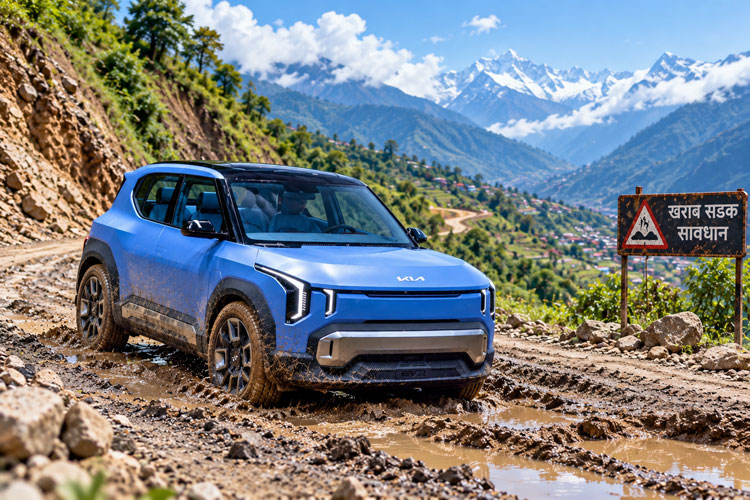
Given Nepal’s geographical diversity, no single type of vehicle can be called suitable for everyone. Vehicles face different challenges on the flat roads of the Terai, the narrow bends of the hills and the difficult tracks of the Himalayan region. Many of our roads are still dusty, muddy and dangerous. In such conditions, the choice of vehicle must weigh practical usefulness alongside technology and price.
Recent photographs of electric vehicles damaged on their way from China to Nepal have made this debate all the more relevant. After vehicles brought in via Upper Mustang were seen broken down by the roadside, interest has been voiced by Nepali consumers and foreign tourists alike. This has raised questions about Nepal’s road infrastructure and its vehicle transport arrangements.
However, it would also be wrong to conclude from these incidents that all EVs are weak. Technical facts are needed on the damage to the vehicles, its causes and the condition of the transport. Even so, the episode has raised one important question: given Nepal’s difficult terrain and weak infrastructure, what kind of vehicles and what kind of import system are we choosing?
Roads alone are not to blame; management is also at fault
A vehicle imported from China travels from the manufacturing hub to the border and then across Nepal’s difficult roads to its destination. Geographical difficulties, landslides, river erosion and floods make the trade routes connected to China especially risky.
Along the way, road conditions, weather, the method of transport and management can all affect the vehicle’s safety.
Because the government calculates tax on imported vehicles by adding transport costs, bringing vehicles in through alternative routes pushes prices up. With road infrastructure weak, the government should therefore consider policy options to reduce transport costs. Where feasible, safe truck transport, well-organized transit and risk-mitigation measures need to be adopted.
The responsibility of traders is no less. Their duty is not merely to sell vehicles to consumers. Ensuring safe transport, suitable vehicle selection and after-sales service is equally important. A fair assessment of the costs and benefits of importing by sea can also be carried out.
EVs cannot be the only choice for all
For urban commuting, daily trips to the office and most regular highway travel, EVs are an excellent choice. Low operating costs, energy efficiency and zero local air pollution make them more useful than petroleum-fuelled cars. But the situation is different for consumers who must travel regularly over difficult terrain or who live in remote areas.
In remote areas, the availability of charging infrastructure, charging time, access to maintenance and the ability to operate the vehicle in emergencies matter greatly. When floods and landslides block roads or the electricity supply is disrupted, the availability of alternatives is also important. In such situations, vehicles running on petroleum fuel or other suitable technologies may prove practical.
This does not mean EVs cannot negotiate difficult roads. Ground clearance, drivetrain, battery protection, water-wading capability and the operating limits set by the manufacturer all play a major role. Consumers should therefore choose a vehicle after understanding their actual needs.
The government’s goal should not be to make EVs the only option, but to create an environment in which consumers can choose the vehicle that suits their needs.
The government, too, should not treat EV promotion as a policy of applying one technology to everyone. The goals of environmental benefit, energy security and reduced dependence on imported petroleum products are important. But in pursuing them, the geographical circumstances and economic capacity of consumers cannot be ignored.
The future of EVs in Nepal is bright. But their expansion must move forward together with improvements in roads, bridges, charging networks and after-sales service. A policy of increasing EV use in suitable places while keeping other technology options open as needed is more practical than trying to displace petroleum vehicles immediately.
Ultimately, no single technology alone will determine the future of vehicles. Geography, infrastructure, cost and consumer needs all play a part. EV use in Nepal should grow, but the idea that EVs are the solution to every problem is not right. The government’s goal should not be to make EVs the only option, but to create an environment in which consumers can choose the vehicle that suits their needs.