KATHMANDU: Nepal and India have advanced two major petroleum infrastructure projects aimed at strengthening Nepal’s fuel storage, transportation and distribution system.
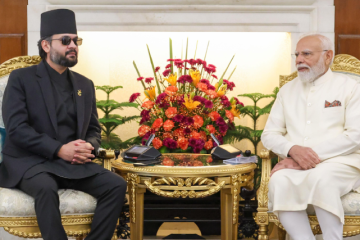
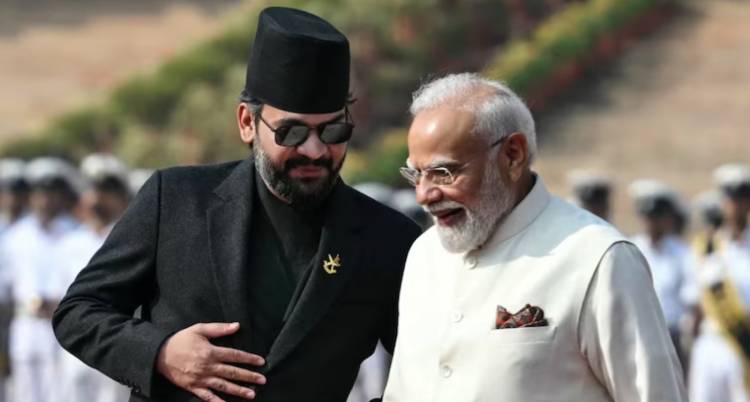
Prime Minister Balendra Shah and Indian Prime Minister Narendra Modi jointly handed over the second phase of the Motihari-Amlekhgunj Petroleum Pipeline and laid the foundation stone for a new petroleum storage terminal in Jhapa on Monday.
The ceremonies were held simultaneously in New Delhi, with both leaders jointly inaugurating and launching the projects.
Motihari-Amlekhgunj pipeline phase II
Under the second phase of the Motihari-Amlekhgunj Petroleum Pipeline project, the Amlekhgunj depot has been upgraded with modern storage and distribution facilities.
The project includes two petrol storage tanks with a capacity of 4,100 kiloliters each, an automated tank-truck loading gantry with 24 bays, a terminal automation system, a quality control laboratory and upgraded fire safety facilities.
With these improvements, Amlekhgunj has become Nepal’s first modern petroleum terminal, according to Nepal Oil Corporation (NOC).
The project was developed under a government-to-government (G2G) agreement signed between Nepal and India in 2015. It was implemented through a business-to-business (B2B) agreement between NOC and Indian Oil Corporation (IOC).
A program was organized at Amlekhgunj to mark the handover.
New petroleum terminal in Jhapa
Meanwhile, the foundation stone was laid for a new pre-fabricated petroleum storage terminal in Jhapa. The project will include a cross-border pipeline connecting Siliguri in India to Charali in Jhapa.
The pipeline will be approximately 50 kilometers long and have a diameter of eight inches. Around 36 kilometers will be built on the Indian side and 14 kilometers in Nepal.
The new terminal will have storage capacity of 6,600 kiloliters for petrol and 12,300 kiloliters for diesel. It will also include modern storage and distribution facilities.
The entire project will be constructed with a grant from the Indian government.
Both projects are part of Nepal and India’s ongoing cooperation in cross-border petroleum infrastructure. They are expected to improve fuel storage capacity and strengthen Nepal’s petroleum supply and distribution system.