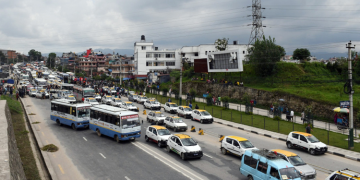
KATHMANDU: Vehicle ownership becomes more expensive as a vehicle gets older. Costs increase due to higher taxes, rising maintenance needs, and lower fuel efficiency.
Older vehicles generally deliver poorer performance. They break down more often and offer lower mileage. This raises repair and fuel expenses. They also attract higher taxes.
Such vehicles emit more smoke and increase air pollution. Accident risks are also higher. For economic and environmental reasons, many countries require old vehicles to be phased out after a certain period.
Most countries enforce mandatory scrapping after 15 to 20 years. Nepal does not yet have a formal scrappage policy. However, public vehicles older than 20 years have not been renewed since 2017. Some provinces, including Bagmati and Gandaki, have set a 30-year limit for private vehicles.
After Nepal adopted a federal system, provinces gained authority over transport regulation. Each province has issued its own transport laws. Vehicle age limits range from 20 to 30 years. Tax rates also differ by province.
How the ‘Aging Tax’ works
Across all seven provinces, vehicles are taxed normally up to 14 years from the production year. No additional annual tax is applied during this period.
From the 15th year onward, an additional 5 percent tax is applied each year. This is commonly called the “aging” or “model” tax, and in Nepali, it is referred to as “Buḍho Kar.”
According to the Department of Transport Management, vehicles older than 14 years must pay this additional tax annually. The rate increases by 5 percent each year.
For example, a vehicle manufactured in 2010 pays regular tax until 2024. From 2025, an extra 5 percent is added every year. The same rule applies to four-wheelers. Cars, jeeps, and buses also face a 5 percent annual increase from the 15th year.
After 34 years, the tax does not increase further. Owners continue paying the doubled amount.
Late tax payments attract penalties, including on the aging tax portion. Tax rates may also change each year through the annual finance act.