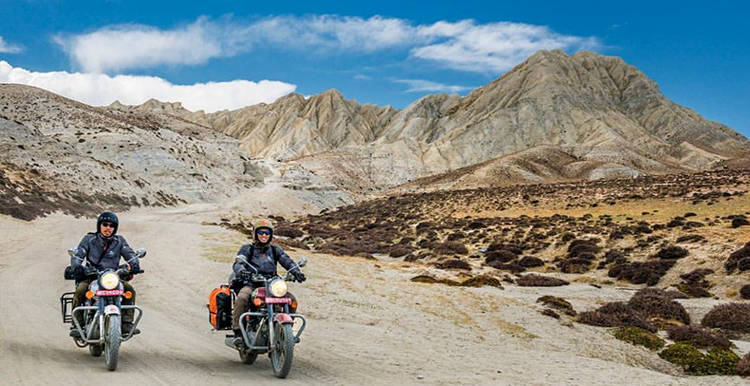
The seventh chapter of the Ride Nepal Series takes riders to Lo-Manthang in Upper Mustang, one of Nepal’s most remote and culturally preserved regions.
Often called the last forbidden kingdom, Upper Mustang lies close to the Nepal–Tibet border and remained closed to foreigners until the early 1990s. Even today, it stands out for its untouched landscapes, ancient settlements, and strong Tibetan influence.
Upper Mustang offers a riding experience unlike anywhere else in Nepal.
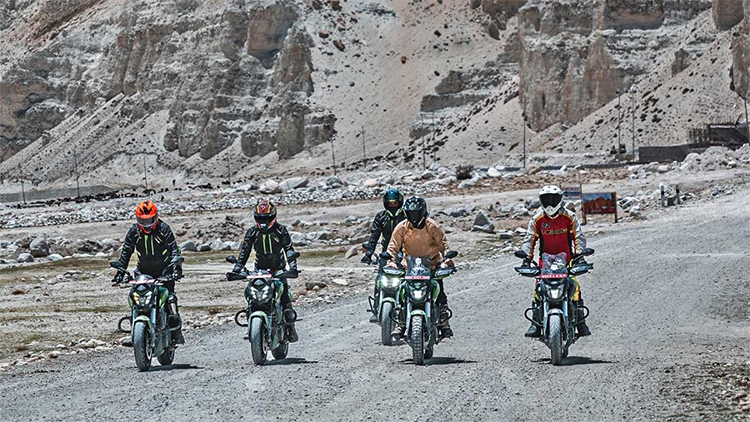
Compared to Lower Mustang, this route is more demanding and physically taxing, with long off-road stretches, barren desert-like terrain, and powerful valley winds. The landscape feels stark and surreal, giving riders the sense of traveling through another world.
The journey to Lo-Manthang typically begins from Pokhara. Riders follow the Baglung Highway up to Beni, where smooth blacktop roads gradually end. Beyond Beni, the trail turns rough and off-road, marking the real start of the Upper Mustang adventure.
The classic route follows:
Tatopani → Ghasa → Marpha → Jomsom → Chele → Syangboche → Charang → Lo-Manthang
Riders starting from Kathmandu first take the Prithvi Highway to Pokhara before continuing north. Those entering from Sunauli usually ride through Butwal and Pokhara before joining the Mustang route.
The ride to Lo-Manthang covers around 245 km from Pokhara, typically completed over 5–6 days. Riders starting from Kathmandu travel approximately 450 km, usually planning 7–8 days for the journey, while those entering from Sunauli cover about 430 km in a similar 7–8 day timeframe.

The route climbs to a maximum altitude of around 3,840 meters, with riding conditions ranging from moderate to extreme, depending on road surfaces, weather, and high-altitude terrain.
Upper Mustang demands careful riding. Loose gravel, rocky trails, narrow mountain paths, and strong winds require steady throttle control and endurance. While accommodation is available in the form of hotels and lodges at major stops, comfort is basic in remote areas.
The last reliable fuel station is in Beni. Fuel may be available in local markets beyond this point, but availability is not guaranteed, making fuel planning critical.
The Upper Mustang ride passes several iconic destinations along the way, including the Tatopani hot springs, Rupse Waterfall, the world-famous Kali Gandaki Gorge, Dhumba Lake, and the sacred Muktinath Temple. As riders move deeper into Upper Mustang, cultural landmarks such as Jhong Cave and Thubchen Gompa in Lo-Manthang highlight the region’s deep historical and spiritual roots.
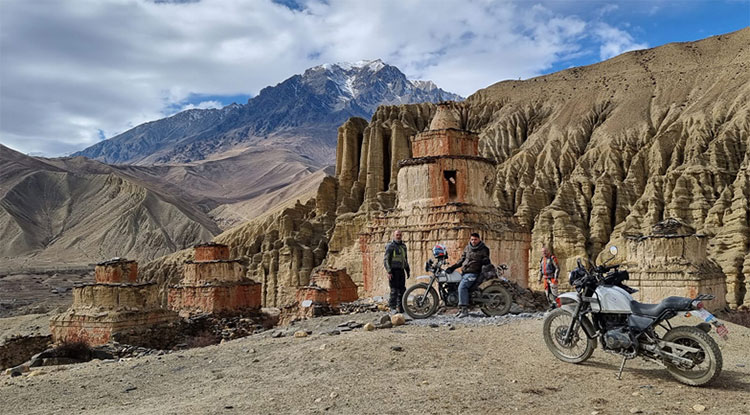
Throughout the journey, the route is framed by towering Himalayan peaks, including Dhaulagiri, Nilgiri, the Annapurna range, and Machhapuchhre, adding dramatic scale and visual intensity to every day on the trail.
Riders must obtain the required entry permits before starting the journey to Upper Mustang. These include the Annapurna Conservation Area Project (ACAP) permit, which costs Rs 1,000, and the TIMS (Trekking Information Management System) card, priced at Rs 500.
In addition, Upper Mustang is a restricted area, and riders may need to secure additional special permits, depending on nationality and prevailing regulations, so advance verification is essential before planning the ride.
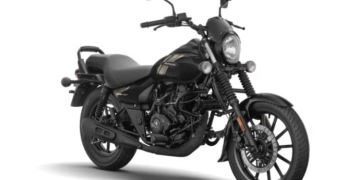
The Lo-Manthang ride is not about speed or comfort but about endurance, discipline, and respect for the terrain. High altitude, strong winds, and remote trails demand careful preparation and a reliable motorcycle.
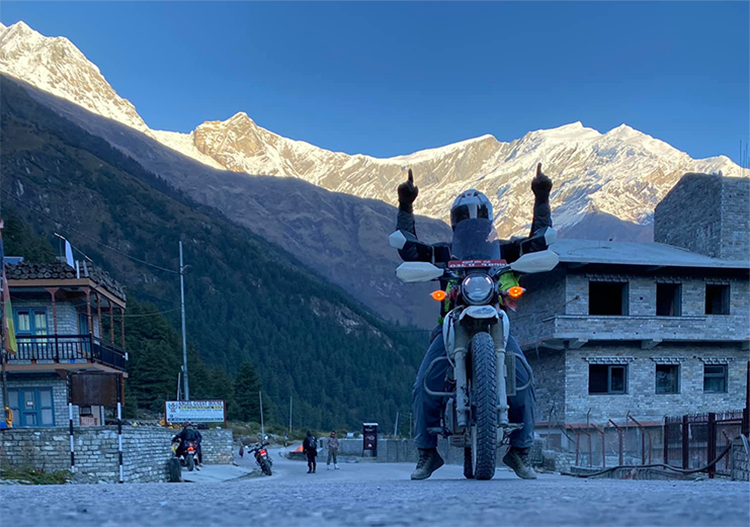
More challenging than Lower Mustang, the journey rewards riders with one of Nepal’s most distinctive landscapes and cultural experiences, making Lo-Manthang a truly unforgettable destination on the country’s motorcycling map.
Shrestha is a tourism expert.