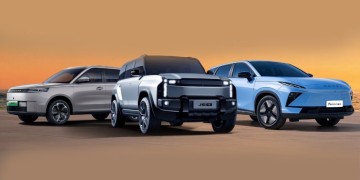
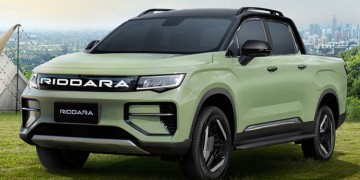
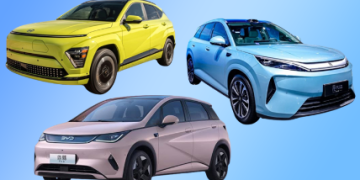
KATHMANDU: Electric vehicles from China are expanding rapidly in the Nepali market. China currently has around 129 car brands, including multiple sub-brands established by major automakers, producing battery electric, plug-in hybrid and extended-range electric vehicles.
Most of these brands are looking to expand globally, and Nepal has become one of their emerging destinations. While China classifies its automakers into categories such as luxury, high-tech, premium, semi-premium, super mainstream, mainstream, entry-level and traditional, only models from the high-tech and semi-premium categories have reached Nepal so far.
High-tech brands like Avatr and semi-premium brands such as IM and Zeekr are now available in the local market.
According to industry estimates, around three dozen Chinese brands have entered Nepal to date. Among them, nearly a dozen brands have already exited the market.
Currently, brands such as BYD, MG, Omoda/Jaecoo, Deepal, Dongfeng Nammi, and Leapmotor are performing well, while GAC Aion, Kaiyi, Xpeng and Zeekr are gaining attention.
Other brands like Smart, Skywell, Great Wall, Geely, Wuling, BAW, Seres, JY Air and Neta are also available through different dealers.
A few new brands are preparing to enter, while some older ones have discontinued operations. The latest addition is IM, which recently began official sales in Nepal.
An importer told MeroAuto, “So far, about three dozen Chinese car brands have come to Nepal, but around a dozen have shut down. The brands entering now are better structured, and since China is tightening export rules, low-quality brands are unlikely to come.”
China tightens EV export rules
China’s domestic EV industry is undergoing consolidation. The government may make mergers mandatory. Most automakers are facing losses due to heavy price competition.
Currently, only 30% of EV dealers in China are profitable. The rest are struggling with high production and R&D costs. Experts say mergers aim to stabilize the market. Manufacturers are still investing heavily in battery technology, safety systems and charging infrastructure despite declining profits.
The Chinese commerce ministry announced that export licenses will be required for EVs starting next year. This move aims to prevent unfair competition from unregulated traders and protect the reputation of Chinese auto brands abroad.
Only automakers and their authorized companies will be allowed to apply for export licenses. All EV sellers must follow the existing rules to export vehicles.