KATHMANDU: Two separate auto associations organized two major auto shows in August this year; the NAIMA Mobility Expo and the NADA Auto Show 2026, both held at Bhrikutimandap in Kathmandu. However, even after both events, the market has yet to see the excitement many had expected.
Weak overall economic activity, along with the devastating Bhotekoshi flood that left thousands of people missing and caused damage worth billions, has kept the market unusually quiet. It’s been almost a month since the flood, but people are still struggling to move past it.
The flood also forced the closure of a major trade route with China, causing several vehicles that companies were bringing to Nepal to go missing. This has created liabilities worth billions for insurance companies. All of this has left the auto market fairly sluggish, right when Dashain, usually the busiest season, is approaching.
“It doesn’t even feel like Dashain is coming. And there’s no guarantee that everyone who booked a vehicle at the auto shows will actually go ahead and buy it,” one car dealer told MeroAuto.
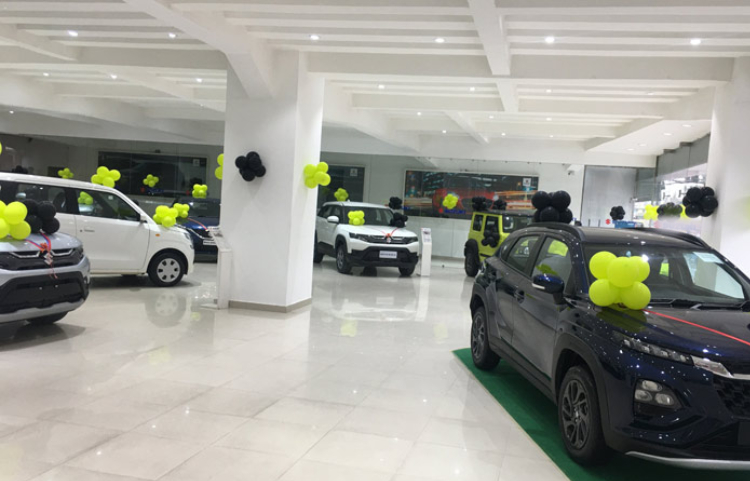
Most dealers agree that footfall has not picked up the way it usually does. “By this time in previous years, sales would have already gained momentum. This year, that’s not happening. A few models are getting attention, but otherwise, people seem to be in a ‘wait and watch’ mode,” they say.
This shows that both dealers and buyers remain fairly optimistic about EVs. But recent events have made potential EV buyers hesitant.
Import problems
The Rasuwagadhi border point was damaged by the flood, and China shut down the Tatopani border point, causing serious problems in vehicle imports. Vehicles brought in for the festival season are currently stuck at the Mustang customs office, and bringing them in from there isn’t easy either.
With supply disrupted, dealers are quietly working behind the scenes, trying to make sure vehicles reach customers who booked them before Dashain.
“We deliver vehicles to our customers exactly as committed. We’re working quickly on everything needed to make that happen,” said Gaurav Sarda, Managing Director of SPG Automobiles, which sells vehicles from the Chery Group.
Chinese vs Indian EVs
If Chinese EVs can’t be delivered on time, many buyers may end up choosing Indian-made EVs instead. Chinese companies are currently pushing hard to expand in markets where they’d normally sell around 15,000 units a year, aiming for 10,000 units even in smaller markets. But it’s easy to guess that supply remains their biggest headache right now.
If customers don’t get their Chinese cars in time for Dashain, Indian-made EVs are likely to grab a good chunk of the market. This could also set the stage for tougher competition between the two in the days ahead.
What about the petrol car market?
While EV sales remain weak, petrol cars aren’t doing particularly well either. Petrol cars currently make up around 20 percent of total car sales in Nepal.
Although sales have dropped compared to last year, there is no sign of a big jump in petrol car sales either.