KATHMANDU: Private investment in EV charging infrastructure has significantly improved long-distance electric mobility in Nepal. Traveling from Kathmandu to the eastern Terai or towards western Nepal is now far more practical in an EV than it was two years ago.
Earlier, range anxiety and long waiting times at charging stations were major concerns for EV users. Today, that situation has changed. DC fast chargers installed along major highways have increased driver confidence.
Interestingly, much of this expansion has been driven by small highway hotels and restaurants rather than only vehicle distributors or the government. Many roadside businesses are installing DC fast chargers with their own investment to attract and retain customers.
From Dharke and Malekhu in Dhading to hotels along the highway in Ichchhakamana Rural Municipality, Chitwan, multiple DC fast chargers are now operational. During a short tea or coffee break, drivers can typically add 10-20 percent charge, making intercity travel smoother.
Hotel operator Saroj Adhikari from Galchi says EV charging has become almost mandatory for new businesses. Without charging facilities, hotels risk losing customers.
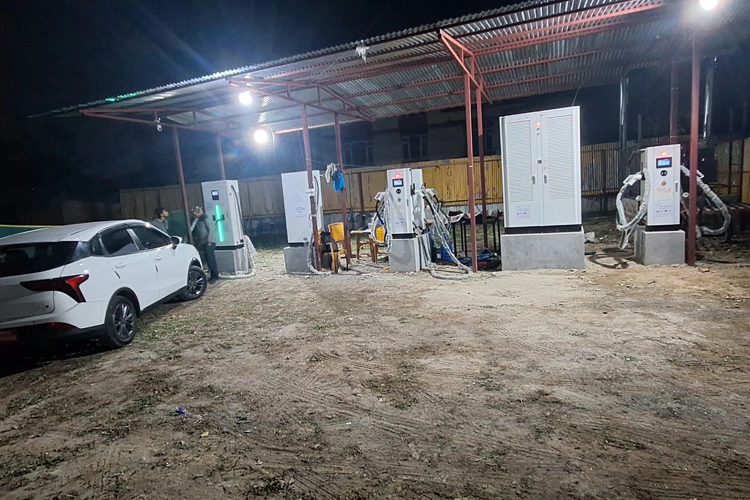
Similarly, Barasinghe Beer Garden in Kurintar has installed a DC charger, serving around 30-40 vehicles daily. Most visitors do not fully charge their cars but top up during a 30-minute meal stop, helping them save time on long trips.
The two examples represent a broader national trend. DC chargers are now available at intervals of approximately 30-40 km on major highways.
Areas that had no chargers a year ago now have multiple units. On the eastern corridor, routes from Bhiman towards Belaka have expanded to include Katari and Gaighat. The Pokhara highway and the Narayangadh-Butwal and Butwal-Mahendranagar corridors have also seen similar growth.
Over 2,000 DC chargers installed
As per the Nepal Electricity Authority, nearly 2,000 DC chargers have been installed nationwide as of last week. These include both CCS2 and GBT charging guns.
GBT chargers are more common due to higher usage by commercial EVs and are widely available, including in remote areas. CCS2 chargers are also present in significant numbers, supported by car importers, the government, and private hospitality operators.