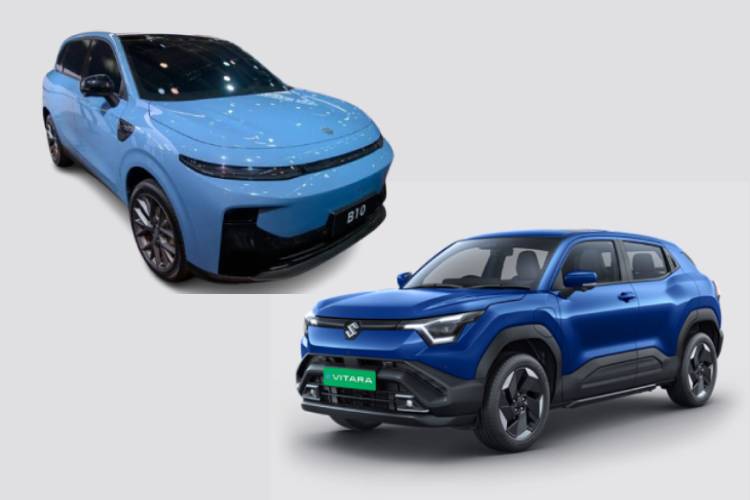
KATHMANDU: The Suzuki e Vitara and Leapmotor B10 have emerged as two strong contenders in Nepal’s mid-size electric SUV segment. While comparisons are usually made between Chinese EV brands, these two models bring together products from two different automotive backgrounds.
The e Vitara is Maruti Suzuki’s first global electric SUV, developed under the Japanese automaker’s EV strategy. The Leapmotor B10, meanwhile, represents the latest generation of Chinese electric vehicles with a strong focus on technology and performance.
Although the two SUVs differ in design philosophy, they compete in a similar price range and target buyers looking for a feature-rich electric SUV. Here’s how the Suzuki e Vitara and Leapmotor B10 compare across design, dimensions, performance, features, safety, and value.
Design
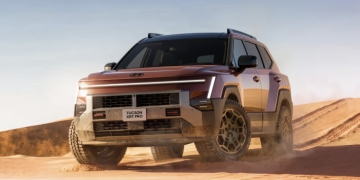
The Suzuki e Vitara follows a traditional SUV design with a bold front bumper, muscular fenders, and an upright stance. It has a rugged appearance inspired by conventional SUVs.
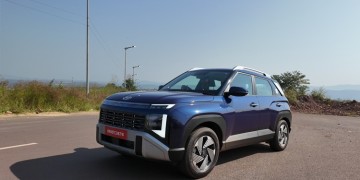
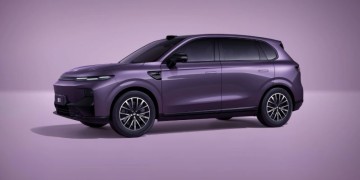
The Leapmotor B10 adopts a more futuristic EV design. It features flush door handles, a slim LED light bar, clean body lines, and a minimalist exterior. Design preference ultimately depends on individual taste.

Dimensions
The Leapmotor B10 is larger than the e Vitara in most dimensions, giving it a more spacious cabin.
Both SUVs are available with up to 19-inch alloy wheels. They also use MacPherson strut front suspension and multi-link independent rear suspension.
Battery and performance
The Suzuki e Vitara comes with a 61 kWh battery, while the Leapmotor B10 is equipped with a 67.1 kWh battery.
The B10 also produces more power. Its rear-mounted electric motor delivers 160 kW and 240 Nm of torque. The e Vitara’s front-mounted motor produces 128 kW and 193 Nm of torque.
The e Vitara is available with a front-wheel-drive layout, while the B10 uses a rear-wheel-drive system.

Features and cabin
The Leapmotor B10 focuses heavily on in-car technology. It features a 14.6-inch infotainment display, a Qualcomm Snapdragon 8155 processor, AI voice control, a customizable dashboard, and a 360-degree camera.
The Suzuki e Vitara also offers a digital instrument cluster, a large touchscreen infotainment system, a 360-degree camera, wireless smartphone connectivity, and Level 2 ADAS functions.
Safety
Both SUVs offer a strong list of safety features. They include six airbags, ABS with EBD, Electronic Stability Program (ESP), Adaptive Cruise Control, Lane Keep Assist, Blind Spot Monitoring, and other advanced driver assistance systems.
Price in Nepal
CG Motors offers the Suzuki e Vitara in multiple variants priced between Rs 4.9 million and Rs 6.0 million.
The Leapmotor B10 is currently priced at Rs 5.5 million. Before the latest fiscal budget reduced EV taxes, it was priced at Rs 6.0 million.
Which EV is the better buy?
The choice ultimately depends on the buyer’s priorities.
The Leapmotor B10 is a stronger option for those looking for more technology, a larger body, higher power output, and a bigger battery. It offers better value for buyers who prioritize modern EV features and performance.
The Suzuki e Vitara, on the other hand, stands out for its established brand reputation and ownership experience. Maruti Suzuki’s extensive service network, better spare parts availability, and stronger customer confidence make it an attractive choice for buyers who prioritize after-sales support and long-term reliability.