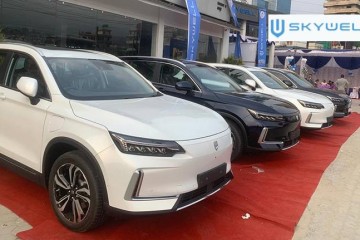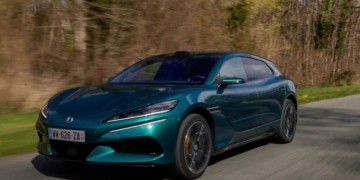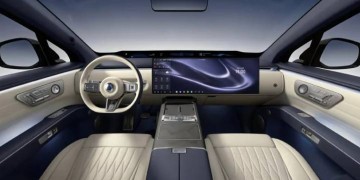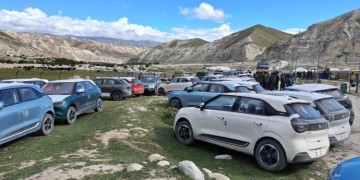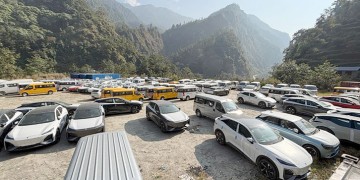
KATHMANDU: Nepal imported electric passenger vehicles from 33 different brands during the fiscal year 2025/26, highlighting the continued expansion of the country’s EV market. The imports covered a wide range of segments, including mini cars, hatchbacks, SUVs, sedans and premium luxury vehicles.
Of the nearly 15,000 passenger cars imported during the fiscal year, around 12,700 units were electric, reflecting the growing dominance of EVs in Nepal’s automobile market.
The strong demand for electric vehicles has encouraged distributors to introduce several new brands. However, only a few have managed to gain significant traction. Many of the newer entrants continue to struggle due to limited brand recognition, weaker after-sales service, inadequate spare parts availability and relatively smaller service networks.
While 33 brands imported EVs during the year, only six crossed the 500-unit mark and 11 imported more than 100 units. The remaining 22 brands brought in fewer than 100 vehicles.

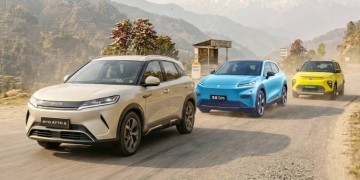
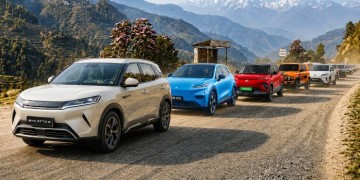
BYD retained its position as Nepal’s largest EV brand by a wide margin. Its official distributor, Cimex Inc., imported 4,270 electric vehicles, accounting for nearly one-third of the country’s total EV imports. The company imported 2,264 units of the Atto 2, 1,299 Atto 1s, 446 Sealion 7s, 257 Atto 3s, two M6 MPVs, and one unit each of the Denza D9 and Seal.
A strong global brand, competitive pricing, an extensive charging network and well-established after-sales support have helped BYD maintain its leadership.
India’s Tata Motors secured second place with 2,236 electric vehicles imported through its authorised distributor Sipradi Trading. The lineup was led by the Tigor EV, with 1,002 units, largely driven by taxi demand. The company also imported 515 Punch EVs, 494 Tiago EVs, 174 Nexon EVs, and 50 Curvv EVs during the fiscal year.

China’s Dongfeng Nami ranked third after MAW Vriddhi imported 939 vehicles. The total included 687 units of the Nami VIGO, 250 Nami Box hatchbacks, and two units of the Dongfeng 007. The recently launched Nami VIGO has emerged as one of the fastest-growing EV models in Nepal.
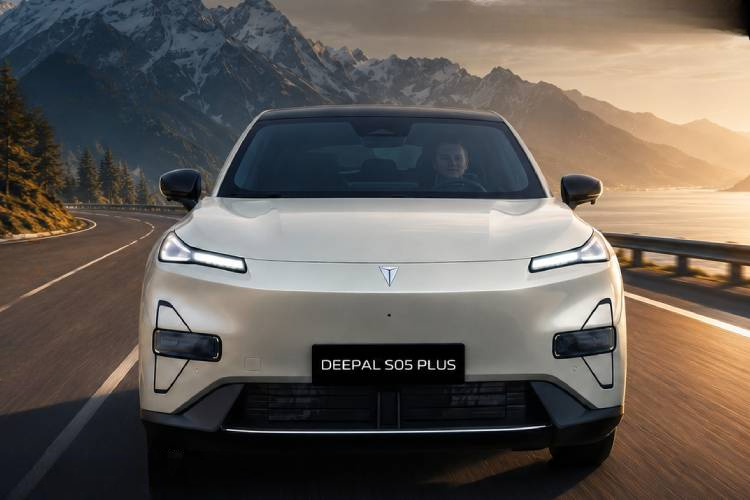
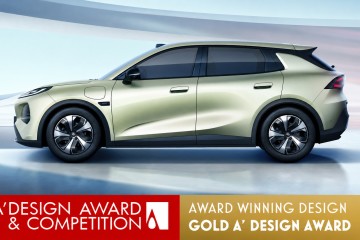
Another Chinese brand under MAW Vriddhi, Deepal, finished fourth with 788 units. The distributor imported 785 units of the Deepal S05 SUV and three units of the Deepal E07. iCAUR, represented by SPG Automobiles, completed the top five after importing 512 units of the iCAUR V23. Despite entering Nepal only last year, the brand has gained attention with its distinctive design and competitive pricing.

SPG Automobiles also imported 401 units of JAECOO, including 212 J5 SUVs and 189 J6 SUVs, placing the brand sixth. The company further imported 294 units of the OMODA E5, making OMODA the seventh-largest EV brand by import volume.
India’s Mahindra, distributed by Agni Incorporated, ranked eighth with 262 electric vehicles, comprising 212 units of the BE 6, 44 units of the XEV 9e, and six units of the e2o. MG, imported through Paramount Motors and GO Automobiles, secured ninth place with 228 units, including 140 MG S5 EVs, 39 Comet EVs, 34 IM6 SUVs, and 15 Windsor EVs.

Chinese startup Leapmotor rounded out the top ten after its distributor Shangrila Motors imported 137 units of the Leapmotor B10 SUV. The company did not import any units of the C10 or T03 during the fiscal year.
Outside the top ten, Laxmi E-Mobility imported 120 units of the Kaiyi e-Qute 02 and e-Qute 04, while GSEV (Easy Taxi) brought in 101 vehicles. Other notable brands included Proton with 97 units, GWM ORA with 78 units, Geely with 67 units, and both Forthing and Maruti Suzuki with 50 units each.

Brands importing fewer than 50 vehicles included Dayun (48), GAC AION (35), Jinpeng (32), Henrey Voltas (30), Hyundai (26), XPENG (21), Tesla (17) and BMW (10). Meanwhile, Kia, Audi, Avatr, Jaguar, BAW, Wuling, LEVC and JMEV each imported fewer than 10 electric vehicles during the fiscal year.
The figures show that while Nepal’s EV market continues to attract new entrants, sales remain heavily concentrated among a handful of established brands. Companies with stronger dealer networks, reliable after-sales service and proven products continue to dominate the country’s rapidly growing electric vehicle market.