KATHMANDU: The global auto industry enters 2026 facing slower EV growth, rising software integration and renewed focus on hybrids. After a volatile 2025 marked by affordability concerns and regulatory shifts, automakers are adjusting strategies for a more measured transition.
Here are the key trends expected to define 2026.
AI integration expands across vehicles
Artificial intelligence will become more common in new vehicles this year. Brands such as Hyundai, Kia, Mercedes-Benz and Volkswagen already offer AI-based voice control and navigation features.
Automakers including Ford and Stellantis are accelerating AI deployment across future lineups.

According to automaker disclosures and industry analysts, AI will increasingly support predictive maintenance, driver monitoring and enhanced safety systems. Over time, it is expected to become deeply integrated into software-defined vehicle platforms.
However, privacy concerns remain significant. According to Deloitte’s 2026 Global Automotive Consumer Study, 62% of U.S. respondents are concerned about data from synced devices, while 58% raised concerns about in-cabin camera data and vehicle location tracking.
Software-defined vehicles (SDV) gain momentum
The shift towards software-defined vehicles (SDVs) will continue in 2026. Early adopters such as Tesla and Rivian have built vehicles around centralized software architectures that allow over-the-air (OTA) updates.
SDVs enable continuous performance improvements, safety upgrades and infotainment enhancements without dealership visits.
According to Deloitte research, 52% of U.S. Consumers said they would keep their vehicle longer if it received regular OTA updates. While this may impact new vehicle sales cycles, it could strengthen long-term customer loyalty.

Automakers are also applying generative AI technologies such as ChatGPT and Gemini across manufacturing and development processes to improve efficiency and quality control.
According to General Motors, the company plans to integrate conversational AI into future vehicles and transition towards a centralized computing platform later this decade.
Physical buttons return to improve safety
Despite increased software integration, physical buttons are making a comeback. Consumers have expressed frustration with touchscreen-only interfaces.

Brands including Ferrari and Mercedes-Benz have reintroduced tactile controls for volume and climate adjustment.
According to industry studies, drivers can spend up to 40 seconds interacting with touchscreens while driving. Automakers are now balancing digital interfaces with physical controls to improve usability and safety.
EV growth moderates as hybrids gain ground
Global battery electric vehicle (BEV) sales rose 29% year-over-year in 2025 to approximately 14.6 million units, representing 16.1% of global light vehicle sales.

According to industry projections, BEV sales are expected to grow 19% in 2026 to around 17.4 million units, accounting for roughly 19% of global vehicle sales.
By 2026, electrified vehicles including BEVs, plug-in hybrids and range-extended EVs are projected to represent about 30% of total global sales.
However, growth is moderating in several markets due to evolving regulations, reduced incentives and affordability pressures. Hybrids and plug-in hybrids are gaining renewed focus as transitional solutions.
Combustion engines remain relevant
Despite strong EV adoption globally, internal combustion engines are not disappearing.
Ram has revived the Hemi V8, while Chevrolet is developing a new-generation V8 engine. Several German manufacturers are also investing in updated combustion platforms.
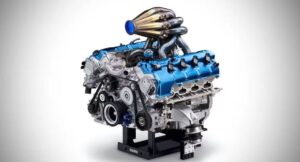
Honda is designing gasoline engines optimized for hybrid systems, reflecting a broader industry shift towards balanced electrification strategies.
According to market analysts, affordability challenges and infrastructure gaps continue to support demand for hybrids and efficient gasoline vehicles in key markets.
Chinese automakers expand global footprint
Chinese automakers continue to reshape the global competitive landscape. In 2025, Chinese-origin brands accounted for approximately 26.5% of global vehicle production, totaling around 24.8 million units.

According to global production forecasts, that share is expected to rise to roughly 27.4% in 2026.
Geely has indicated long-term plans to expand production outside China, including potential U.S. manufacturing. While large-scale U.S. entry is unlikely in 2026, global expansion strategies are accelerating.
Production outside mainland China reached about 1.1 million units in 2025 and is projected to increase to approximately 1.6 million units in 2026.