KATHMANDU: Global shipping through the Strait of Hormuz has ground to a near standstill following escalating military conflict between the United States, Israel, and Iran, after strikes killed Iran’s Supreme Leader Ayatollah Ali Khamenei on Saturday and prompted a wave of retaliatory Iranian attacks across the Middle East.
War risk insurers moved swiftly on Saturday, issuing cancellation notices for policies covering vessels transiting the Gulf and the Strait of Hormuz, an extraordinary weekend move that underscored the pace of escalation. Coverage for ships in the region is expected to jump by as much as 50%, with prices for Gulf voyages rising from approximately 0.25% to as much as 0.375% of a vessel’s replacement cost.
For an owner operating a $100 million vessel, that translates to a jump from $250,000 to $375,000 per voyage, a steep toll that has prompted many ship-owners to simply stop at the strait’s entrance rather than risk passage.
“If Israel and the US are continuing to strike Iran, it’s more likely that Iran will start trying to leverage their control via the manipulation of shipping in the region— DYLAN MORTIMER, MARINE HULL UK WAR LEADER, MARSH BROKER”
Iran threatens to close the Strait
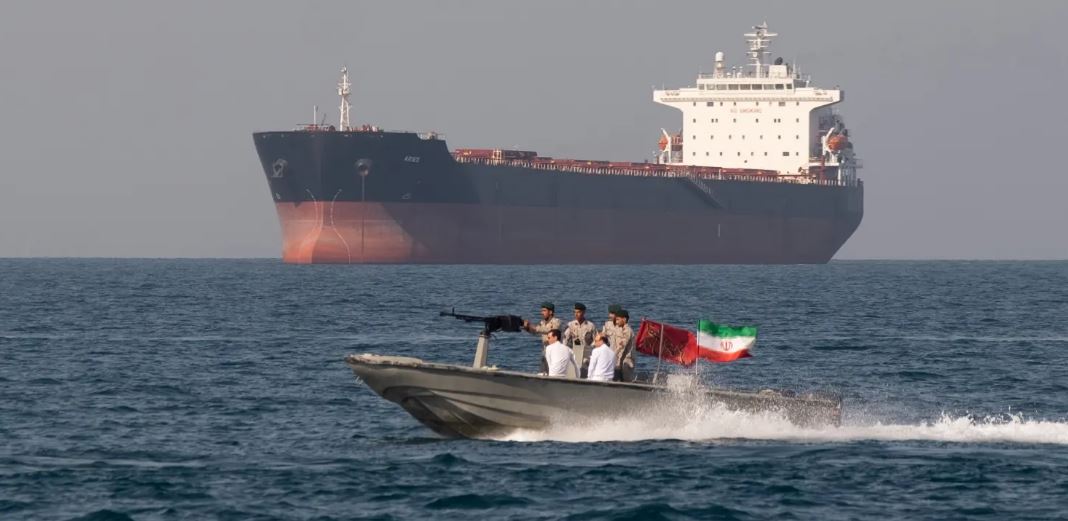
Iran has issued warnings to commercial vessels not to transit the Strait of Hormuz, and advisory firm EOS Risk reported that some ships received what appeared to be radio warnings from the Iranian Revolutionary Guard Corps declaring the strait closed to shipping. At least two vessels were struck by unknown projectiles near the waterway over the weekend.
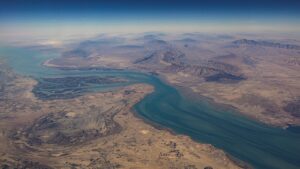
The UK Maritime Trade Operations Center (UKMTO) confirmed one vessel was hit east of the Strait, while another was struck off the coast of the United Arab Emirates. Iranian state television separately claimed that an oil tanker sank after attempting to pass through an account that has not been independently verified.
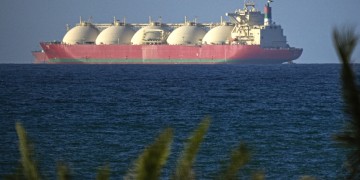
Ship-tracking platform Kpler reported that at least 150 large tankers had dropped anchor in open Gulf waters rather than attempt passage, with only a handful of Iranian and Chinese vessels moving through. “Because of Iran’s threats, the strait is effectively closed,” said Homayoun Falakshahi of Kpler. “The vessels have taken a precautionary measure not to enter as the risks are too high and their insurance costs have sky-rocketed.”
Maersk suspends transits; reroutes around cape
Danish container shipping giant Maersk, responsible for moving roughly one in six containers worldwide, announced Sunday it was suspending all sailings through both the Strait of Hormuz and the Bab el-Mandeb Strait, rerouting vessels around the Cape of Good Hope instead. The diversion adds significant time and cost to voyages between Asia, the Middle East, and European markets.
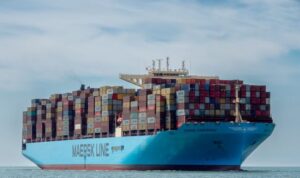
Cargo war risk insurers, covering commodities such as grain and oil carried on tankers, also said they were preparing to issue policy cancellations on Monday before renegotiating coverage at substantially higher rates.
Oil prices surge; OPEC+ responds
With Brent crude markets closed until late Sunday, over-the-counter trades between private buyers indicated the price had jumped roughly 10%, hitting around $80 a barrel. Some analysts warn prices could surpass $100 if the Strait remains closed for any significant period.
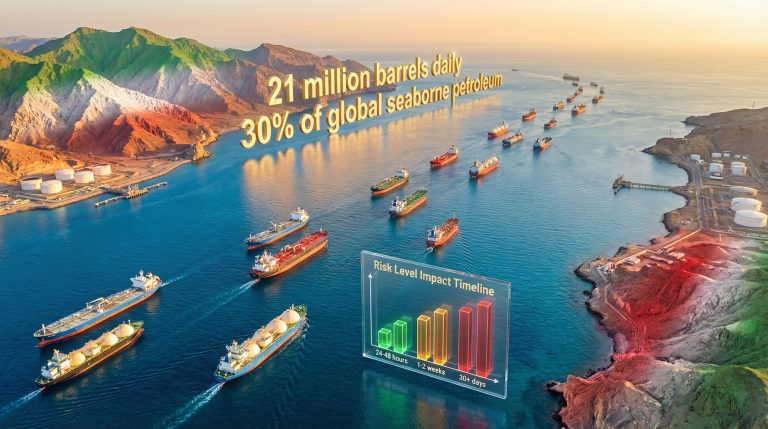
In response, OPEC+ the grouping of major oil producers including Saudi Arabia and Russia agreed on Sunday to increase collective output by 206,000 barrels per day in an effort to stabilize global markets. However, some experts doubted the increase would be sufficient to offset the potential impact of prolonged Hormuz disruption, through which roughly a fifth of the world’s crude oil and global liquefied natural gas flows daily.
Edmund King, president of UK motoring group the AA, warned that drivers worldwide could soon feel the effects. “The turmoil and bombing across the Middle East will surely be a catalyst to disrupt oil distribution globally, which will inevitably lead to price hikes,” he said. “The magnitude and duration of pump price increases depends on how long the conflict goes on.”
“To avoid the risk of severe disruption to energy supplies, the US would need to guarantee security for western-flagged ships in the Strait— JASON BORDOFF, COLUMBIA UNIVERSITY GLOBAL ENERGY EXPERT”
Insurance markets brace for further volatility
Underwriters’ primary concern remains whether Iran will move to formally and forcibly seal the Strait of Hormuz, a move that would constitute one of the most significant shocks to global energy markets in decades. Insurers are also pricing in the risk that Iranian proxies may attempt to board or seize commercial vessels, echoing tactics used during previous periods of regional tension.
Insurance costs for ships calling at Israeli ports, which had been around 0.1% of vessel replacement cost before recent strikes, are also expected to surge by as much as 50%, as underwriters brace for continued Iranian retaliation. Rather than withdrawing coverage entirely, brokers indicated insurers are expected to cancel existing policies and renegotiate at sharply higher premiums keeping routes technically insurable, but at a cost that may deter many operators.
With Iran and Israel continuing to exchange fresh aerial strikes on Sunday and showing no immediate signs of de-escalation, the coming days are expected to be critical in determining whether the world’s key maritime energy corridor can reopen safely and what impact the ongoing conflict could have on global energy supply and prices.
The information in this report has been compiled from multiple global media sources. This remains a developing story, and updates will follow as the situation evolves.