KATHMANDU: The government is preparing to strictly enforce GPS and CCTV installation in public vehicles.
The Ministry of Physical Infrastructure and Transport has drafted a new guideline to make transport services more technology-driven, safer, healthier, and passenger-friendly.
The proposed directive is titled Vehicle Technology, Safety and Passenger-Friendly Guideline 2025. Its main goal is to improve safety, reduce irregularities, prevent abuse, lower accident risks, and modernize Nepal’s transport sector.
The ministry has made the draft public and asked stakeholders for feedback. A discussion meeting has also been scheduled for 27 April 2026.
After receiving suggestions, the guideline will be finalized and implemented soon.
Vehicle owners must bear installation costs
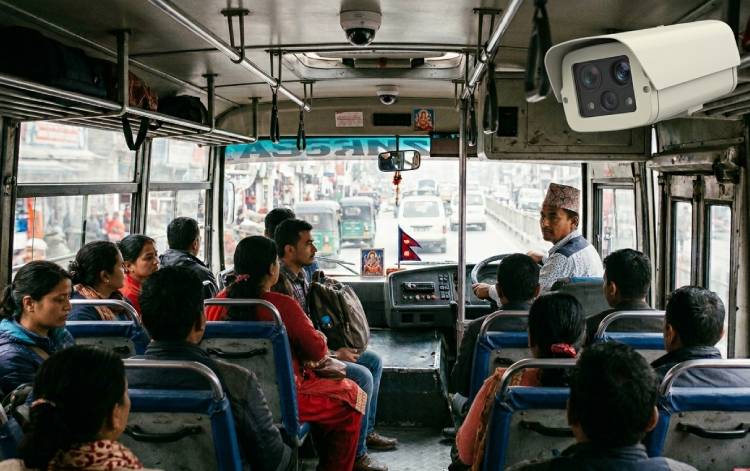
According to the draft, all public vehicles must install at least two CCTV cameras.
The installation cost must be paid by the vehicle owner. For GPS systems, the Department of Transport Management will provide technical support.
CCTV will not be mandatory for taxis. However, if taxi owners request it, the department will provide technical assistance.
CCTV footage must be stored for at least three months. The CCTV system must record all activities inside the vehicle.
It must monitor driver behavior, fatigue, negligence, and unsafe actions. The system must also be AI-based and capable of passenger counting and facial recognition.
Vehicles must have WiFi support so CCTV data can be sent in real time to the control room.
GPS devices installed in vehicles must include key features such as geo-fencing, an over speed warning system, ignition on/off alerts, and route tracking information. All tracking data will be continuously monitored from the department’s central control room to ensure proper oversight and vehicle management.
Online ticketing and digital payment mandatory
Short and long-route public vehicles must introduce online ticket booking through mobile apps or similar systems.
Online payments must support government-approved payment gateways or QR codes.
Passengers cannot be charged extra fees for online ticket payments.
The department will also develop a digital platform to integrate multiple transport modes such as buses, taxis, and motorcycles into one ticketing system.
First aid kit and fire safety equipment required
Every vehicle must carry a first aid kit. Drivers and helpers must receive basic training on how to use it.
Vehicles must also carry fire extinguishers based on seat capacity. Transport inspectors or traffic police will be allowed to check these safety tools.
SOS button mandatory
All public vehicles must install an emergency SOS button. If there is danger, an accident, attack, or medical emergency, the system will send an alert with live location to the central control system.
Time card for public vehicles
The Department of Transport, Nepal Police, or related agencies must issue time cards based on route operations.
The card will include essential details such as the vehicle number, route information, designated checkpoints, minimum travel time, and the issue date, ensuring clear identification and proper monitoring of the vehicle’s operation.
E-challan to replace paper fines
Electronic challan will now be mandatory for traffic violations. Instead of paper slips, fines will be issued digitally.
The e-challan must include challan number, date, time, offense details, payable amount, payment status, and QR code or online payment link.
The system will include penalties for various traffic violations such as red light violations, not wearing a helmet, not using a seatbelt, using a mobile phone while driving, and illegal parking, missing required documents, lane violations, and overspending.
It must also clearly specify the exact law or rule that was violated and the specific offense for which the challan has been issued, ensuring transparency and accountability.