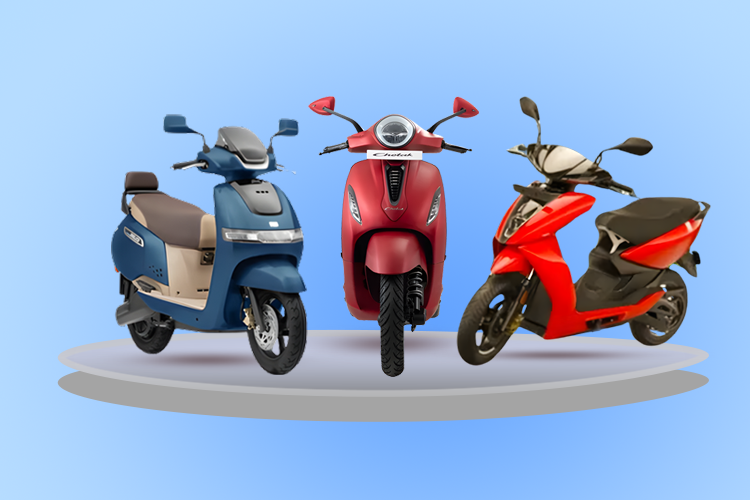
KATHMANDU: Demand for electric scooters has been rising rapidly in Nepal in recent months. With petrol prices increasing by around 35 percent in just one and a half months due to tensions in the Middle East, more consumers are shifting towards electric mobility to reduce running costs.
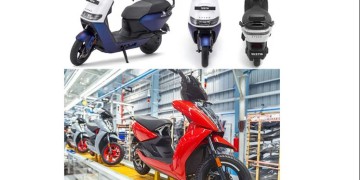
More than three dozen electric scooter brands are currently available in the Nepali market, including over two dozen Chinese brands. While Chinese brands dominate the four-wheeler EV segment, their presence in the two-wheeler category appears relatively weaker. Although the number of Indian electric scooter brands in Nepal remains limited, they continue to hold a strong market position.
Brands such as Bajaj, Ather, TVS, Yadea, TailG, Luyuan and Garow are available in the market. Among them, here are three Indian electric scooter brands that are becoming increasingly popular in Nepal.
TVS iQube
The TVS iQube is one of the most preferred electric scooters in the Indian market and is steadily gaining popularity in Nepal as well. Its practical design, trusted brand image and user-friendly features have made it a preferred option for many buyers.
The scooter is available with 2.2 kWh and 3.5 kWh battery options, with the range varying depending on the variant. On a full charge, the iQube delivers over 100 km of range. It is powered by a 4.4 kW motor.
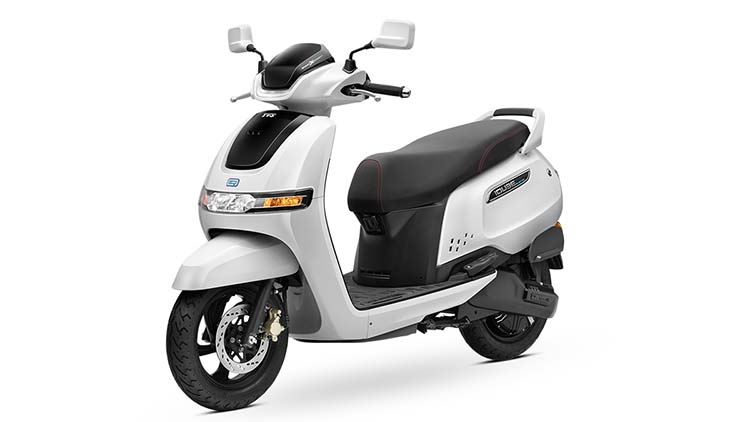
Features include a touchscreen display, navigation, smartphone connectivity and reverse assist. With a spacious and comfortable seat, it suits both daily office commutes and family use.
TVS’ official distributor in Nepal, Jagdamba Motors, has priced the iQube from Rs 279,900.
Ather
Ather is among the best-selling electric scooter brands in Nepal. For buyers seeking a premium electric scooter, the Ather 450 series and Rizta are attractive options.
The Rizta is designed mainly for family and daily users, while the 450 series offers a sportier design and riding character.
The 450 lineup includes S and X variants, while the Rizta is available in S and Z trims. Rizta offers a comfortable riding position, a large seat and ample storage space, making it a practical family scooter. For solo riders, the 450 series may be the better fit.

The Ather 450S gets a 2.9 kWh battery, while the 450X is available with 2.9 kWh and 3.7 kWh battery packs. The Rizta S comes with a 2.9 kWh battery, while the Rizta Z gets a 3.9 kWh unit. Motor output stands at 4.3 kW for the Rizta and 5.4 kW for the 450 series.
Depending on the variant, these scooters offer a claimed range of 120 km to 160 km on a full charge. Features include a smart dashboard, connected technology, fast charging, traction control and navigation.
The Rizta has recently attracted strong attention for its balance of practicality, ride quality and technology. Vaidya Energy has priced the Rizta from Rs 294,900, while the Ather 450 starts at Rs 324,999.
Bajaj Chetak
The Bajaj Chetak electric scooter is also becoming a popular choice among buyers. Its legacy branding, classic styling and modern EV technology combination has helped it stand out in the market.
Currently, only the Chetak 3501 variant is available in Nepal. It comes with a 3.5 kWh battery pack and offers a claimed range of up to 150 km on a full charge.
A key strength of the Chetak is its metal body construction and durability. Features include regenerative braking, digital display, smart connectivity and a practical boot space. Compared to some rivals, its build quality feels more premium.
Hansraj Hulaschand & Company has priced the Chetak at Rs 324,900.
For buyers looking for a dependable and practical daily commuter, the TVS iQube stands out. Those wanting premium technology and smart features may prefer Ather, while customers seeking classic design with durability can consider the Bajaj Chetak.